
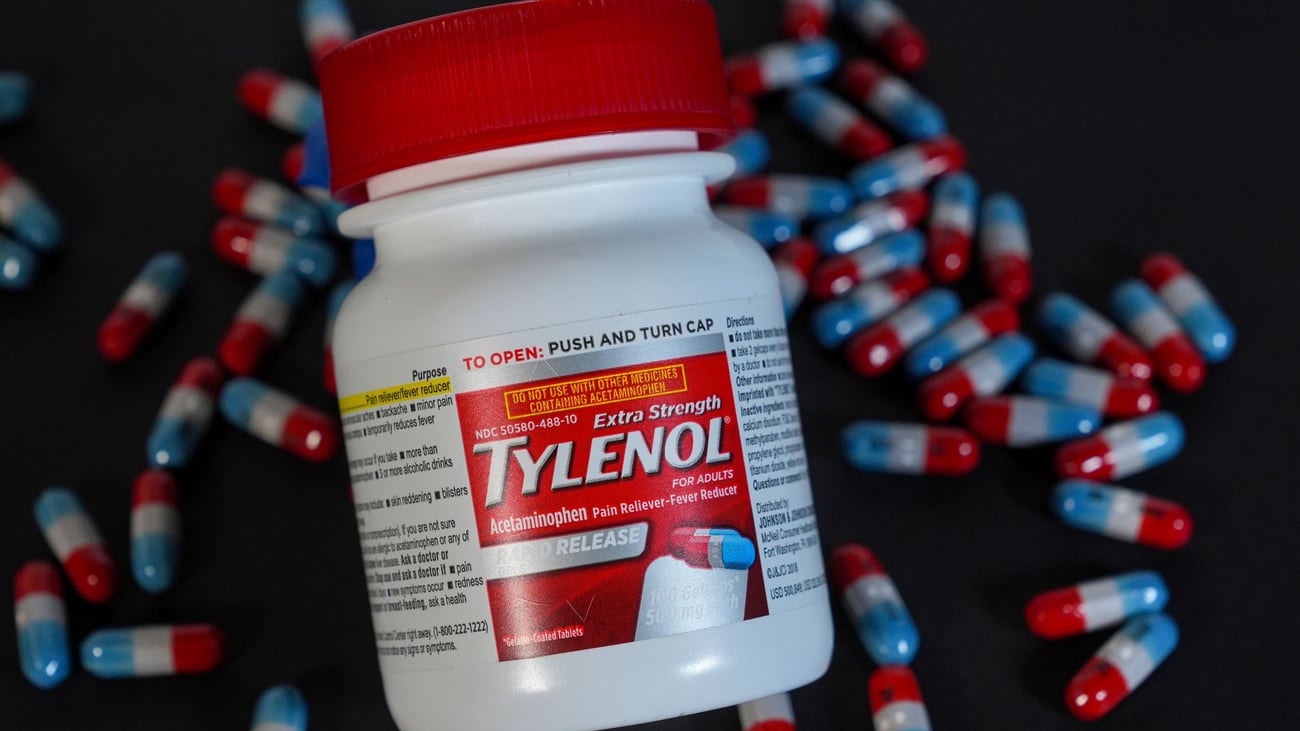
The state claims a last-minute removal to federal court was a stall tactic, while Johnson & Johnson says it had a fair shot under Supreme Court precedent.(CN) — Texas wants to claw back unspecified legal fees from the deep pockets at Johnson & Johnson over the healthcare behemoth’s legal maneuvering in a 2025 lawsuit over the supposed link between Tylenol use and autism.Texas Attorney General Ken Paxton sued in Panola County this past October, claiming Johnson & Johnson and spinoff Kenvue violated the state’s consumer protection law by failing to warn that Tylenol use in pregnancy or early childhood can cause autism and ADHD.The state also claims the 2023 corporate split creating Kenvue was a fraudulent transfer designed to leave liabilities behind. The state sought a temporary restraining order that would have required new warning language on Tylenol bottles sold in Texas and blocked a $400 million dividend.Thirteen hours before the Nov. 7 hearing, the companies removed the case to federal court in Tyler. Removal automatically freezes state proceedings, but the defendants argued the lawsuit raised important federal questions about FDA-approved labeling under a narrow Supreme Court doctrine known as Grable, which gives jurisdiction to the federal court. They also sought to send the case to multidistrict litigation in New York already handling private Tylenol-autism claims.U.S. District Judge J. Campbell Barker held a rare Saturday hearing the next day, remanded the case and denied Texas’s request for fees and motion for sanctions. While he called the removal “zealous advocacy,” he also said the Grable question was at least debatable.At the Fifth Circuit Tuesday, Ashley Keller, arguing for Texas, told U.S. Circuit Judges James C. Ho, Stephen A. Higginson and Carl E. Stewart the lower court used the wrong test. The Supreme Court in Martin v. Franklin Capital requires an “objective reasonableness” inquiry, he said, and expressly rejected a frivolousness standard.“It is always an abuse of discretion to apply the wrong standard,” Keller argued, pointing to 16 Grable remands in the circuit over the past year, all granted. “The plaintiffs are batting 1,000. The defendants are batting zero.”Yet fees are almost never awarded, he said, because judges typically treat the argument “there was something federal lurking somewhere” as enough to make the removal reasonable, and deny costs.Keller walked through the first Grable factor: the petition does not “necessarily raise” a federal issue.“If I represent that my drug is category B when it’s really category C, that’s a misrepresentation that you don’t need to know anything about federal law to adjudicate,” he argued. The duty to warn, he added, comes from state law. The companies never cited additional Supreme Court precedent until the appeal.Higginson challenged the tone of Texas’s reply brief, which called the other side “delusional and on Kool-Aid,” for which Keller apologized. The Barack Obama appointee then asked how often the petition cites Texas law versus the FDA. Keller said the citations are factual, not legal elements of the Deceptive Trade Practices Act claim.Representing the companies, attorney Geoffrey Wyatt said they had an objectively reasonable basis for the removal. He pointed to lower court rulings where judges found Grable jurisdiction because state consumer protection or product liability claims were built around alleged violations of FDA labeling and marketing rules.Paragraphs about FDA pregnancy categories, he argued, create a distinct theory that cannot be resolved under Texas law alone.“They are, for practical purposes, like separate causes of action,” Wyatt said, noting Justice Clarence Thomas’ concurrence in Grable itself called the doctrine “anything but clear.” The evidence supports reasonableness when out-of-circuit cases exist, he said.Wyatt emphasized the Saturday hearing’s speed and the judge’s use of “arguable,” language the Fifth Circuit has used to deny fees. He noted similar cases brought by the attorney general that were remanded without fee awards. Abuse of discretion is a high bar, he said, even if the panel would have decided differently.Stewart, a Bill Clinton appointee, asked whether Judge Barker simply found the removal “not frivolous.” Wyatt agreed the judge viewed it as more than a throwaway argument. Stewart later told Keller, “You want a pound of flesh” because Texas is a “repeat player.”“I’m happy to embrace Shakespeare,” Keller replied in a nod to the reference, adding that the state wants “what the statute says that we can get.”Ho, a Donald Trump appointee, asked how to tell “frivolous” from “objectively unreasonable” and whether this case is categorically wrong or merely a close Grable call. Keller said the first factor is the easiest and this petition flunks it. Higginson asked both lawyers whether they knew of any other state attorney general case in which fees were awarded after a Grable remand; neither did.The panel did not indicate when it would rule.Subscribe to our free newslettersOur weekly newsletter Closing Arguments offers the latest about ongoing trials, major litigation and rulings in courthouses around the U.S. and the world, while the monthly Under the Lights dishes the legal dirt from Hollywood, sports, Big Tech and the arts.Additional Reads
Texas asks Fifth Circuit to force J&J to pay for Tylenol court shuffle
Full Article
Original Source
Read the full article at Courthousenews →KhanList aggregates and links to publicly available news content. We do not host full articles from third-party sources. Always verify important information with original sources.