
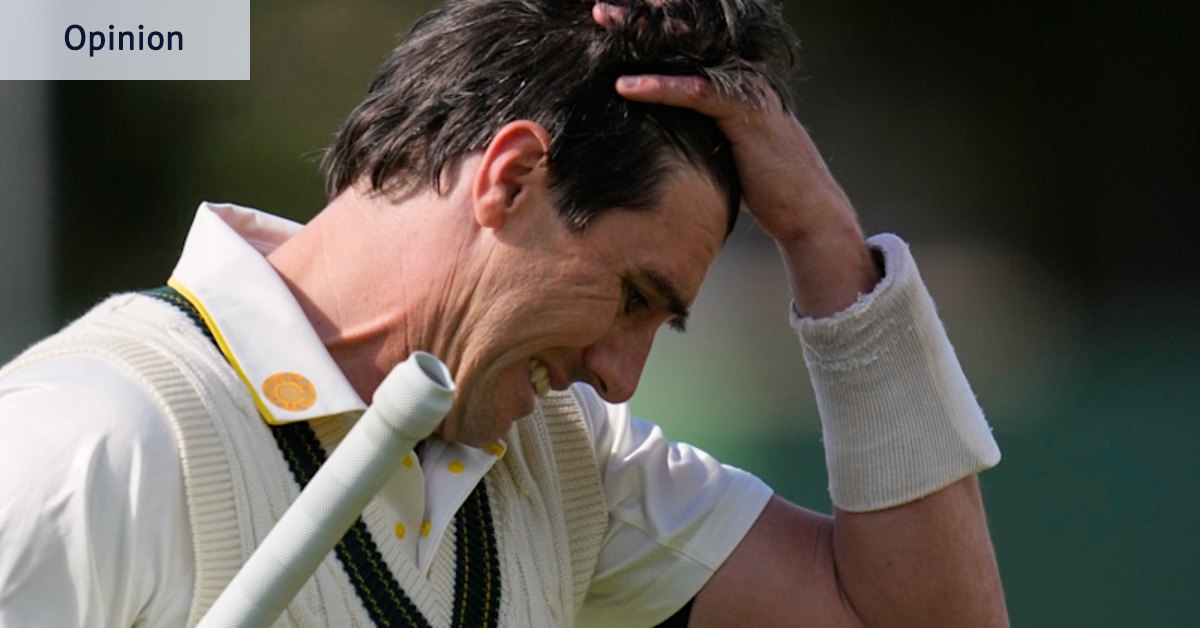
OpinionFormer Australian Test captainOctober 25, 2026 — 7:33pmOctober 25, 2026 — 7:33pmEarly in my career, I learned that when things weren’t going my way, bemoaning my luck got me nowhere. I had to change my approach. The same lesson applies to Test cricket today, and the first change we need is how we read the evidence.This follows the second Test between South Africa and Australia at St George’s Park in Gqeberha, where rain did not save Australia from a humbling defeat.It was grim stuff for Pat Cummins and Australian in Gqeberha.AP Photo/Themba HadebeWorryingly, the familiar chorus has started: sparse crowds, the critics say, prove the longest format is dying.I don’t think they prove that. But the game’s administrators should feel distinctly uncomfortable because the real threats to Test cricket are less visible than empty seats, and they can fix them.What the empty seats tell usA thin weekday crowd is a scheduling result, not a verdict on the format. This series sits in a shoulder window: after the peak of the rugby and soccer seasons, before the domestic summer begins, and across school and university exams. Asking families, students and young professionals to give up several consecutive weekdays at that time of year is asking the impossible, and that is before we count the cost of tickets, transport and food for households under real financial pressure.Fans hardly flocked to the first Test between South Africa and Australia in Durban.APPut the same contest in the middle of summer and the picture changes. Boxing Day, New Year’s Test and Ashes Tests still fill grounds. Demand for the best Test cricket, played when people can attend, has not disappeared.So the gate is a poor test of the format’s health. Better questions are:Do the best players choose to play Tests?Do broadcasters and streamers pay properly for them?Can smaller nations afford to host and tour?On those questions, the news is more worrying.The real threat is collisionT20 is not Test cricket’s executioner, but I won’t pretend it is a harmless neighbour. When the SA20 overlapped with South Africa’s tour of New Zealand in early 2025, the Proteas had to send a squad featuring seven uncapped players, led by a captain (Neil Brand) who had never played a Test match.With stars such as Virat Kohli, the Indian Premier League has gone from strength to strength.APThat is the ultimate indignity when franchise leagues and international cricket overlap in the same weeks and one pays far better. I don’t blame players for choosing to secure their families’ futures. The failure belongs entirely to administrators who built (and tolerate) a calendar that forces that choice.Right now, Test cricket is thriving—but only if you belong to the “Big Three” of India, Australia and England, who pass a profitable revenue bucket back and forth in five-match marquee series. For the rest of the world, hosting a Test match is a fast way to go broke.Yet T20 also pays the billsBoth things are true. The IPL, the BBL and the SA20 generate the broadcast and sponsorship revenue the sport relies on. Boards outside the wealthiest nations cannot fund Test hosting and touring from Test revenue alone.The answer is neither to fight T20 nor to hope it will be generous. Make co-existence a condition of doing business.The one-way streetAny serious settlement has to begin with the IPL because it is the world’s biggest league yet, paradoxically, the least reciprocal. It already occupies more than two months of the calendar, and it is reportedly set to expand further in 2028. For nearly two decades, it has drawn on the best players from every other country. Yet Indian players under BCCI contracts are barred from every other franchise league. I understand the case for that: workload and protecting the IPL brand.But a league cannot systematically strip the world’s asset pool while keeping its own off-limits and then expect everyone else to bend their Test calendars to fit its ever-expanding footprint.That cost falls on the other boards and on the players, who are left to choose between country and contract.Leagues need sanction from national boards and the ICC, and their players need release from their home boards. That gives the game leverage, and it should use it. I would write four conditions into every single league sanction:A Test levy and guaranteed match fees: A fixed share of domestic league revenue must go into a global Test fund. This fund should serve two purposes: subsidising hosting costs for smaller nations so they can afford three-Test series instead of hollow two-Test jokes, and establishing a competitive global minimum Test match fee. If a young West Indian, Kiwi or South African cricketer knows that pulling on the creams guarantees a premium, reliable income, the temptation to abandon a Test tour for a short-term franchise contract evaporates.Protected windows: The Future Tours Programme must ring-fence each host nation’s peak summer for Test cricket. The domestic leagues must schedule around international windows, not the other way around. Series should also be long enough to matter. A two-Test series is a cipher. Barely a story, forget an event.Full-strength squads: No sanctioned franchise window can overlap an ICC-scheduled Test series. Selectors must be free to pick their absolute best XI without forcing a player into an agonising contract dispute between country and club.Absolute reciprocity: Any league that draws on international players must accept the same rules as everyone else. The IPL has completed 19 seasons, drawing on global talent throughout its existence while barring Indian players under BCCI contract from participating in overseas leagues. Player release must work both ways. A league that wants the world’s best should be willing to share its own. English and Australian administrators, in particular, need to be tougher. We must stop being pusillanimous collaborators and sycophants when the future of Test cricket is at stake.Australia is one country where Test cricket isn’t a financial impost.Getty ImagesScarce, not exclusiveSome argue Test cricket should become a luxury product, like the majors in tennis and golf. I take one lesson from that: fewer, better-placed Tests, each treated as an event. I reject the price tag. The majors are annual showpieces. Tests are how most of us first fell in love with the game. In a country where cost-of-living pressure is real, pricing families out would be self-defeating.Make Tests premium in the calendar and accessible at the gate: cheap weekday tickets for schools and students, affordable family days and broadcasts that tell the contest’s story and the score.Younger audiences come to Tests the same way they come to T20 – through stars and stories.We have to give them both.Management, not mourningTest cricket’s problem is not that people have stopped loving it. It is that we have made it hard to schedule, hard to fund and harder to pick our best players for.That is a management failure, and leadership, not appeasement, must fix it.I learned long ago that bemoaning your luck changes nothing. The custodians of the game should stop wringing their hands over empty seats in Gqeberha and write rules that let the longest format thrive alongside the shortest.After all, it demands more of a player than any other form of the game: skill, patience and character – just ask Kohli or Starc. And that is worth protecting.News, results and expert analysis from the weekend of sport sent every Friday. Sign up for our Sport newsletter.Greg Chappell is a former Australian captain. He led Australia in 48 of his 87 Tests, scoring 7,110 runs at an average of 53.86.From our partners
Test cricket isn’t going anywhere. But it does need some help
Full Article
Original Source
Read the full article at Smh →KhanList aggregates and links to publicly available news content. We do not host full articles from third-party sources. Always verify important information with original sources.