
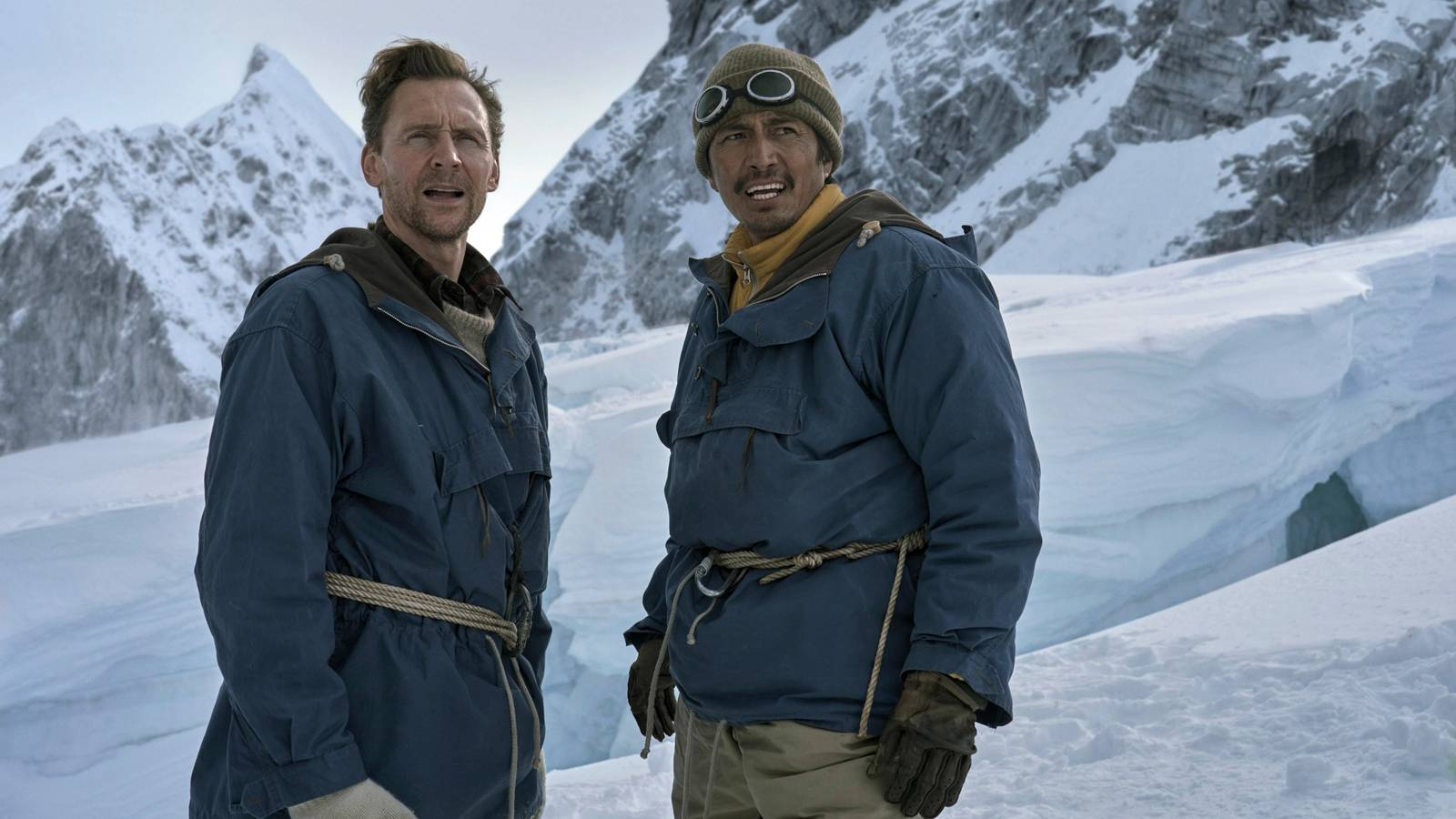
Published Oct 16, 2026, 8:30 PM EDT Liz Declan is a Lead Writer for ScreenRant, primarily covering movies. She is a massive fan of Star Wars, the MCU, and Supernatural. In addition to writing, Liz loves attending and covering conventions and interviewing actors. Find her on TikTok and Instagram @va.va.vera Tom Hiddleston's newest project, Tenzing, is a biopic centered on the real-life 1953 climb to the summit of Mount Everest, which saw the titular Nepalese-Indian Sherpa mountaineer Tenzing Norgay and New Zealand mountaineer Edmund Hillary become the first known people to reach the peak of the mountain. Hiddleston plays Hillary, Genden Phuntsok plays Tenzing, and they are joined by a relatively small cast of other climbers, one of whom is John Hunt, played by Willem Dafoe. Reviews of Tenzing from critics ahead of its limited theatrical release were largely positive, with the movie currently having a very respectable 98% critic score on Rotten Tomatoes. Given that the movie only just hit Apple TV today, audience scores have not yet been added to the site, although the fact that the show has already proven to be a hit on the streamer bodes well for that score as well. Of course, being that Tenzing is based on a true story, it might seem as though the film's conclusion is already self-explanatory; however, as with any movie based on a true story, there were some adjustments that Tenzing made, and, even truer of this movie in particular, the story has a unique focus that translated to a very specific and meaningful ending. Here's everything you need to know about the conclusion of Tenzing. Who Reaches The Summit Of Mount Everest First Explained Credit: MovieStillsDB Tenzing is already such a well-known story because it is based on the true events of Edmund Hillary and Tenzing Norgay's climb. However, some debate remains over who actually arrived at the summit first, and, as Tenzing shows, initially, it hadn't seemed like they were going to be the climbers to make this epic journey at all. Prior to Hillary and Tenzing venturing off to reach the top of the mountain, two other climbers in their larger group, Tom Bourdillon and Charles Evans, were selected to make the attempt. However, after some severe weather, these plans were dashed, which made way for Hillary and Tenzing to be the two to make the climb. The movie does show their ascent all the way to the top; however, it does not take a clear stance on who reached the summit first. Both men can be seen from behind, each taking steps in turn. The shot is a fair distance away, so it's impossible to say, based on the movie, who was technically first. In the end, though, it doesn't really matter, and that's certainly the stance that the movie takes. Hillary and Edmund arrived at the summit of Mount Everest because of their partnership with one another, so focusing too heavily on whose foot literally reached the summit first dilutes that story. Instead, this movie shows the two walking up together, opting not to enter into the debate. This film does arguably nod towards that debate, though, as, before they walk all the way to the peak, each climber takes a turn saying, "After you." How Does The Tenzing Ending Change The Stories That Have Been Told Before? Credit: MovieStillsDB Perhaps the most significant contribution of Tenzing is the shift in focus that the movie offers compared to other versions of this story. That is, as the title suggests, this movie is just as much about Tenzing Norgay and his relationship to this mountain and to this climb as it is about the climb itself. In the movie, Tenzing's childhood, wife, children, and myriad other experiences and moments are captured, all helping to paint a picture of this historical figure who has too often been sidelined or overlooked despite this massive contribution. This, in turn, has also shifted the way that Tenzing looks at the climb to the summit of Mount Everest overall, compared to other movies, documentaries, and versions of this story that have come before. Specifically, Tenzing highlights the cultural, emotional, and spiritual significance of this expedition, treating it as a profound experience for Tenzing rather than simply a 'conquering' of the mountain. At one point, that idea is directly explored on screen, as John Hunt's comments about the "siege" of Everest are entirely at odds with Hillary and Tenzing's approach. Also driving this focus home is the fact that Tenzing calls the mountain not Everest but Chomolungma, its Tibetan name. Does Anyone Die In Tenzing? Although there are no on-screen deaths in Tenzing, there is one significant death in the movie, and there are multiple close calls for key characters. The one death is, sadly, Tenzing's wife, who dies off-screen, seemingly of an illness. While her actual death is not shown, the movie does show Tenzing and his two young daughters holding a funeral for her, with her body wrapped in a burial shroud and then burned. It's clear that (understandably) this death has a massive impact on Tenzing, who at one point discusses his daughters with Hillary and looks pained when asked about the girls' mother. In addition to the passing of Tenzing's wife, there are some close calls for both Tenzing and Hillary, as well as some other climbers, at various points in the movie. For Tenzing and Hillary in particular, each faces a near-death experience in the film and is saved by the other. The first incident involved Hillary, who fell down a crevice that opened up in the ground while the two were climbing. He almost certainly would have fallen to his death had Tenzing not been there, holding tightly to the rope that Hillary was attached to. Ultimately, he is able to be pulled up. Tenzing also has a near-death moment, in which he suffers from hypoxia and begins hallucinating. Already, it was clear that something was wrong, as his breathing had become considerably more labored, and he seemed disoriented, but when he was fully taken over by hypoxia and appeared just about ready to pass out, Hillary rushed to his side and helped him adjust his mask, thereby saving his life. In the end, none of the climbers died during the movie. The Real Meaning Behind Tenzing's Final Scene The final shot of Tenzing shows the titular lead of the movie standing off to one side of the celebrating group after Hillary and he returned to the camp and smiling up at the mountain. Just before the camera cuts to black, Tenzing's smile widens, and he lets out a deep and contented sigh. As mentioned, part of what Tenzing does so differently from other versions of this story is focus on Tenzing as the primary hero, in a sense. It's really told from his perspective, emphasizing not only his love and respect for the mountain throughout the climb but also his childhood and why Everest is so significant to him. By ending the film in this way, Tenzing affirms that focus of the movie, making the conclusion feel just as much about Tenzing and what he accomplished as it is about the feat of reaching the summit of Mount Everest. Does The Tenzing Ending Set Up A Sequel? Credit: MovieStillsDB There's very little chance that Tenzing will be getting any sort of sequel. The movie comes across as very self-contained, and the aforementioned ending feels like a perfect way to conclude the overarching story. There is, of course, the possibility of each of the two main characters' lives being revisited at some point later on, but that feels incredibly unlikely. Instead, Tenzing is presented as a gorgeous standalone film that captures this famous story in a way that sheds considerably more light on Tenzing Norgay, his contributions, and what this history-making climb really meant to him. Director Jennifer Peedom Writers Luke Davies Producers Emile Sherman, Liz Watts, Iain Canning
Tenzing Ending Explained: Who Makes It To The Top Of Mount Everest First?
Full Article
Original Source
Read the full article at Screenrant →KhanList aggregates and links to publicly available news content. We do not host full articles from third-party sources. Always verify important information with original sources.