
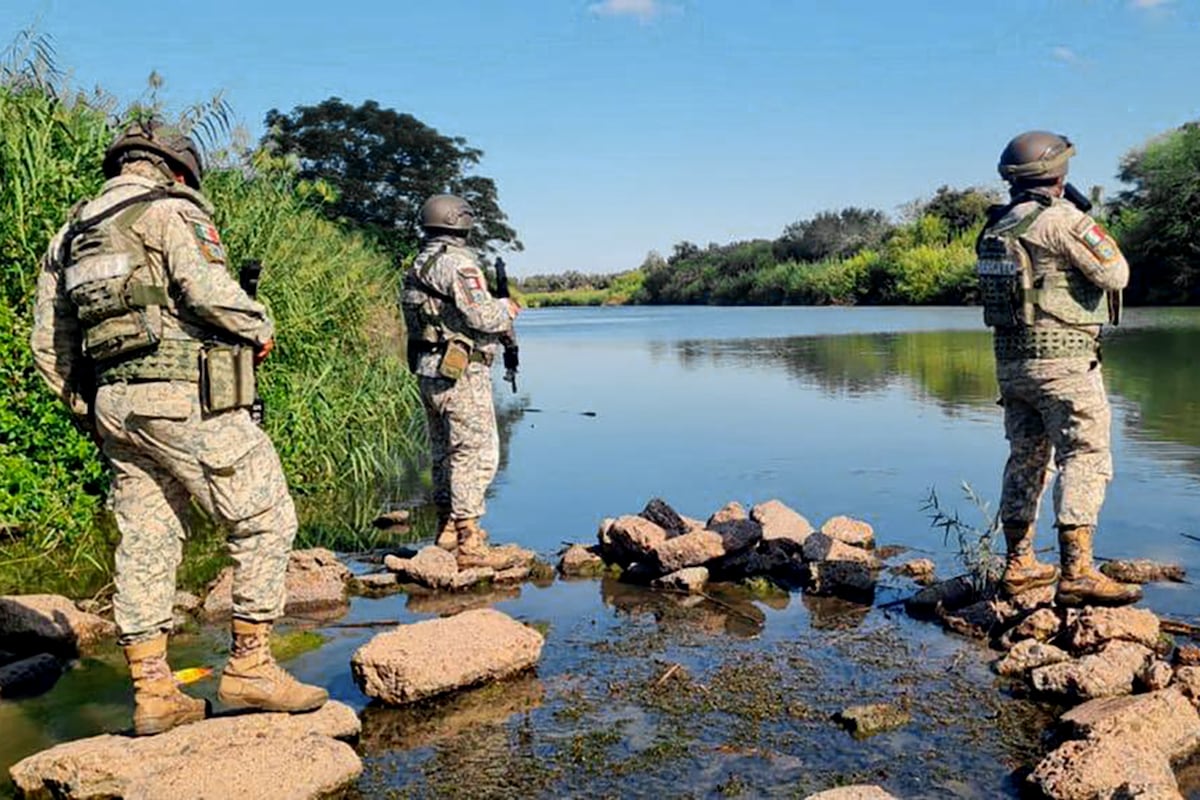
Tensions are rising along the Mexico-U.S. border — this time on the eastern side — due to an incident that has quietly made its way to the press. Ten days ago, U.S. Coast Guard personnel patrolling the Rio Grande area between Texas and Tamaulipas exchanged gunfire with suspected armed men who were crossing from the Mexican side. No injuries or fatalities were reported, but authorities have launched separate operations on both sides of the border — a deployment that, at its core, reignites fears of intervention by Washington on Mexican territory.It’s been the same old tune for the past year and a half — the usual threat from Washington since Donald Trump’s return to the White House. According to the Republican narrative, the activities of Mexican “narco-terrorist organizations” pose a risk to Americans; if Mexico doesn’t do more to stop them, the argument goes, we will. Mexico has tried to prove itself during this time, with mass deportations of criminals to the north, arrests of cartel members and politicians colluding with them, and the implementation of border operations. The response always wavers between acknowledgment and new demands.The dividing line between the two countries is changing shape; the phenomena that characterize it shift rapidly. Where three years ago thousands of migrants waited for appointments with Border Patrol, a process they managed with an app on their cellphones, the reality of drones and signal jammers now prevails. Apprehensions of migrants attempting to cross illegally from Mexico into the U.S. have collapsed to fewer than 10,000 a month. In contrast, the shooting down of unmanned aerial vehicles used by cartels to monitor the border are increasing. On Monday, a U.S. military commander told Reuters that in the past month alone they had detected “378 incursions,” a trend that is rising.It was in that context that the shootout on the Rio Grande occurred, prompting the deployment of troops on both sides of the border. The exchange allegedly took place on September 26 near the Texas town of Garceño, a mirror of the Mexican town of Camargo in Tamaulipas. Allegedly, because Mexican President Claudia Sheinbaum expressed some skepticism on Monday morning during her regular press conference. “They said there had been shots fired from the Mexican border toward the U.S. We have asked for evidence that this was the case, because we have no evidence,” she said.U.S. Ambassador to Mexico Ronald Johnson had accepted his government’s information on Sunday while praising the deployment of 500 Mexican troops to the area on social media. “Together, we intend to patrol both sides of our shared border, protect our communities, and make it more difficult for criminal and terrorist organizations to operate,” he said. “Mexican military commanders will communicate directly with deployed U.S. forces.”The deployment adds another layer of uniformed personnel to the southern side of the border, where the Mexican government has been running the Frontera Norte operation for months precisely in response to pressure from the north. That operation, with thousands of soldiers sent to the border, was the Sheinbaum administration’s first response to the rhetoric from Trump and his cabinet, focused in his second term on organized crime coming from the south rather than on migration, as occurred in his first term.The possibility that the exchange of fire occurred as described north of the border follows familiar patterns. The so-called narrow border, the stretch from Reynosa to Nuevo Laredo where Mexican troops have been deployed, is known for cartel control. Security consultancy Lantia places more than half a dozen criminal groups operating in its main municipalities, from Nueva Ciudad Guerrero to Ciudad Díaz Ordaz, passing through Mier, Miguel Alemán, and Camargo itself.Over the past two decades, migrant smuggling networks have also used these municipalities to move groups of people across the river. Camargo, in fact, is a painful memory for Mexican society after the 2021 massacre of 19 people in a rural area of the municipality — mostly migrants trying to cross into the U.S. to find work. The killers on that occasion were a group of state police, but the motive for the attack was never entirely clear.Sign up for our weekly newsletter to get more English-language news coverage from EL PAÍS USA Edition
Tensions mount on Mexico-US border amid drones and shootouts
Full Article
Original Source
Read the full article at English →KhanList aggregates and links to publicly available news content. We do not host full articles from third-party sources. Always verify important information with original sources.