
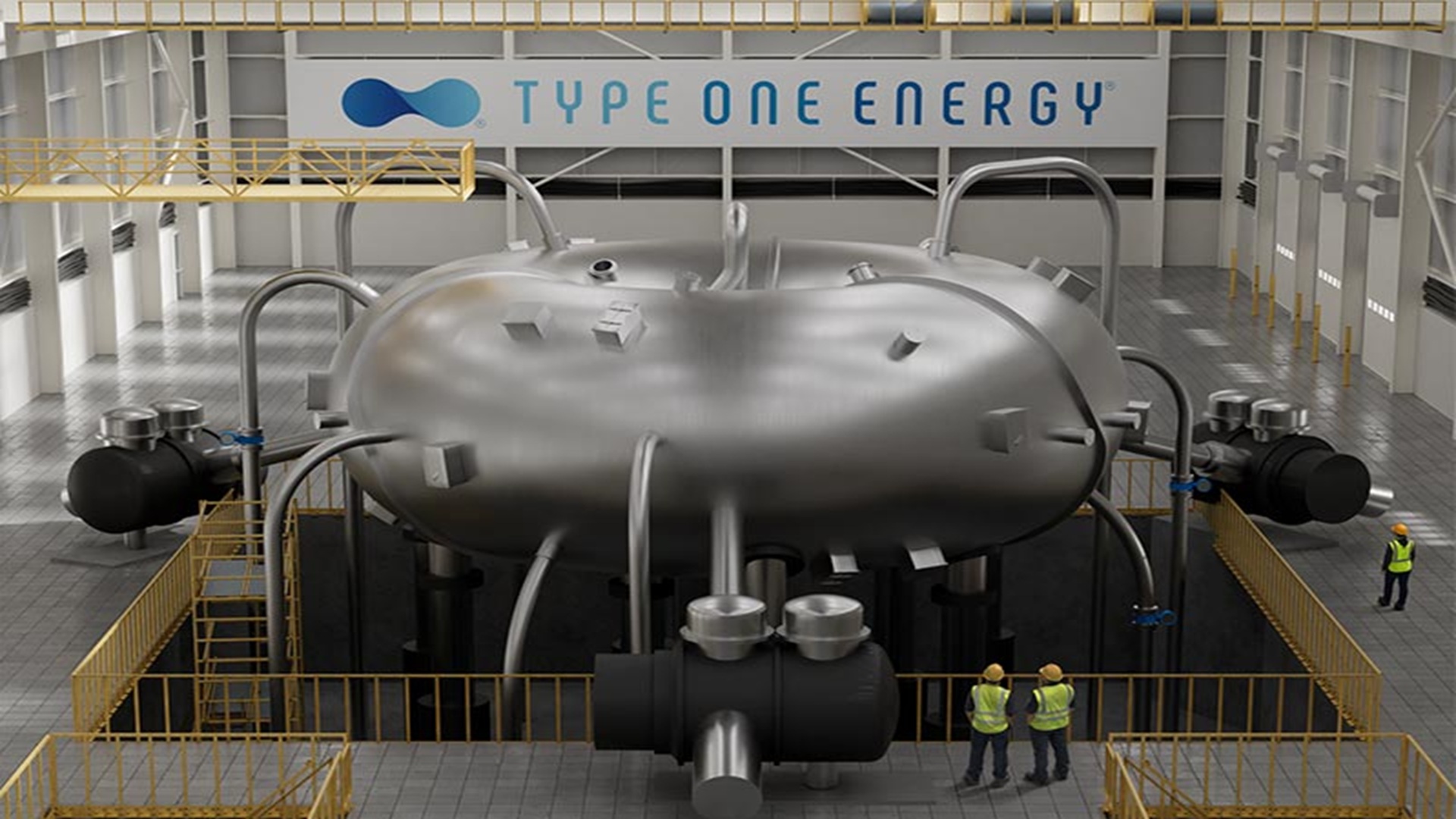
A 400-megawatt fusion power plant using a stellarator design is moving closer to construction in Tennessee after Type One Energy received the state’s first fusion-specific license. The license clears a key regulatory step for Project Infinity, which is planned for the Tennessee Valley Authority’s Bull Run Energy Complex in Clinton. Type One Energy plans to break ground on the project’s first phase this year and expects full startup by 2034. The company’s Infinity Two is designed to generate 400 megawatts of electricity using stellarator technology. The project is being developed with the Tennessee Valley Authority, Oak Ridge National Laboratory and the University of Tennessee. Stellarators use complex, three-dimensional magnetic fields to confine the superhot plasma needed for fusion. Unlike the more widely known tokamak design, the magnetic coils in a stellarator are twisted around the plasma chamber, creating a configuration intended to keep the plasma confined without relying on a large electrical current running through it. Stellarator design reaches deployment The Tennessee license is significant because it is the first issued under a state regulatory framework specifically created for nuclear fusion machines. Tennessee developed the framework after the Nuclear Regulatory Commission delegated regulation of fusion energy production to the states. That gives Type One Energy a defined licensing route as it moves its stellarator technology from development toward a commercial power plant. The Bull Run project will be developed in phases. The site is also intended to become a fusion development campus involving Type One Energy, TVA, Oak Ridge National Laboratory and the University of Tennessee. “For the first time, a fusion power plant-specific licensing process has been developed and then used to grant a fusion-specific license to operate a fusion machine, consistent with a national regulatory framework for fusion energy,” said Christofer Mowry, CEO of Type One Energy. “The importance of this milestone cannot be overstated. Tennessee’s licensing process is now the international benchmark for how to ensure fusion power plant ‘safety by design’ in a manner that can unlock the compelling economics of this transformational power generation technology. We are grateful and honored to receive this initial fusion machine license for Project Infinity.” Fusion works by combining light atomic nuclei to form a heavier nucleus, releasing energy in the process. The challenge for power developers is maintaining the extreme conditions required for the reaction while controlling the resulting plasma and extracting useful heat. Type One Energy’s approach is built around stellarator confinement. The company says its Infinity Two design is based on a deuterium-tritium fusion reaction and is designed to produce 800 megawatts of fusion power, with 400 megawatts delivered to the electrical grid. Tennessee builds fusion testbed The project is also notable for where it is being developed. Bull Run is a former fossil-fuel power site, and the planned fusion campus would repurpose existing energy infrastructure while bringing together a commercial developer, a major utility and research institutions. The first phase of Project Infinity involves Infinity One, a prototype and workforce training facility that will help Type One and TVA test technologies intended for the larger power plant. Type One says Infinity One is scheduled for commissioning and startup in 2029. The new license therefore covers more than a paperwork milestone. It establishes a regulatory framework that Tennessee expects could be used as other fusion machines move toward commercial deployment. “As the global epicenter of nuclear energy, Tennessee is building the workforce, infrastructure and regulatory framework needed to lead the next generation of nuclear innovation,” said Gov. Lee. “By creating a clear path for emerging technologies like fusion, we’re advancing the reliable, abundant American energy we’ll need for generations to come.” If Project Infinity stays on schedule, Tennessee could become an early test case for whether stellarator technology can move from experimental fusion systems to a grid-scale power plant. Get the latest in engineering, tech, space & science - delivered daily to your inbox.With over a decade-long career in journalism, Neetika Walter has worked with The Economic Times, ANI, and Hindustan Times, covering politics, business, technology, and the clean energy sector. Passionate about contemporary culture, books, poetry, and storytelling, she brings depth and insight to her writing. When she isn’t chasing stories, she’s likely lost in a book or enjoying the company of her dogs.
Tennessee grants first fusion license, clearing path for 400MW stellarator plant
Full Article
Original Source
Read the full article at Interestingengineering →KhanList aggregates and links to publicly available news content. We do not host full articles from third-party sources. Always verify important information with original sources.