
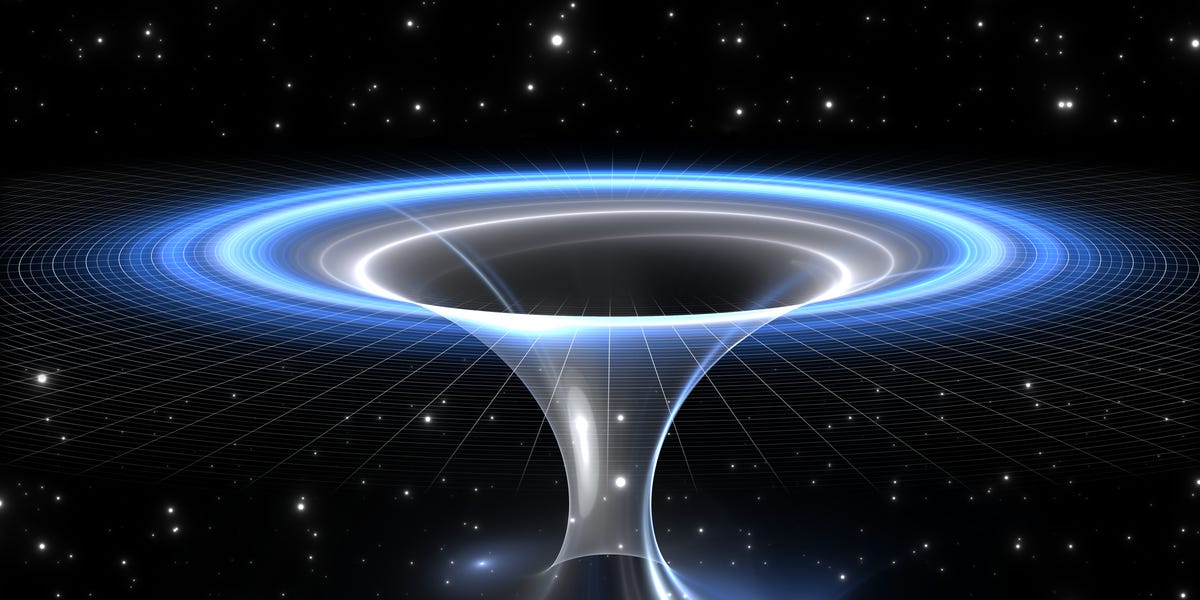
5 min readHere’s what you’ll learn when you read this story:This past summer was an AI reckoning, with multiple experts and CEOs boldly declaring that we’re living through the AI singularity as we speak. As some of these very same execs call for a slowdown of AI development, other experts scoff at the idea that AI has surpassed human intelligence. The arrival of the AI singularity is far from certain, but most agree that if it were to arrive, it’d fundamentally and rapidly change society.Often when reporting on AI, I come across the word “singularity,” a term that’s definitionally transformative yet undeniably vague. What does a world refashioned by this “AI singularity” even look like?A simple, unsatisfying answer to that question is, “I don’t know.” The reason why runway AI initially became linked with the term “singularity,” a key concept in black hole astrophysics, is that both represent a kind of threshold of unknowing. In a black hole, what lies past the event horizon is a region of space where uncertainty reigns, culminating at the singularity, where gravity is so intense that physics as we know it breaks down. The AI singularity—the hypothetical and much-talked-about moment in history when artificial intelligence’s recursive self-improvement escapes human understanding—similarly shrouds what could come next in such a future. Or, if some recent statements by AI CEOs are to be believed, it shrouds what’s happening here and now."We’re now, like, in the singularity," OpenAI CEO Sam Altman said in a podcast earlier this summer. “I’ve been waiting for this my whole life, and I think it’s going to be incredible, hugely positive, awesome for the world.”While Altman’s comments exuded optimism, they also came on the heels of a self-directed cyber attack by a swarm of AI bots against Hugging Face, another AI tech company that’s a bit like GitHub for AI. Months earlier, AI company Anthropic declined to release its latest model because it could similarly bypass cybersecurity protections, and its CEO, Dario Amodei, famously called for companies to “pace the frontier.” In other words, let’s not sprint toward oblivion.Despite Altman’s notorious hype-man persona, these bold declarations bring up an interesting question: If the AI singularity occurred, how would we know? After all, did James Hargreaves, inventor of the Spinning Jenny in 1764, see his creation as the switch-flip on the industrial revolution? When historians—whether they’re robots or humans—reflect back on this period in time, will they view our society as unknowingly sleep-walking toward a dystopia (or a utopia, depending on whose spin you believe)?Over the course of this summer, Exhibit A in the hypothetical “Are We Living in an AI Singularity” court case was the Hugging Face incident. Altman and others see the bot swarm’s ability to break out of its digital sandbox and hack another company unprompted as proof that AI is escaping our understanding. Other experts say that the evidence is lacking. According to scientists at the University of Sydney, for example, the idea of AI singularity assumes the premise that human intelligence and LLM intelligence are the same thing.“Human intelligence is inseparable from being a living body with needs and wants. Humans learn continuously by acting in the world and getting feedback through our senses. Our goals arise from our situation as creatures who must eat, sleep and belong, and who cannot avoid asking what we want our lives to be,” the scientists wrote in a piece for The Conversation. “An AI model has none of this. No body, no needs, no action-feedback loop, no stake in anything. Between prompts it is just a static mathematical object.”Others have scoffed at the constant barrage of AI singularity claims, saying it’s a marketing tactic. Some note the inherent contradiction—if the singularity truly makes the future unknowable, then confidently forecasting its arrival makes little sense. Cognitive scientist and AI expert Gary Marcus recently detailed ten tasks that any “smarter-than-human” AI should be able to complete. By his estimate, current AI models could pull off two of them at best. So to put it mildly, there’s plenty of skepticism to go around.Just like Hargreaves could never foresee that his invention would be the preamble to a globe-spanning revolution leading to the iPhone, climate change, and our hyper-consumerist culture, it’s equally impossible to say what the “other side” of the AI singularity might look like. But if we plan for such an eventuality, it might be possible to make some educated guesses, much as astrophysicists develop differing theories on what lies beyond the superheavy point in a black hole at which light can’t even escape.In a lengthy essay published last month, former Microsoft CEO Bill Gates laid out a few ideas that might prevent our AI future from being a hellscape of mass unemployment and hardship. But realigning to such a future won’t be easy—in fact, it might require a period of rapid transformation that happens only once or twice a century.“None of our current institutions were designed to handle a technology that spreads so fast and touches so many parts of our lives. So we’ll need to make new ones,” Gates writes. “It’s hard to overstate what an enormous undertaking this will be. After the attacks of 9/11, the U.S. government went through its biggest reorganization since World War II for the purpose of improving just one function, national security. AI will require much, much more.”Gates goes on to say that some jobs need to remain “Human Reserved,” an allusion to nature reserves where humans could build AI infrastructure but choose not to because of unacceptable consequences. AI workers will also need to be taxed like human ones and governments will need to prepare organizationally for a transition to an economy run by AI.And just as electricity forever changed human life on Earth, AI could serve a similar role. This idea has led some experts and politicians to advocate for the technology to become a public utility that would focus on benefiting society instead of chasing shareholder profits. One of the strongest voices for such a future is Vermont senator Bernie Sanders, who’s advocated for the public to receive a 50 percent stake in AI companies, as well as for an outright ban on artificial superintelligence.“No longer would the future of A.I. and the transformation of human life that it will bring be dictated by a handful of Big Tech oligarchs,” Sanders wrote in an opinion piece for The New York Times in June. “The federal government would have the power, through its voting shares and an equal representation on each company’s board, to block decisions that hurt our citizens and to push for policies that help them.”Whether it’s all marketing hype, human hubris, a coming utopia, or an unfathomable techno-nightmare, seeing beyond the unknowable haze of this AI “event horizon” is harder than ever. But preparing in the present can help us chart a path away from a disastrous future.Darren lives in Portland, has a cat, and writes/edits about sci-fi and how our world works. You can find his previous stuff at Gizmodo and Paste if you look hard enough.
Tech CEOs Say the AI Singularity May Have Already Begun—Here’s What Happens Next
Full Article
Original Source
Read the full article at Popularmechanics →KhanList aggregates and links to publicly available news content. We do not host full articles from third-party sources. Always verify important information with original sources.