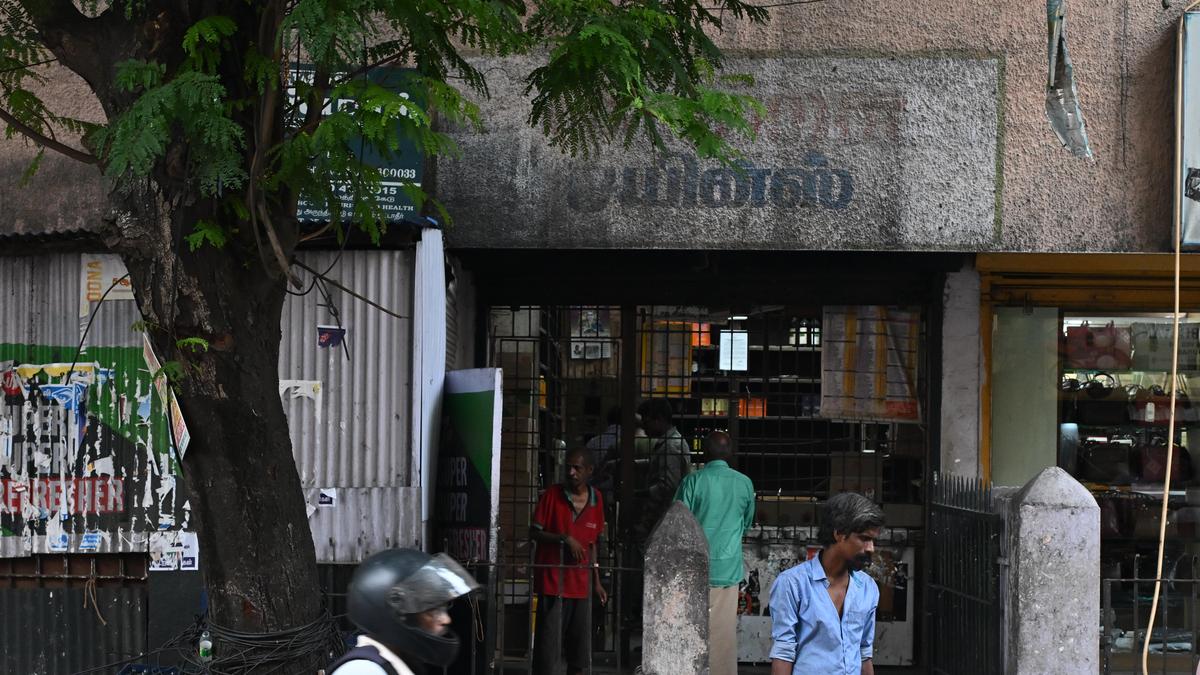
A TASMAC outlet in West Mambalam. File | Photo Credit: R. Ragu The Madras High Court on Friday (August 14, 2026) reserved its orders on a writ petition (criminal) filed by former DMK Minister and incumbent Coimbatore South MLA V. Senthilbalaji’s co-accused T. Ramesh of Karur to quash the DVAC’s July 28, 2026, FIR in the TASMAC tender irregularities case.First Division Bench of Chief Justice Sushrut Arvind Dharmadhikari and Justice G. Arul Murugan deferred its verdict after hearing senior counsel V. Raghavachari for the petitioner and senior counsel Siddhartha Dave and State Public Prosecutor R. John Sathyan for the DVAC.Additional Solicitor General (ASG) AR.L. Sundaresan, too, made his submissions and opposed the writ petition since it had also urged the court to declare Section 17 of the Prevention of Corruption Act (PCA), 1988, unconstitutional as it empowers the police to arrest the accused without summoning them for inquiry.In his affidavit, the petitioner stated that he was one of the accused in the TVK MLAs ₹35 crore bribery case as well, and that the High Court had on August 4, 2026, stayed the investigation, conducted by the Greater Chennai Police, in that case, pursuant to a similar writ petition filed by him challenging Section 17 of the PCA.The petitioner claimed that he was arrested by the DVAC in the TASMAC tenders case immediately after he was released on bail in the TVK MLAs bribery case. He said, though his name does not figure in both FIRs, the police had implicated him on the basis of the investigation conducted by them.Stating that Section 35(3) of Bharatiya Nagarik Suraksha Sanhita (BNSS) mandates the police to issue a notice of inquiry to the suspects before resorting to the extreme step of arrest, the petitioner said, on the other hand, Section 17 of the PCA empowers the investigating officer to arrest even without a warrant.Opposing the petitioner’s plea, the DVAC contended that the petitioner could not casually urge the court to quash the FIR in a serious corruption case involving a loss to the tune of not less than ₹100 crore caused to the public exchequer due to large-scale irregularities in floating TASMAC tenders in 2021.The prosecution said, the Supreme Court had permitted the DVAC to proceed with the investigation while granting interim protection from arrest to the prime accused in the case and therefore, the present writ petitioner was not entitled to any kind of relief from the High Court.The ASG, on his part, said that the challenge to Section 17 of the PCA was not maintainable at all since the petitioner had not raised any ground to show, even prima facie, as to how the legal provision was unconstitutional. He said, in the guise of challenging Section 17, the petitioner cannot question the correctness of the DVAC’s FIR, which was registered on the basis of proceedings initiated by the Directorate of Enforcement (ED) in a related case. Published - August 14, 2026 03:03 pm IST
TASMAC irregularities case: Madras High Court reserves orders on plea to quash DVAC’s FIR
Full Article
Original Source
Read the full article at Thehindu →KhanList aggregates and links to publicly available news content. We do not host full articles from third-party sources. Always verify important information with original sources.