
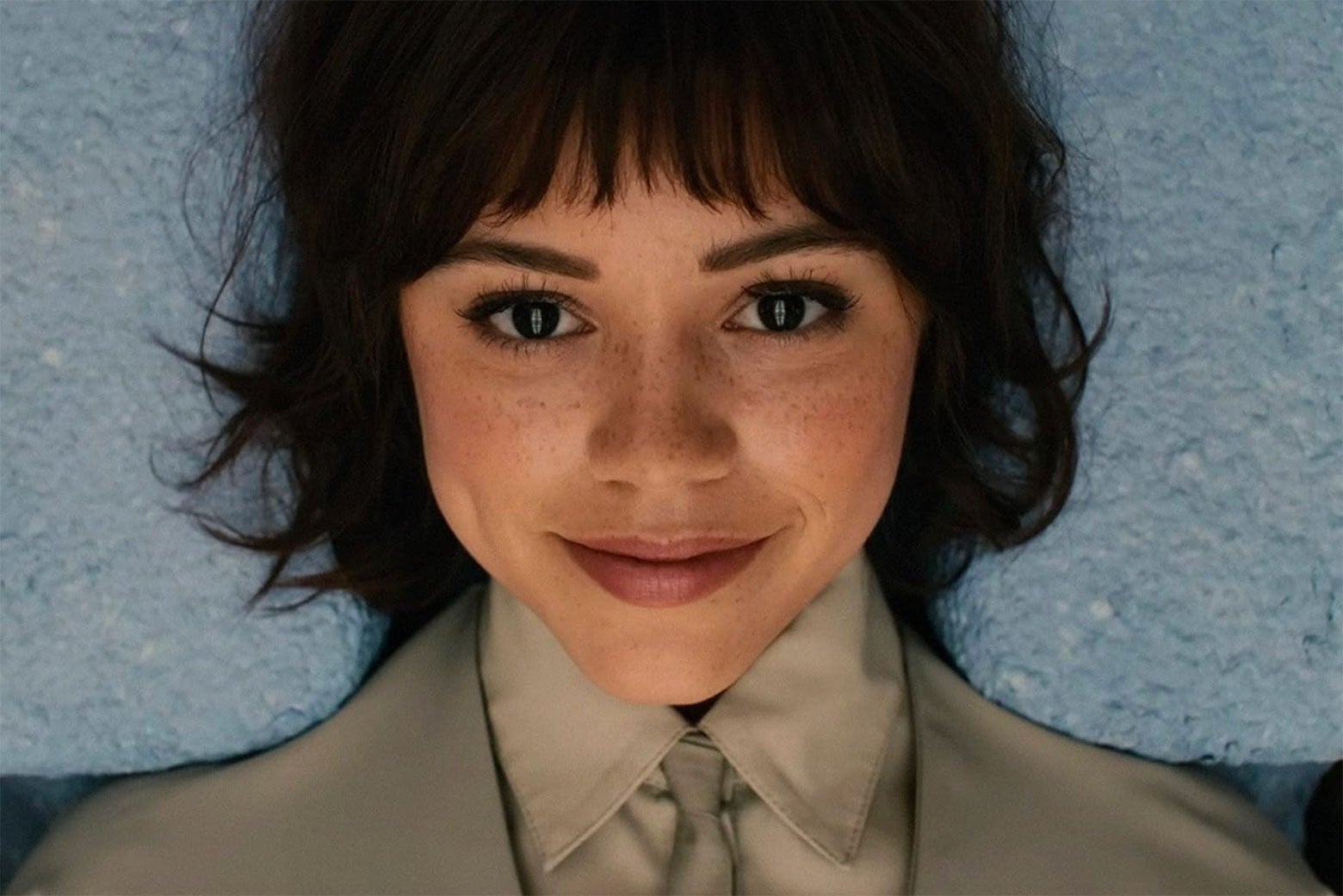
Movies Taika Waititi Adapted Klara and the Sun. The Result Is Very Different From the Book. The film version of Kazuo Ishiguro’s novel is shaping up to be a legendary bomb. By Enter your email to receive alerts for this author. Sign in or create an account to better manage your email preferences. Unsubscribe from email alerts Are you sure you want to unsubscribe from email alerts for Laura Miller? Oct 27, 20262:26 PM Columbia Pictures Sign up for the Slatest to get the most insightful analysis, criticism, and advice out there, delivered to your inbox daily. If you squint, you can sort of see why Taika Waititi chose to adapt Kazuo Ishiguro’s 2021 novel Klara and the Sun. Waititi is drawn to naive narrators who try to figure out a world the audience understands better than those characters do, as in Jojo Rabbit, which won him the Academy Award for Best Adapted Screenplay in 2020. In Ishiguro’s novel, the title character, an “artificial friend,” is chosen by a lonely 14-year-old named Josie, the daughter of a privileged single mother in some vaguely located future. Through Klara’s innocent eyes, the reader pieces together the grim reality of Josie’s world, a highly stratified society where, to help their kids get ahead, parents have them genetically modified, or “lifted,” a procedure carrying no inconsiderable risk. When Klara learns that Josie is dying as a result of complications from the lifting process, she tries to save the girl she has been programmed to love by appealing to the sun, whose solar rays provide Klara’s own power. In Waititi’s adaptation, Klara (Jenna Ortega), assures Josie (Mia Tharia) that the sun will heal her, but Josie, in a bleak moment, retorts that the sun isn’t a god: “It’s just a burning ball of fire that can’t think or feel.” As in Ishiguro’s 2005 masterpiece Never Let Me Go, the novel Klara and the Sun doesn’t deny that the universe its characters inhabit is unfeeling and meaningless, and that the rest of humanity often follows suit, albeit under the merest veneer of concern. The unsophisticated, even banal voices with which Ishiguro’s characters narrate their stories make them seem like children or the adherents of a cargo cult. Klara’s beliefs are incorrect; the sun doesn’t care about her at all. But her false faith shields her from the world’s coldness and cruelty, facts she’s incapable of comprehending. Like the clones in Never Let Me Go, no one in Klara’s life thinks of her as having any inherent worth. She was created only to meet the needs of more important others, and will be casually disposed of once she serves that purpose. Knowing that, is it so terrible that Klara has formed a sort of religion to comfort herself? Isn’t all religion just such a bulwark against the void? These are challenging ideas that Waititi appears reluctant to embrace, resulting in a muddled movie that has been received poorly. One big difference between how Ishiguro and Waititi handle these questions is that Ishiguro doesn’t answer them. In the movie, the delicate existentialism of Ishiguro’s novel gets swamped by Waititi’s relentless whimsy and a sentimentality that seems to be obligatory in Hollywood. The film version of Klara and the Sun doesn’t much care whether Klara is deluded. What matters is whether she has a “dream,” described by the ordinarily pragmatic Josie in a jarringly boosterish conversation as “anything you want to happen, really bad.” Other heartwarming messages Klara learns are that even when your boss has to tell you to “stop doing weird things,” you can still find someone to love you and that “it’s OK to be broken.” It’s not that the deeper counterpoint to all this pop-culture pep-talking has been entirely purged from Waititi’s movie. He gestures at times toward the starker truths in Klara’s story. But these touches are no match for Ortega’s superhuman cuteness, her large, round, childlike head and dimpled smile, or for the way Michael Giacchino’s saccharine score showers the audience with tinkling chimes as the camera zooms in on Klara’s wonderstruck face. If Waititi were willing to make Klara’s situation a bit more forlorn, or to press a bit harder when pointing out the futility of her efforts, the movie might have worked as a satire of Hollywood’s morale-priming clichés, all that palaver about how “you can do anything if you try,” the indomitability of the human spirit, and the transformative power of love. Perhaps someone involved in the making of Klara and the Sun feared that hewing closer to Ishiguro’s novel would make the movie uncommercial. Instead, Waititi’s inability to commit has resulted in what’s shaping up to be a legendary bomb, with an opening-weekend box office of just $725,000 after Sony Pictures reduced the number of theaters the movie would run in. That dismal opening, and the accompanying chatter about Waititi’s failure to live up to his initial promise, is a shame, because Waititi can be truly funny. As a filmmaker, he’s at his best when deflating grandiose and menacing figures by showing them to be as subject to the vanity and petty indignities of everyday life as the rest of us. Even centuries-old vampires bicker with their roommates at house meetings, and Hitler is a pathetic little man who can’t grow a real mustache. There isn’t a figure like that in Klara and the Sun, so the movie’s comedy comes from Klara’s cheerful cluelessness and slapstick derived from her difficulty navigating complex phenomena in the physical world, like walking through a field of tall grass. None of this is funny enough to make up for the movie’s skittishness when to comes to the story’s tragic dimension. To be fair to Waititi, though, Klara and the Sun might be unfilmable—not as a big-budget project at least, and not because of any technical challenge. Ishiguro’s novel simply refuses to deliver what most audiences expect from a movie. It doesn’t dispense lessons and messages. Instead, Ishiguro depicts the human condition, a state of uncertainty that even a sentient robot inhabits. What makes Klara different from her creators isn’t her capacity for emotions, let alone love, but the fact that, unlike her, we have the capacity to understand this, even if we’re rarely willing to try. Books Movies
Taika Waititi Adapted a Strange and Beautiful Novel. The Result Is Shaping Up to Be a Legendary Bomb.
Full Article
Original Source
Read the full article at Slate →KhanList aggregates and links to publicly available news content. We do not host full articles from third-party sources. Always verify important information with original sources.