
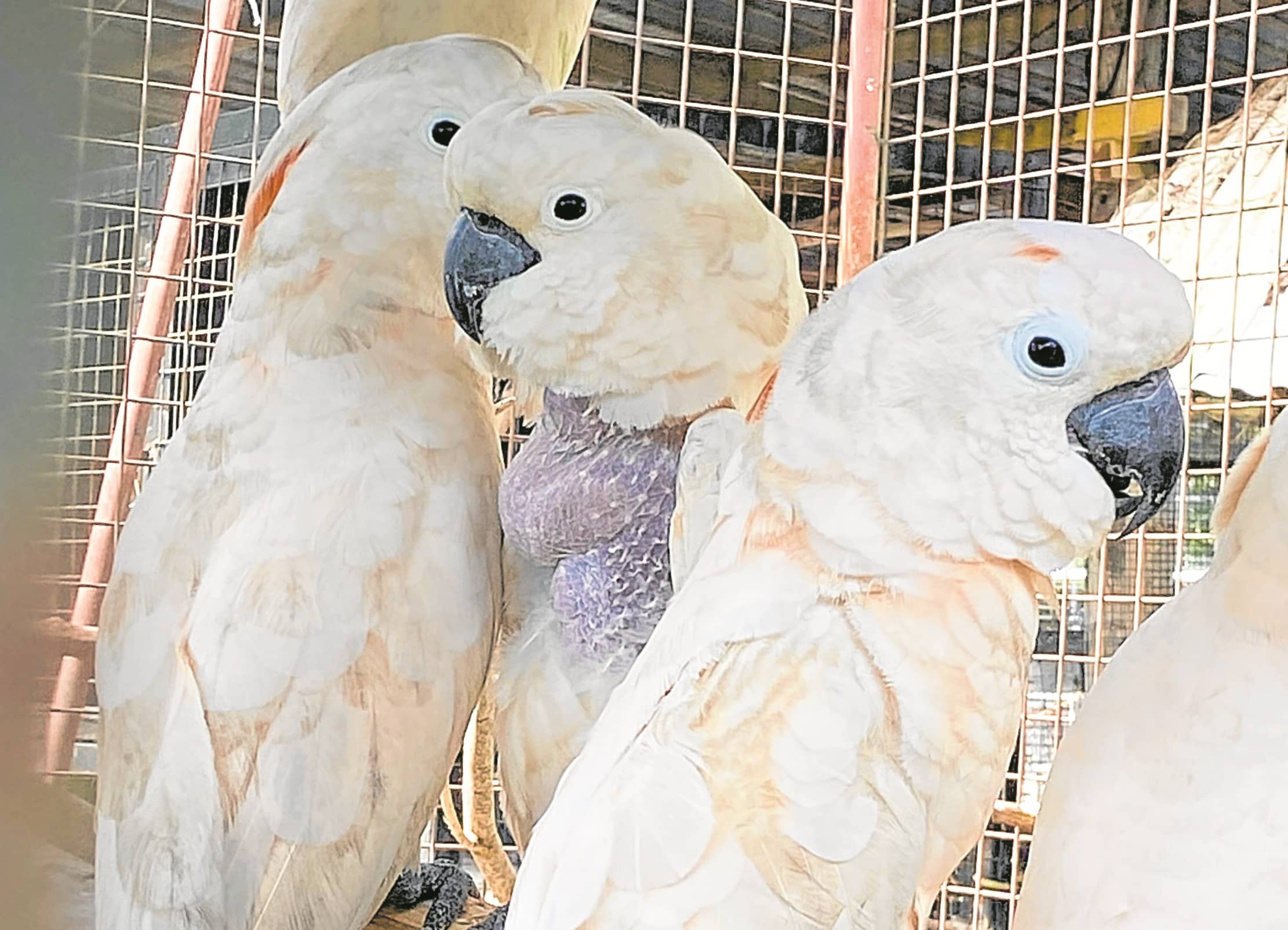
POACHED The smuggling of live Indonesian wildlife—particularly parrots—into the Philippines has been documented formore than three decades. Photo shows distressed birds with feathers plucked, behavior they engage in due to the toll ofprolonged captivity. —Contributed photo MANILA, Philippines — In early July, Haribon Foundation met with wildlife and law enforcement officers in Quezon City, Davao, and General Santos City to strengthen the fight against the illegal cross-border trade of Indonesian parrots—a trade that conservationists warn threatens not only endangered birds, but public health as well. Illegal wildlife trade in the Philippines was once tied to physical markets. Not anymore, shares Dr. Esteven Toledo, in charge of the Wildlife Rescue Center under the Department of Environment and Natural Resources-Biodiversity Management Bureau (DENR-BMB) and CITES (Convention on International Trade in Endangered Species of Wild Fauna) wildlife enforcement officer. “Famous illegal wildlife trade hubs like Cartimar—they’re now gone. The greatest challenge now is the illegal wildlife trade on the internet,” Toledo said. Article continues after this advertisement He also warned that trafficked animals pose a health risk to people, since they skip the health checks required for legally imported wildlife. READ: PH LOSING P50B A YEAR TO ILLEGAL WILDLIFE TRADE “These animals are coming from the wild, and they are not subjected to any health assessment or the usual process of importing or exporting animals. There is a potential risk of spreading zoonotic diseases like Covid-19,” he said. The meetings brought together officers from the Philippine National Police, the Philippine Coast Guard, the DENR-BMB, and other government partners. Coordination for deterrence Discussions covered updates on Haribon’s ongoing work to curb the illegal parrot trade, as well as next steps for tackling it together—for the sake of the birds, and for the people on both sides of the border whose safety is also at stake. Article continues after this advertisement For Rjay Serrano, research specialist at Haribon, the meetings reinforced a lesson that has shaped the project from the start: No organization can dismantle the trade without help. “Tackling the illegal parrot trade isn’t something any single organization can do alone. When different groups collaborate, we see better results. More seizures are done, more wildlife traders are being prosecuted,” said Serrano. Article continues after this advertisement “Coordination ensures that law enforcement know what to do from seizure to prosecution, creating a deterrent that makes illegal traders think twice.” Toledo added that the public has a role to play too. “We should not patronize illegally collected or traded wildlife. When the buying stops, the poaching and the hunting will stop as well,” he said. Three-decade smuggling The July meetings were part of Haribon’s Tackling Cross-Border Bird Trade: Indonesian Parrots in the Philippines project, which worked with various law enforcement and environment officials across key transport and confiscation points in Luzon and Mindanao. The illegal wildlife trade is considered the second biggest threat to species survival globally. The smuggling of live Indonesian wildlife—particularly parrots—into the Philippines has been documented for more than three decades, costing the country an estimated $1 billion a year. From 2010 to 2020, more than 67,500 wildlife specimens were confiscated from 523 suspected violators in the Philippines, while 763 birds endemic to Indonesia were seized in 2022 alone. The project focuses on gathering data on traded species and trade routes, supporting law enforcement, raising awareness, shaping policy recommendations, and strengthening cooperation between the Philippines and Indonesia. Haribon is the Philippine national partner of BirdLife International, the world’s largest nature conservation partnership. Haribon is working closely with its BirdLife partner in Indonesia, Burung Indonesia, to align efforts on both sides of the border where the trade begins and ends. Your subscription could not be saved. Please try again. Your subscription has been successful. The project is supported by BirdLife International, March Conservation Fund, and Mandai Nature. —Contributed
Tackling illegal wildlife trade, from Cartimar to the internet
Full Article
Original Source
Read the full article at Newsinfo →KhanList aggregates and links to publicly available news content. We do not host full articles from third-party sources. Always verify important information with original sources.