
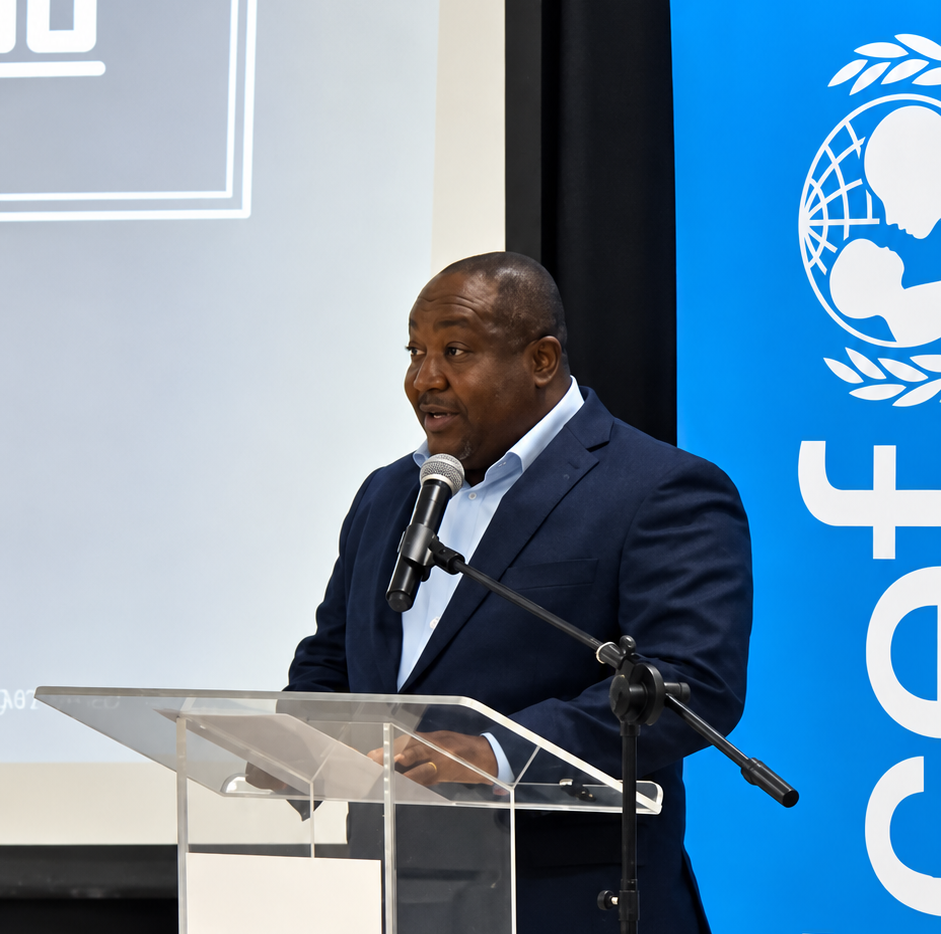
Communication Specialist at CDEMA Keith Goddard. (Photo Credit: Shanna Moore) Barbados could face a “new normal” of longer and more frequent dry spells for up to four months of every year by mid-century, a new regional climate analysis has warned, placing growing pressure on water supplies, farming, public health and school sanitation. The researchers warned that repeated climate shocks can eventually contribute to malnutrition, interruptions to schooling and other consequences for children that continue after the immediate event has passed. The warning comes after months of warnings from forecasters about drought, below-normal rainfall and extreme heat, while low reservoir levels have affected water supply in some communities. A new UNICEF-commissioned study projects that moderate to severe drought could occur across the Eastern Caribbean for three to four months of the year on average by the mid-century, with Barbados and Grenada standing out among the projections. “By mid-century, moderate to severe drought could occur almost a third of the time, from around 21 per cent in the model baseline,” researcher Irina Bird Reddiar said as she presented the findings in Saint Lucia on Wednesday. “The increase is particularly strong in Barbados and Grenada.” UNICEF Eastern Caribbean Area Office Representative Maryam Abdu. (Photo Credit: Shanna Moore) The projections are contained in the Child-Centred Climate Analysis for Building Resilience, commissioned by the UNICEF Eastern Caribbean Area Office and undertaken by consultant Meru Labs across Barbados, Dominica, Grenada, St Kitts and Nevis, Saint Lucia and St Vincent and the Grenadines. Though the Barbados Water Authority did not attribute low reservoir levels to drought, the new regional analysis warned that more frequent dry conditions will place increasing pressure on water supply, agriculture and school sanitation. “Drought will become the new normal,” Reddiar said. Beyond the annual dry season that runs from December to May, the study predicts that “moderate to severe drought conditions are projected to occur for three to four months each year on average. And for countries that depend on rainfall, water supply, agriculture and school sanitation, this is a fundamental challenge”. Farming is among the areas of concern, with the study citing evidence that drought events can reduce food output by between 20 and 40 per cent. For families dependent on farming and other climate-sensitive livelihoods, reduced production can mean lower household income and increased food insecurity. Water shortages can also affect sanitation and other essential services, including at schools. The projections align with the drier conditions Barbados has been experiencing since the rainy season began in June. In June, the Barbados Meteorological Services warned that drought conditions could persist for months despite the start of the wet season, with rainfall expected to remain near or below normal through October. Drought warnings were in place for June and July, followed by watches through October. The Met Office said at the time that while Barbados had recorded 278.4 millimetres of rainfall up to the end of May, most of it had fallen during just a few days in January and March, leaving vegetation particularly stressed in southern and south-western districts. Forecasters also cautioned that occasional heavy showers would not necessarily solve the problem, since short bursts of rainfall do not replenish freshwater aquifers as effectively as prolonged rainfall. Earlier this month, Barbadians were warned about persistent high temperatures and to guard against heat exhaustion, dehydration, heatstroke and fainting as hot conditions were expected to continue through September and October. Water aquifers and the reservoirs they feed have also been unseasonably low. Last month, the BWA advised that low levels at Bowmanston, St John – a vital water catchment serving rural Barbados – could result in low water pressure or temporary outages for sections of St John, St George and St Philip. Water tankers were dispatched to assist affected communities. For Barbados, the drought projections come alongside another concern identified by the researchers: rising temperatures. The study projects that temperatures across the six Eastern Caribbean countries could rise by approximately 1.4 C by mid-century under a high-emissions scenario. That could translate into more than 80 additional days each year above 30 C and more than 10 additional days above 32 C. “These are the days on which learning, health and outdoor work are seriously problematic,” Reddiar said. The study also found that the timing of the threats could compound their effects, with peak heat and the hurricane season overlapping between August and October, around the beginning of the school year. Saint Lucia’s Minister of Agriculture, Fisheries, Food Security and Sustainable Development Lisa Jawahir said governments needed to start treating spending on climate resilience as part of their annual budget planning. Minister of Agriculture, Fisheries, Food Security and Sustainable Development in Saint Lucia, Lisa Jawahir. (Photo Credit: Shanna Moore) In a discussion following the presentation, Jawahir argued that countries could not wait until the effects were being felt before finding the money to respond. “We need to make sure when there are budget discussions, some of these issues on climate are reflected as something that the Ministry of Finance should see the need to say, you know what, we need to put money now on a yearly basis so that we don’t get our children to that place.” Jawahir likened preparedness to making sure a child had an umbrella before the rain started: “We need to give them umbrellas [before] the rain starts. “We cannot wait until the rain is falling to buy the umbrella.” The study calls for measures including climate-smart agriculture, improved water security, livelihood diversification and nature-based solutions. It also points to early-warning systems, pre-positioning essential supplies and financing that can be activated ahead of forecast hazards. But consultations conducted as part of the research found that anticipatory and shock-responsive measures remain underfunded relative to longer-term structural investments. Limited budgets and the capacity to prepare funding proposals were among the barriers identified by regional stakeholders. And while the projections look towards the middle of the century, Reddiar cautioned against treating the climate pressures identified in the study as something countries only needed to prepare for in the distant future. “This is not a future scenario. It’s already happening,” she said. (SM)
Study: 80 more days a year above 30 C by mid-century
Full Article
Original Source
Read the full article at Barbadostoday →KhanList aggregates and links to publicly available news content. We do not host full articles from third-party sources. Always verify important information with original sources.