
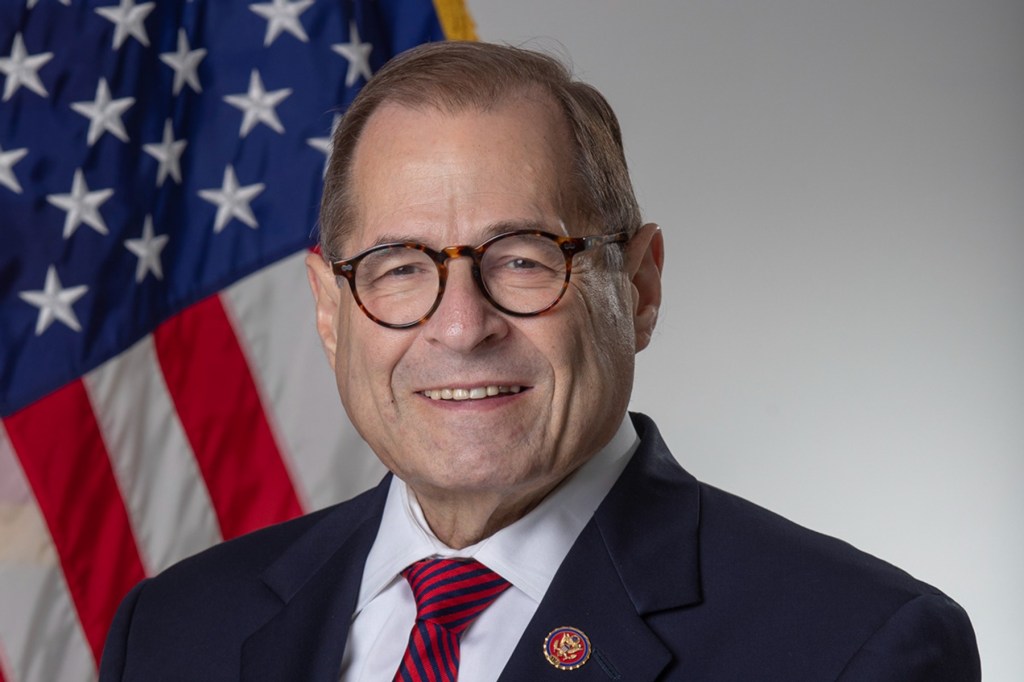
Big Tech has built AI on stolen intelligence, and Trump's DOJ is helping them get away with it. Rep. Jerrold Nadler Courtesy of the Office of Congressman Nadler For over 30 years, I’ve had the privilege of sitting on the House Judiciary Committee, and one of my priorities has been to ensure that the most powerful companies are held to account for ripping off Americans. As we grapple with fast-moving technological change, lawmakers must be vigilant that new technologies do not create new socio-economic harms. Sadly, some of the largest and wealthiest AI companies are running roughshod over intellectual property (IP) rights. Far from being “super intelligence” — as President Trump calls it — when you look at how these models are trained, they can more fittingly be described as “stolen intelligence.” There are currently dozens of lawsuits in the U.S. and around the world alleging that AI companies have violated copyright by training their models on millions of articles, songs, books, voice recordings, videos and other creative content without permission and without payment. Related The outcome of these lawsuits will have far-reaching ramifications. Worryingly, Trump’s Department of Justice is trying to put its finger on the scale, siding with billionaires in Silicon Valley against the creative and cultural beating heart of America, made up of thousands of journalists, authors, artists, actors, songwriters and musicians. Last month, the DOJ filed a brief in the New York Times v. Microsoft and OpenAI in support of Microsoft and OpenAI. The Times alleges that Microsoft and OpenAI copied millions of its articles to train ChatGPT. Recently unsealed court filings show that a senior Microsoft scientist privately described the practice as “an astonishing theft of unprecedented proportions,” yet Donald Trump and his hand-picked lawyers argue that the clear evidence of market harm isn’t theft, but “fair use.” While just one filing, AI developers everywhere may try to use the Trump Administration’s argument to defend the practice of mass intellectual property theft. It’s not just the free press that’s under attack. Just look at the music industry. Suno, the most widely used AI music generator, is being sued by major record labels for training its model on their recordings without permission. Like OpenAI, Suno claims this is “fair use,” despite admitting in court that it trained on essentially all music files of reasonable quality accessible on the open internet. If the DOJ’s argument takes hold, Suno will have every reason to keep doing it. Related We’re already seeing widespread market harm from Stolen Intelligence across the creative sector. Anyone streaming music has almost certainly listened to an AI-generated track without even knowing it. Most platforms are drowning in AI-generated slop, and AI makes it easier than ever for bad actors to perpetrate streaming fraud — which costs artists and rightsholders hundreds of millions, or even billions, each year, according to experts. This causes real and disproportionate harm to artists and consumers. Every listen on an AI-generated track dilutes the share of streaming proceeds that go to human artists, from global artists to independent musicians hoping a viral song will turn a passion into a career. Consumers are served an imitation without even knowing it, with one label, Sony Music, recently stating they have requested over 260,000 takedown requests of AI deepfakes of their artists and the epidemic becoming “an uphill struggle.” Unless Congress draws a line in the sand, more and more companies like OpenAI and Suno will determine that they can rip off the artists, authors and creators that they rely on to train their models. We cannot let the Trump Administration give permission for mass IP theft by the back door. America can lead the world in artificial intelligence without building it on theft. Stolen Intelligence is not an achievement, it is a liability, and Congress should treat it as one. Congressman Jerrold Nadler has served New Yorkers in elected office for 50 years. Throughout his tenure, he has fought to support creative industries and strengthen protections for artists. Today, he represents New York’s 12th Congressional District in the U.S. House of Representatives. Daily newsletters straight to your inbox Sign Up More From Pro
Stolen (Not Super) Intelligence: Why Congress Must Stop Big AI From Ripping Off Creators (Guest Column)
Full Article
Original Source
Read the full article at Billboard →KhanList aggregates and links to publicly available news content. We do not host full articles from third-party sources. Always verify important information with original sources.