
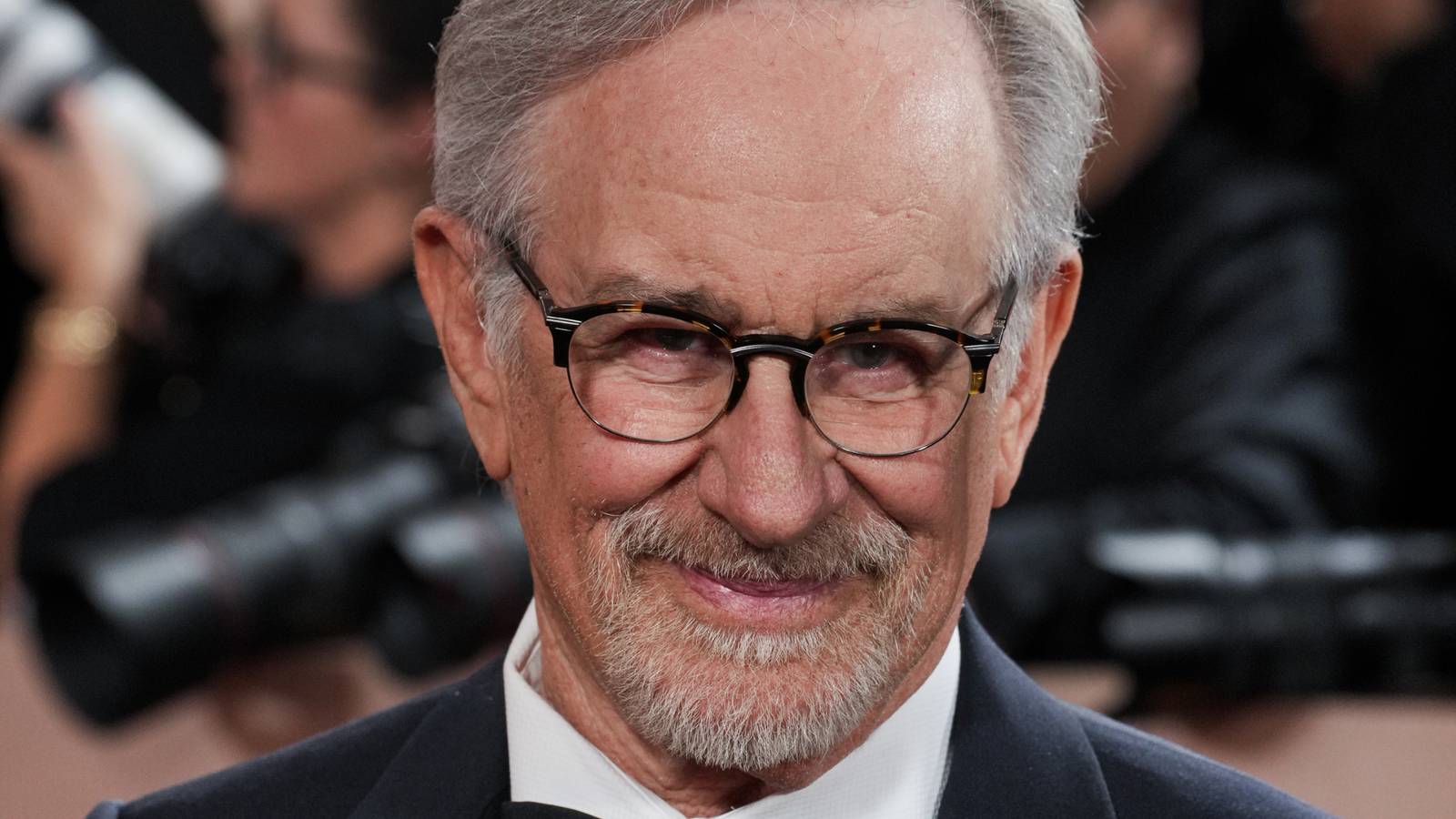
Published Oct 24, 2026, 9:00 PM EDT Richard Craig is a Senior Author at Screen Rant covering film and TV. Richard has also written extensively about horror and film soundtracks, contributing a chapter to the first major academic collection on the folk horror genre, The Routledge Companion to Folk Horror. Richard is also a performing musician and holds an MA in Music and Sound Art. Steven Spielberg has directed some of the greatest science fiction movies ever made, but one of his finest achievements is available to watch for free on YouTube. Science fiction has always offered filmmakers a chance to imagine what lies beyond the limits of human understanding. The very best sci-fi movies explore humanity’s curiosity about the universe, their place within it, and the possibility that reality might be stranger than people realize. Steven Spielberg has repeatedly shown himself to be a true master at exploring these. Spielberg excels at grounding extraordinary events in recognizable human emotions. His characters aren't always scientists or soldiers equipped to deal with the impossible; they're ordinary people whose lives are suddenly disrupted by something beyond their understanding. That perspective makes the unknown feel both terrifying and full of possibility. Spielberg's fascination with extraterrestrial life has produced wildly different films, from intimate stories about unlikely friendships to frightening depictions of humanity under attack. Yet one movie established the approach that would influence much of his subsequent work, combining spectacular filmmaking with a profound sense of wonder. Close Encounters of the Third Kind (1977) changed Hollywood's relationship with science fiction, arriving at a pivotal moment when the genre was becoming a major commercial force. With another Spielberg sci-fi film released in 2026, there's an excellent reason to revisit the classic that started it all, which is free to stream on YouTube. Steven Spielberg Delivered A Sci-Fi Masterpiece With Close Encounters Of The Third Kind Close Encounters of the Third Kind depicts Roy Neary (Richard Dreyfuss), an Indiana electrical lineman whose life changes after witnessing an unidentified flying object. Unable to explain what he saw, Roy becomes obsessed with a mysterious shape that keeps appearing in his imagination. Meanwhile, Jillian Guiler (Melinda Dillon) searches for her young son Barry, who has also encountered the inexplicable. Their stories converge as government investigators, led by French scientist Claude Lacombe (François Truffaut), investigate a series of UFO sightings. The mystery eventually leads to Devil's Tower in Wyoming, where humanity prepares for an extraordinary encounter. Spielberg builds suspense through unexplained lights, strange sounds, and mysterious communications rather than conventional alien-invasion action. The extraterrestrials’ intentions remain uncertain, making the eventual meeting all the more compelling. The climactic sequence is a triumph of cinematic spectacle. The enormous mothership, dazzling lights, and John Williams' unforgettable five-note musical motif create an encounter that feels simultaneously overwhelming and welcoming. Music becomes a means of communication, suggesting that humanity might bridge the gap between species without firing a single shot. Dreyfuss gives Close Encounters an equally compelling emotional centre. Roy's obsession damages his relationships and disrupts his family life, making him a flawed protagonist rather than a conventional hero. His desperate need to understand what he experienced drives the story towards its unforgettable conclusion. Close Encounters received eight Academy Award nominations and won for Vilmos Zsigmond's cinematography. Its visual effects and sound design helped establish new standards for science fiction filmmaking. Close Encounters Helped Reinvigorate The Sci-Fi Genre The late 1970s marked a turning point for science fiction cinema. In 1977, Close Encounters of the Third Kind arrived alongside George Lucas' Star Wars. The films offered contrasting visions of the genre. Star Wars delivered space battles, exotic worlds, and swashbuckling adventure, while Spielberg explored the possibility of peaceful communication with extraterrestrial life. Both became major commercial successes, showing Hollywood that science fiction could appeal to mass audiences without sticking to a single formula. The momentum continued with Richard Donner's Superman (1978), which brought superhero spectacle to new heights, plus Star Trek: The Motion Picture (1979), which took the television franchise to cinemas. The 1980s followed with a remarkable range of films, including E.T. the Extra-Terrestrial (1982), Blade Runner (1982), The Thing (1982), and Back to the Future (1985). These movies approached science fiction from different directions, spanning family adventure, dystopian drama, horror, and comedy. What connected many of them was Hollywood's growing willingness to invest in technically ambitious productions with broad commercial appeal. Close Encounters was particularly influential because its climax prioritizes communication over conquest. It proved that a science fiction blockbuster could deliver spectacle without relying on a battle to save the world. Close Encounters Has Defined Spielberg's Sci-Fi Career Spielberg's fascination with extraterrestrial life didn't end with Close Encounters. The film established a storytelling approach he would revisit throughout his career, placing ordinary people at the center of extraordinary events. His most obvious follow-up was E.T. the Extra-Terrestrial (1982). Spielberg had considered a sequel to Close Encounters before pursuing a different story about a stranded alien befriending a young boy. Elliott (Henry Thomas) helps E.T. return home, creating an intimate story of friendship and separation. Like Close Encounters, E.T. features a spectacular UFO reveal. Spielberg later took a darker approach with War of the Worlds (2005). Starring Tom Cruise as a father trying to protect his children during an alien invasion, this replaces wonder with panic as humanity struggles against an overwhelmingly powerful enemy. Its focus on an ordinary family caught in a global catastrophe nevertheless reflects the human perspective that made Close Encounters so effective. Across many films, Spielberg has moved between wonder, horror, and futuristic adventure without losing his interest in the people caught up in extraordinary circumstances. Close Encounters remains the clearest expression of that approach, balancing cosmic mystery with an intensely personal story. Close Encounters Got A Great Spiritual Sequel In 2026 Nearly five decades after Close Encounters, Spielberg returned to extraterrestrial mysteries with Disclosure Day (2026). Starring Emily Blunt, Josh O'Connor, Colin Firth, Eve Hewson, and Colman Domingo, the film revisits what happens when humanity can no longer deny that it isn't alone. Blunt plays a Kansas City weather presenter who experiences something inexplicable, while O'Connor portrays a journalist investigating the truth. As evidence of extraterrestrial intelligence emerges, powerful institutions struggle to control what the public discovers. Unlike Close Encounters, which builds towards a meeting between humans and aliens, Disclosure Day examines the consequences of a revelation that could change the entire world. The two films aren't directly connected, but their shared themes make them natural companions. Both explore the tension between curiosity and fear, asking whether people and institutions are prepared to confront evidence that challenges humanity's place in the universe. Disclosure Day offers a new perspective on Spielberg's enduring interest in alien contact. Watching it alongside Close Encounters of the Third Kind highlights how the director's approach has evolved while retaining its fascination with the unknown.
Steven Spielberg's 135-Minute Sci-Fi Movie Streaming Free On YouTube Is A 10/10 Masterpiece
Full Article
Original Source
Read the full article at Screenrant →KhanList aggregates and links to publicly available news content. We do not host full articles from third-party sources. Always verify important information with original sources.