
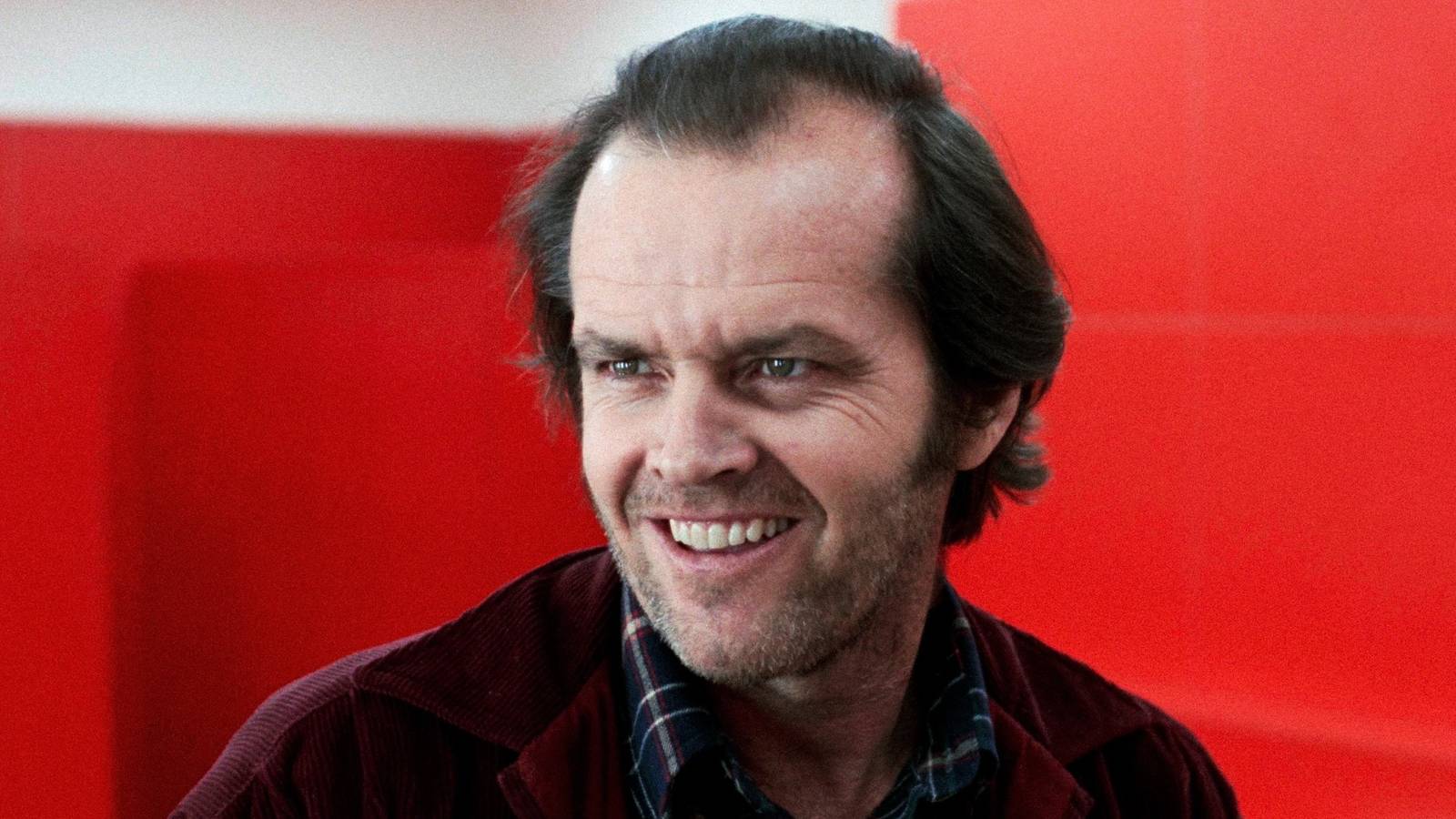
Image via Warner Bros. Published Nov 19, 2026, 5:45 PM EST Michael Block is a 14 time GLAM Award nominated writer, producer, and host of the podcast Block Talk. Throughout his time in the entertainment industry, he has worked on and off Broadway as a stage manager, written several produced plays, critiqued hundreds of theatrical performances, drag and cabaret shows, and has produced events randing from drag competitoons to variety concerts! On Block Talk, he interviews nightlife personalities, covers the wide world of entertainment through features, ranking episodes, and recaps ALL of Drag Race, as well as Dragula and Survivor. He has interviewed hundreds of RuGirls that span the globe at DragCon NYC, DragCon LA, and DragCon UK. In his free time, he makes one-of-a-kind jewelry and gift baskets with his mom. He is a proud member of the LGBTQ+ community. Sign in to your Collider account There is simply no one as prolific in the modern literary realm as Stephen King. Dubbed the King of Horror, the genuine genius proved that horror was his wheelhouse, but he could also put out monumental hits in the suspense, crime, science fiction, fantasy, and mystery realms. Between creating iconic characters and crafting tales that have infiltrated our nightmares and then having them cemented into media history through the power of film and television adaptation, King’s influence on entertainment and pop culture is undeniable. With more than five dozen novels and hundreds of short stories, King’s track record of authoring masterpieces is quite high. But which of those masterpieces are the very best? We’re here to create eight titles that fit the brief. While fans may have their own list of favorites, this group spans a strong range of themes, genres, and eras. We will mention their impact and adaptations when necessary, but most of our discussion will center around the book itself. What’s your favorite Stephen King book of all time? 8 'The Running Man' (1982) Image via Signet Books First published under the pseudonym Richard Bachman, the dystopian thriller The Running Man became an almost prophetic wonder. Set in a dystopian, economically ruined America in the year 2025, the narrative follows an unemployed, desperate father named Ben Richards who enters a deadly reality TV game show to pay for his gravely ill daughter's medicine. To win a one-billion-dollar prize, Richards must survive for 30 days while being hunted across the country by ruthless professional killers and a bloodthirsty public. As he evades capture across multiple states, he uncovers dark truths about the totalitarian network running the games, culminating in a violent final confrontation. The novel stands out for its relentless pacing, sharp satire of media and inequality, and raw, desperate protagonist. A profound novel within King’s catalog, The Running Man anticipated reality television, audience participation, and the public's willingness to treat human suffering as entertainment. Viewers don't just watch the lethal manhunt; they are financially rewarded for turning contestants in, making the audience complicit. Unlike a traditional invincible action hero, Ben Richards is an impoverished, angry, and physically frail man whose rage and desperation to pay for his sick daughter's medical care drive the story with urgent emotional weight. Written in roughly a week, it carries that same urgency in its pacing, moving at a furious clip. The book takes a much darker, grimmer turn, while its two films lean into a campier approach. In 1987, Paul Michael Glaser directed a loose adaptation starring Arnold Schwarzenegger. Then, Edgar Wright took on a more book-accurate version in 2025, the year the book was set, with Glen Powell playing Richards. 7 '11/22/63' (2011) Image via Scribner What if you had the ability to change history, would you take the opportunity even if it means it will alter the future? That's the main premise of King's daring sci-fi thriller 11/22/63. The novel follows Jake Epping, a high school English teacher who discovers a time portal in the back of a local diner that leads back to the year 1958. Recruited by his dying friend, Jake embarks on a mission to live in the past and prevent the assassination of President John F. Kennedy. Along the way, his plans get complicated as he falls in love with a small-town librarian, realizes history resists change, and confronts the unforeseen consequences of altering the timeline. A masterful time-travel thriller, 11/22/63 was a daring risk that paid off. The novel blends a high-stakes story with an intimate, emotionally grounded love story and vivid historical detail. Rather than treating time travel as a simple fix, King presents the past as resistant, pushing back with obstacles and unintended consequences as Jake tries to alter his newfound present. King backed up his nostalgia with extensive research into the era, capturing everyday textures alongside the tension leading up to November 22, 1963. The novel tackles alternate history in an accessible manner where the true horror is fate itself. While the novel features recurring interest in fragile reality and subtle ties to its broader universe, 11/22/63 stands out for its brazen mechanics and heartbreaking romance. The conclusion leaves a lasting impression by weighing personal sacrifice against the broader consequences of changing history. The novel translated perfectly into a self-contained sci-fi miniseries led by James Franco. 6 'Salem's Lot' (1975) Image via Vintage Publishing If there's one novel that truly defines everything that King is, it's 'Salem's Lot. His second published novel, the horror story follows writer Ben Mears as he returns to his childhood home of Jerusalem's Lot, Maine, to research a local house for a book. He soon discovers that an ancient vampire named Kurt Barlow has moved into the mansion and is turning townspeople into vampires. A small group of residents band together to fight the spreading infection and survive. A genuine horror masterpiece, 'Salem's Lot transplants classic gothic vampire tropes into a richly detailed, modern small-town American setting using the structure of Bram Stoker's Dracula. 'Salem's Lot is a slow-burning epidemic horror. Suspense builds gradually as isolated disappearances turn into an overwhelming vampiric infection that erodes community trust and normal life. Barlow and his spawn are depicted as genuinely monstrous predators, heightening the dread when ordinary defenses fail. Rather than treating the townspeople as disposable victims, King builds an ensemble of everyday individuals whose secrets, lives, and vulnerabilities make the collapse feel intimate and real. With unshowy prose and a broad portrait of a declining Maine hamlet, the story has been transported to the small screen twice as a miniseries, first with David Soul in 1979 and Rob Lowe in 2004, then as a feature film, the strongest of the three, in 2024 starring Lewis Pullman. 5 'It' (1986) Image via Viking Not only is It a masterpiece, but it also remains a bona fide fan favorite story. The 17th novel written under his own name, it is set in Derry, Maine, where an ancient, shape-shifting entity that preys on children's fears awakens roughly every 27 years to feed, most famously disguised as Pennywise the Dancing Clown. In 1958, a group of seven outcast kids known as the Losers' Club wounds the creature in the town's sewers and swears a blood oath to return if it ever comes back. When the murders resume in 1985, the now-adult friends must confront their repressed childhood trauma and reunite in Derry to destroy the monster permanently. It pairs a sprawling coming-of-age story with layered psychology and cosmic horror for a truly timeless wonder that has remained a part of the entertainment zeitgeist since its release. Across a massive page count, King does a phenomenal job developing seven distinct outsiders whose friendships and mutual support through shared trauma anchor the narrative against overwhelming fear. It may be King's greatest example of establishing deep character bonds. The story weaves between two dual timelines. By doing so, it shows how adult memory, repressed trauma, and lost childhood wonder shape a fight against evil. Though Derry functions like a living character with a dark history and cyclical violence, the greatest non-human character is the creature. Pennywise is the iconic face and physical embodiment of the villain; its ability to shift shapes to match each victim's greatest personal fears makes it one of the most terrifying horror villains in history. The horror goes beyond the single monster, as it manifests as abuse, neglect, hate, and adult indifference. It became a runaway bestseller and spawned major adaptations that have kept the story alive, including the original 1990 TV miniseries starring Tim Curry as Pennywise, a two-part film adaptation with Bill Skarsgard as Pennywise, and a brilliant prequel series, It: Welcome to Derry. Collider Exclusive · 8 Questions · 2 Minutes What Is Your Biggest Horror Nightmare? Elm Street · Chucky · Scream · The Conjuring Four horror franchises. Four completely different ways of scaring you. One waits until you fall asleep. One makes sure nobody believes you. One is already in your group of friends. And one is in the house with your family. Answer eight quick questions about how you actually watch horror, and find out which nightmare was built for you. 😴Elm Street(Freddy Krueger) 🧸Chucky(Child's Play) 📞Scream(Ghostface) 🕯️The Conjuring(The Warren Files) FIND YOUR NIGHTMARE → 01 Which horror scene makes you cover your eyes? Four classic images. One of them is worse than the others for you. ASomebody falling asleep when they really should not. BA toy that has moved, and nobody touched it. CA phone ringing in an empty house. DA child talking to somebody who is not there. NEXT QUESTION → 02 You are home alone and you hear a noise. First thought? Everybody has one. It arrives before you have decided anything. AI am exhausted and my mind is playing tricks on me. BSomething in this room is not where I left it. CSomebody is in here with me. DThis house has never felt entirely right. NEXT QUESTION → 03 Which horror movie rule would you break first? Everybody thinks they would survive. Almost nobody actually does. ANever fall asleep. BNever leave it out of your sight. CNever answer the phone. DNever go down to the basement. NEXT QUESTION → 04 Something genuinely frightening happens. What do you do? Not in a film. In your actual living room, tonight. AConvince myself I imagined the whole thing. BTell someone, and brace for them not believing me. CWork out which person I know could be behind it. DGet everybody in the house into one room. NEXT QUESTION → 05 How do you actually watch a horror film? Be honest about this one. Nobody is checking. AFine during. Wide awake at two in the morning. BShouting at the screen that nobody is listening. CCalling the twist out loud before it lands. DThrough my fingers, holding on to something. NEXT QUESTION → 06 Somebody offers you serious money. Which do you still refuse? The amount does not matter. There is one on this list you are not doing. AFall asleep in a room I have never been in before. BKeep an old doll on the shelf facing my bed. CAnswer every unknown number that calls after midnight. DSpend one night alone in a house with a history. NEXT QUESTION → 07 Which feeling stays with you a week after the film? Good horror does not stop when the credits do. ANot wanting to turn the bedroom light off. BNot trusting one particular object in my house. CLooking twice at people I have known for years. DFeeling like something came home with me. NEXT QUESTION → 08 Something wakes you at 3am. What is the worst possibility? Eight questions in, this is the one that decides your nightmare. AThat I am still asleep, and it knows it. BThat the thing nobody believed me about is here. CThat somebody with a key is downstairs. DThat something is in the doorway, watching us sleep. REVEAL MY NIGHTMARE → The Lights Just Went Out Your Nightmare Is…Four franchises, four completely different ways of getting underneath your skin. This is the one built out of your particular fear, why it works so well on you, and what it would leave behind. Elm StreetYour nightmare does not wait outside the door. It waits for you to close your eyes, which you are going to have to do eventually, because nobody has ever won that particular argument. Freddy is horror's cruellest idea: a threat that lives in the one place you cannot guard, cannot lock, and cannot avoid forever. You are the one who is fine during the film and wide awake at two in the morning. Your own head is where this does its damage. These films understood exhaustion as a horror engine. The kids on Elm Street do not lose because they are weak. They lose because they are tired. You can lock every door in the house. You still have to sleep. ChuckyYour nightmare is not really the doll. It is the face of the person you tell, and the way they decide, very kindly, that you have imagined all of it. Chucky works precisely because he is absurd. That is the trap: the more accurately you describe him, the less anybody is going to believe you. You are the one shouting at the screen because the characters are not listening. You know that feeling from real life too. The franchise is at its best when the adults in the room are the real obstacle, and you have met those adults. By the time somebody finally believes you, you will have handled most of it on your own. ScreamYour nightmare has your number, knows your name, and has almost certainly been inside your house before. The worst part is that you already know them. Scream is the only one of these where the killer takes the mask off and turns out to be somebody who was at the party. You are the person who calls the twist out loud before it lands. You watch people the same way you watch films. The franchise made the rules of horror part of the plot, which means the survivors are the ones paying attention. You would be paying attention. Everybody is a suspect, including the person who just offered to walk you home. The ConjuringYour nightmare is not really about you. It is about the people asleep down the hall, and the feeling that whatever is here is not interested in leaving. The Conjuring films are domestic horror. The house, the family, the perfectly ordinary room that quietly stops feeling ordinary. Your instinct is to get everybody into one room. Your fear is protective rather than personal, which is rarer than it sounds. This is the one franchise where belief is the weapon. The people who come through it are the ones who are not alone and refuse to be. Whatever is here did not come for you. It came for the household, and you are the one standing in the hallway. ↻ RETAKE THE QUIZ 4 'Misery' (1987) Image via Viking Press King's greatest psychological horror is a writer's ultimate nightmare: Misery. The twisted masterpiece follows bestselling romance author Paul Sheldon, who is rescued from a severe winter car crash in rural Colorado by former nurse Annie Wilkes. Although she claims to be his "number one fan," Annie keeps the injured writer prisoner in her isolated home and uses painkillers to control him. After discovering that Paul has killed off her favorite heroine in his latest book, Annie violently forces him to write a new novel that brings the character back to life. Misery pairs claustrophobic, grounded psychological horror with a sharp allegory about authorship, creative control, and addiction. Unlike many of King's other pieces, there are no supernatural crutches. The true terror comes entirely from human cruelty, mental instability, and physical helplessness. Misery is an exemplary two-hander. Much of the action traps the injured novelist in a single room in a remote house. Keeping the focus tightly on Paul's survival makes every minute decision and moment of tension feel immediate and personal. That said, Annie may be the greatest antagonist King has ever concocted. She swings wildly between folksy warmth, childish logic, and sudden, brutal bouts of intense violence. King uses the novel to explore a writer's nightmare through creative captivity. It captures the grueling mechanics and pressures of writing in a literally literal way. Further, King uses the dynamic between Paul's painkiller dependency, his obsession with writers, and Annie's erratic control as an allegory for addiction during the height of his own struggles with substance abuse. In the end, writing becomes a tool for endurance and escape, shifting the story toward imagination and survival. Misery was brought to the big screen in 1990 with James Caan as Paul and Kathy Bates, who won an Academy Award for the part, as Annie. It's also been adapted for the stage, and Lizzy Caplan played a younger version of Annie in Castle Rock's second season. 3 'Rita Hayworth and Shawshank Redemption' (1982) Image via Scribner Book Company Part of a larger collection of stories, the realist novella Rita Hayworth and the Shawshank Redemption remains one of King's finest works. The novella follows Andy Dufresne, an inmate wrongly convicted of murdering his wife and her lover, as he endures decades of life at Shawshank State Prison. Told by fellow prisoner Red, the story tracks Andy's quiet resilience, his financial dealings with corrupt prison staff, and his decades-long plan to tunnel out of his cell. Through Andy's enduring hope, Red gradually shifts from a cynical convict to someone who believes in redemption. The story blends a gripping prison-escape narrative with a deeply emotional, resonant heart. King delivers a grounded crime and prison drama modeled after classic Hollywood storytelling, proving his depth and range as a dramatic writer regardless of genre. He miraculously contrasts grim institutional corruption and despair with quiet perseverance and dignity. The novel reads like a reflective, memory-driven account that makes the narrative feel personal, immediate, and rooted in reality. The bond between Red and Andy is a message of enduring friendship, giving the story emotional weight that lasts well beyond the final page. While key changes occurred between the page and the screen, The Shawshank Redemption, starring Tim Robbins and Morgan Freeman, is hailed as one of the greatest adaptations of King's work. 2 'The Stand' (1978) Image via Random House USA Inc Few King novels hit as hard as The Stand. The epic post-apocalyptic dark fantasy centers around a devastating global pandemic caused by a weaponized influenza strain known as "Captain Trips." After the virus accidentally escapes a military facility and wipes out over 99% of humanity, the few immune survivors are drawn by a shared dream into an elemental battle between good and evil. The survivors split into two opposing factions, one building a peaceful community around the benevolent 108-year-old Mother Abagail in Boulder, Colorado, and the other gathering under the demonic Randall Flagg in Las Vegas. It all comes to a head in a final confrontation that decides humankind's fate. The epic masterpiece combines a universal battle between good and evil with a grounded, psychological portrait of ordinary people surviving a deadly pandemic. With an epic scope inspired by The Lord of the Rings, The Stand merges a post-war survival mindset, dark fantasy, and theological themes that divide a broken society. King crafts his story around rich, relatable characters where there is no singular hero but a series of flawed, ordinary individuals whose inner monologues and moral choices drive the narrative. A landmark in King's broader fictional universe, The Stand's original edition was trimmed before an uncut edition arrived in 1990 that truly captured the brilliance of King's storytelling. The Stand has been adapted twice as a miniseries, first in 1994 starring Gary Sinise, Jamey Sheridan, and Molly Ringwald, and then in 2020 featuring Alexander Skarsgård, Whoopi Goldberg, James Marsden, and Odessa Young. The former remains one of the greatest network miniseries ever made. 1 'The Shining' (1977) Image via Vintage Here's The Shining! King's third novel is his very best. The Shining is literary horror at its finest. Jack Torrance, a struggling writer and recovering alcoholic, takes a job as the winter caretaker of the isolated Overlook Hotel in Colorado. He brings along his wife, Wendy, and their young son, Danny, who possesses extrasensory psychic abilities known as "the shining" that let him see the hotel's ghastly past and future. Once winter storms cut them off from the outside world, the malevolent supernatural forces inside the hotel prey on Jack's personal demons and push him toward madness, putting his family in grave danger. The Shining pairs supernatural horror with deeply personal psychological drama, turning an isolated gig into a study of addiction, trauma, and family breakdown. The Shining pulls from King's own personal struggles. The novel's stakes rise as King draws on his experience with alcoholism and frustrations with fatherhood to ground the supernatural story in real, authentic pain. Jack is a man fighting to change, making his unraveling tragic rather than inevitable. Wendy and Danny are given immense depth, showing how past abuse and fear shape the action in the present. The Overlook Hotel is presented as a living force with sentient malice. It functions as a predatory entity that senses weaknesses, feeds on guilt, and exploits individual flaws. With gothic traditions and claustrophobic isolation, King's visceral writing is kept tightly focused on three individuals in one unsettling setting, with sustaining dread established on page one. King has famously disliked the Stanley Kubrick adaptation, as the novel's emotional nuance and character arcs are not nearly the same. And yet, the Jack Nicholson and Shelley Duvall film remains a beacon of prime horror. Though King wrote the 1997 miniseries version starring Steven Weber and Rebecca De Mornay, it pales in comparison. The Shining Release Date May 23, 1980 Runtime 144 minutes Cast Shelley Duvall Wendy Torrance
Stephen King's 8 Greatest Book Masterpieces, Ranked
Full Article
Original Source
Read the full article at Collider →KhanList aggregates and links to publicly available news content. We do not host full articles from third-party sources. Always verify important information with original sources.