
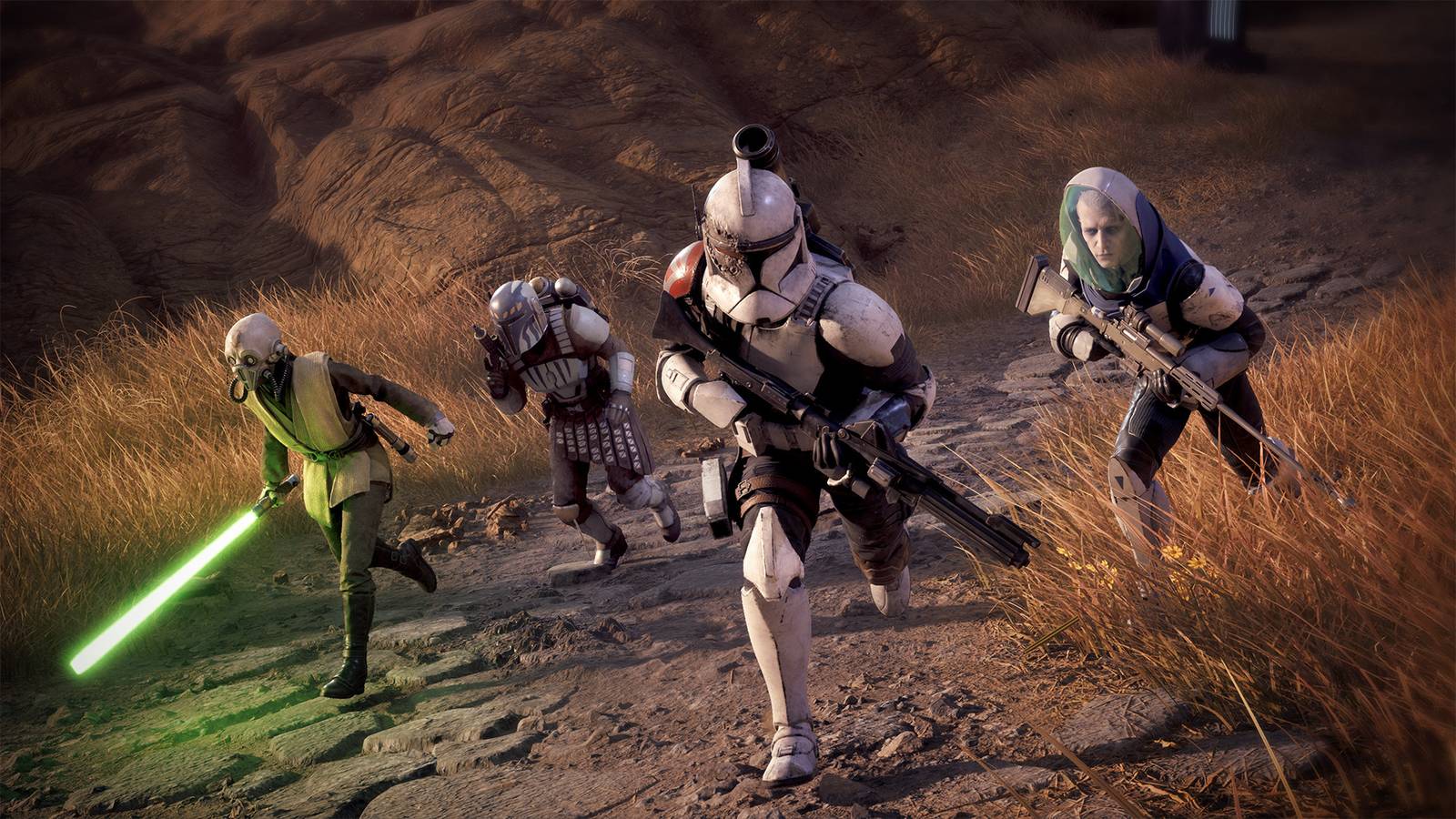
Published Aug 26, 2026, 9:00 AM EDT Zero Company has a touch more Andor DNA than you’d expect. Image: Electronic Arts Let’s make something clear: Despite recent efforts to rehabilitate the Star Wars prequels, these films are simply not very good. George Lucas’ final trilogy is defined by flat direction, cumbersome dialogue, and an obsession with 3DCGI tech that makes nearly every scene detached and alienating — a flaw that’s only worsened with time. Aside from Revenge of the Sith, which still fumbles key moments, these movies are downright tedious, and were rightly panned at release. Even with these flaws, the prequels have one great boon; buried beneath the horrible execution are nuggets of something compelling. Star Wars Zero Company harvests much of this raw potential. Working in a realm pioneered by the Clone Wars TV series, Bit Reactor and Respawn Entertainment’s turn-based strategy game convincingly places us in the late Republic era, where a band of mercenaries ends up way in over their heads as the world crumbles around them. Perhaps most impressively, Zero Company does all this within the margins of a tactics game, as you spend dozens of hours methodically blasting Separatists and cult members in cleverly constructed skirmishes. This combination ends up fitting: you spend so much engrossed in what’s right in front of you, as background news briefings and idle chatter point toward something very dark on the horizon. It’s not your problem until it very much is. You play as Hawks, a disgraced Republic officer in charge of the ailing mercenary crew Zero Company. It’s a ragtag outfit, and while Hawks is former military, their squad takes in all kinds: former Separatists, discharged clones, freedom fighters, legendary warriors, and misfits alike. The group has seen better days. In an effort to clear their deep debt to the Hutts, Hawks begrudgingly takes a job from a Republic intelligence agent who’s looking into something strange: a spiral-obsessed cult called the Coil. From there, Zero Company gets pulled into a conspiracy that increasingly overlaps with the all-consuming Clone Wars. Image: Electronic Arts To avoid overemphasizing Zero Company’s surprisingly compelling storytelling, it’s worth reiterating that most of your time with this very meaty game will be spent fiddling with pieces on a board like you’re playing holochess. At its core, this experience is unabashedly inspired by Firaxis Games’ XCOM: Enemy Unknown. (Zero Company… ZCOM… Get it?) You control a small squad, spending action points to move your units across an isometric battlefield. You’ll move these operatives into cover, have them fire shots with a percentage-based chance of success, and even order them to take a defensive position called Overwatch. In between missions, you’ll prioritize permanent upgrades to your base that improve your units and increase your influence throughout the galaxy, while making decisions about how to improve your troops. But there’s much more to a sound tactics experience than just checking off XCOM’s boxes, and thankfully, Zero Company understands what makes these games tick: the brain-scratching satisfaction of working through battlefields that fit together like puzzles. As you progress, your crew will unlock increasingly specific abilities associated with their classes, offering the tools needed to solve these combat riddles. Use a melee bruiser to knock an enemy out of cover, leaving them wide open for your Marksman. Draw aggro with your Heavy, letting your squishier units hit the flanks unharassed. Use the Scoundrel’s powerful Identify Weakness ability to apply Vulnerable, which guarantees a critical hit. Or just cut people in half with a Jedi. Nearly all of the nine base classes feel fleshed out and useful in some way, especially because you eventually unlock the ability to mix and match. That gives each character a secondary specialization that broadens their toolset and enables sicko synergies. There’s a great deal of freedom to experiment because you can change these classes at any time, tinkering to deal with a particular encounter. While this seems like it would undermine the game’s general emphasis on tough, permanent choices, there are still lasting consequences to how you build your outfit. As your allies form Bonds with one another, they gain stat buffs that probably benefit some classes over others (your tanklike Heavy wants Health and Defense boosts, and so on). Add in the fact that many characters have unique abilities that heavily incentivize certain playstyles — the guy with a melee attack that refreshes all his action points after a kill should probably use a melee-focused class — and you’re getting the best of both worlds. The different enemy types make all the tinkering with weapons, utilities, and skill points worth doing, and while these battles aren’t nearly as harrowing or harsh as in XCOM, the Hard difficulty (which the game recommends for tactics heads) offers enough of a challenge to make it worth thinking through your turns. There’s a lot to consider, because with careful planning, you can take advantage of buffs, AOE attacks, and moves that let units keep attacking to set up board-clearing plays that are a delight to execute. While the penalty for messing up is admittedly too light — allies need to be downed three consecutive times to die permanently — injuries bring stat penalties that can only be healed by spending credits and time, meaning poor play has a cost. While the experience may not quite reach the living-on-a-razor’s-edge highs of 2012’s masterful Enemy Unknown, where every casualty-less victory felt like a minor miracle, it mostly makes up for this by offering plenty of incentive to get through with as few costly mistakes as possible. Hawks is running a business after all. Image: Electronic Arts Between battles, Zero Company does a lot with a little. While these characters don’t get anywhere as much gabbing time as they would in a sprawling RPG like Mass Effect, the dialogue is punchy and to-the-point, as the cast delivers acerbic humor and surprisingly thoughtful asides. Banter melds with politics when the sharp-tongued accountant Runa, who used to work for the Separatists, roasts the embedded Republic Officer Bennic. A holoprojector spits out propagandistic news praising the brave Clone Troopers while condemning General Grievous like he’s a cartoon villain (which, to be fair, he is). A former freedom fighter who experienced Republic occupation firsthand alludes to the dark imperialist heart lurking under the veneer of a failing democracy. Not only is the writing genuinely funny and quick-witted, but the game gets across what it’s like to be a background player in a way that more Jedi-centric stories can’t. Members of your squad have allegiances to either side of the war (or neither), but like most people with political opinions, these views don’t define their every action. Hawks squad isn’t helping the Republic military out of patriotism, but because their short-term goals happen to align. This friction eventually comes to the forefront in an incredibly satisfying way, as what was once background noise becomes an ever-present reality. While not as directly tuned into political happenings as Andor, this story works as a surprisingly incisive prequel, depicting a slow descent into fascism with uncomfortable poignancy. While there’s a lot to love about this mercenary outfit, the main thing holding Zero Company back are its rough edges. At least on PC, I ran into lots of technical issues, including stuttering frame rates, slow load times for enemy turns, and several mid-mission freezes, one of which cost me close to an hour of progress. Overwatch mode feels incredibly wonky too, mostly because the line-of-sight system is inconsistent. While it may look like a particular unit has a clear shot from the isometric camera angle’s elevated perspective, some weird quirk of stage geometry might screw you over. Ultimately, the compelling abilities and engaging strategic challenges make up for these gaffes, but it’s frustrating when you mentally work out a wily turn, only for your best-laid plans to go to waste because your famed Trandoshian hitman somehow can’t see the murderous robot right next to him. It’s not enough to ruin the experience, but these slip-ups can be a bit grating. But still, Star Wars Zero Company surprised me. On top of delivering the XCOM-lite thrills of playing as a field commander, it nails the specifics of this particular time in the Star Wars mythos. Unlike the halcyon image of a “more civilized age” promised by Ben Kenobi, we see the Republic as the messy, flawed institution it was to the average person not living in a Jedi temple on Coruscant. Join Zero Company for the brain-scratching tactics gameplay, stay for a surprisingly clever take on this galaxy far, far away. Star Wars Zero Company will be released Aug. 27, 2026, on PlayStation 5, Windows PC, and Xbox Series X/S. The game was reviewed on Windows PC using a prerelease download code provided by Electronic Arts. You can find additional information about Polygon’s ethics policy here.
'Star Wars Zero Company' does something the prequels never could
Full Article
Original Source
Read the full article at Polygon →KhanList aggregates and links to publicly available news content. We do not host full articles from third-party sources. Always verify important information with original sources.