
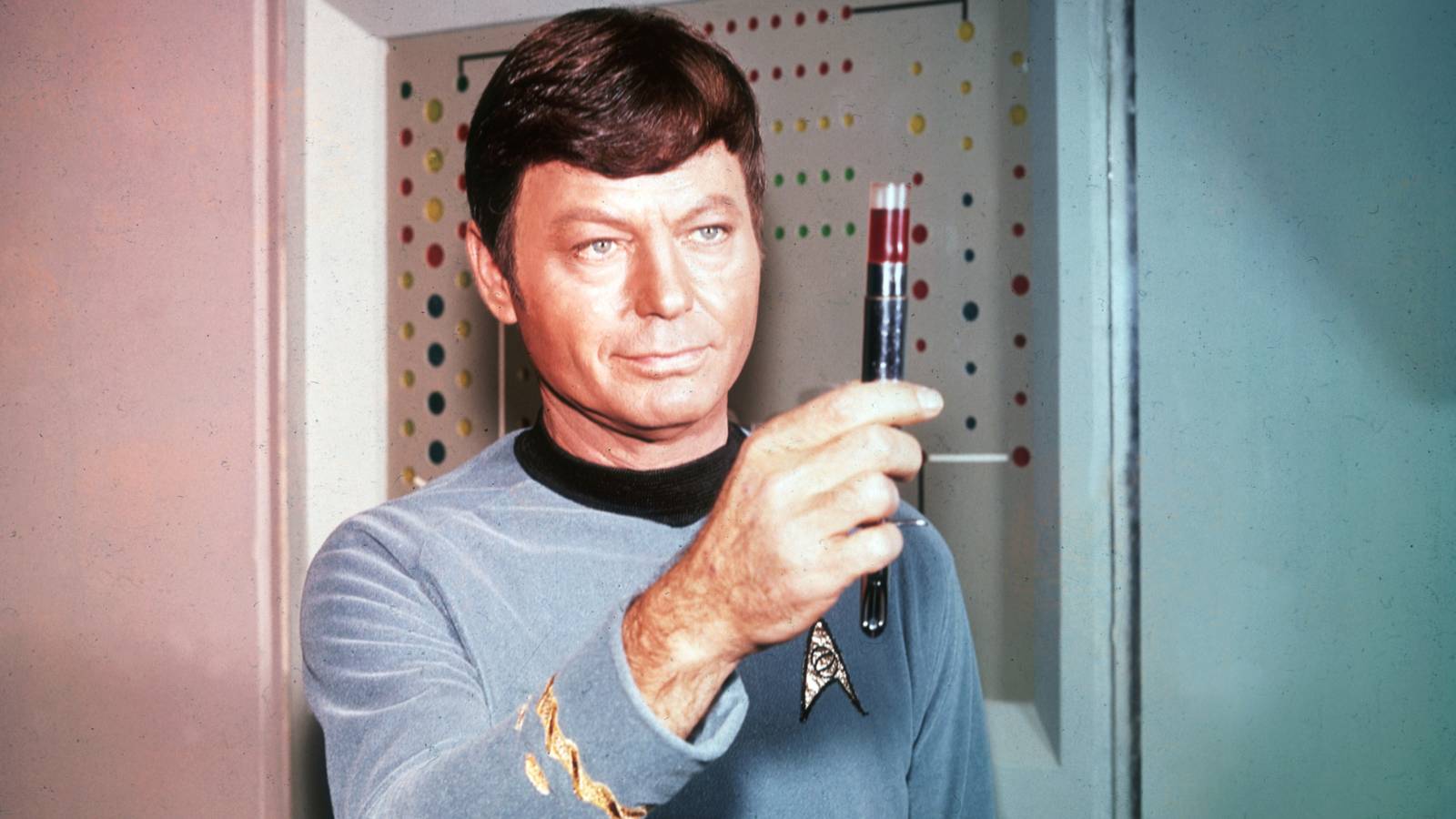
Published Sep 6, 2026, 1:00 PM EDT Laura Hurley has been writing about the entertainment industry for more than twelve years, after a decade as a content producer and editor at CinemaBlend after writing for WhatCulture and Examiner. Attending events like SCAD TVfest and San Diego Comic-Con over the course of her career, she has been immersed in the world of network, streaming, and cable TV. Star Trek: The Original Series was the very beginning of a franchise that has been running for six decades and counting, but there was no way for anybody to know in the 1960s just how successful it would become. Now, not only has the franchise expanded to a total of 13 TV shows and 14 films, but those first three seasons made some surprisingly accurate predictions for 2026, including artificial intelligence. That's not to say that Dr. McCoy was using a Star Trek version of ChatGPT to diagnose any surviving redshirts on the Enterprise, or that Mr. Spock was fact-checking himself via Grok. Still, certain plot points that seemed outlandish in the '60s TV show have been realized in real life. Star Trek: The Original Series went well beyond launching a franchise that would succeed on both the big and small screens; it also portrayed a future that isn't entirely unrealistic anymore. While real-life technology hasn't quite developed to the point of space becoming the final frontier for exploring strange new worlds, one particular episode from 1968 did utilize artificial intelligence. It was 58 years before AI became prevalent, circa 2026. The season 3 episode, called "Wink of an Eye," is available streaming now on Paramount+ for anybody to revisit, and see just what happened for Star Trek to predict AI. Star Trek's First Enterprise Computer Acted Just Like Today's AI Models MovieStillsDB In some ways, "Wink of an Eye" was a typical episode of Star Trek: The Original Series, complete with Captain Kirk romancing one of the humanoids of the week. That said, when the Enterprise was invaded by the time-accelerated people of Scalos, Kirk was accelerated to the point that he was invisible to Spock and McCoy. The goal of the species was to use members of the crew to reproduce. It was up to Kirk to reach out to Spock and McCoy, and Spock and McCoy to figure out a solution, before time ran out. For Spock, solving the mystery involved using the ship's computer in a very different way than usual. He asked the computer open-ended questions about what was happening with the Scalosians invading the Enterprise, and the result was a detailed assessment of the situation. Spock had the option of deciding how to rescue his captain based on the judgment of the computer. It was a minor part of the episode, but the concept would be revisited in later entries in the franchise, and carries quite a bit of weight in 2026. While nobody specifically said in Star Trek lingo that the computer used artificial intelligence, it could certainly be described as AI in modern terms. The computer used its own intelligence to affect the decisions on board the Enterprise in a high-stakes crisis, and that's really not all that different from how AI is used by some people today. AI Isn't The Only Real-Life Development Star Trek Predicted Paramount+ "Wink of an Eye" certainly wasn't the only Star Trek episode to predict the future, and other examples can even be found elsewhere than The Original Series in the '60s. In a season 1 episode of Star Trek: The Next Generation, "Heart of Glory," Geordi predicted both smart glasses and live-streaming. While wearable computers aren't common circa 2026, they certainly exist, and live-streaming is a popular form of entertainment. "Heart of Glory" aired in 1988. In an episode of The Next Generation's third season, called "The Ensigns of Command," Data introduced the concept of music that could be digitally stored and reproduced. The plot point was introduced in 1989, years before the iPod and other devices began to popularize the MP3 format as the best means of listening to music. Drones were used in a 1990 episode of The Next Generation, "The Most Toys," for everything from making deliveries to search-and-rescue missions. Even the communicators, which were used regularly on The Original Series, seemed to predict the flip phones that were popular before the rise of smart phones. Concepts were also introduced early on in the franchise, before they would develop in the real world. Episodes tackled the use of virtual reality, the privatization of space travel (which sent Star Trek's William Shatner to space in 2021), the blending of biology with technology, virtual personal assistants that were created well before Siri and Alexa, and wider acceptance of sexuality and gender, to a certain extent. It's entirely possible that more concepts from Star Trek: The Original Series will come to fruition in the real world in the coming years, and even possible that current shows, like Star Trek: Strange New Worlds, will make some accidental predictions that come true. For now, Paramount+ is the place to find the franchise on a streaming platform. Release Date 1966 - 1969-00-00 Network NBC Showrunner Gene Roddenberry Star Trek follows the U.S.S. Enterprise on its five-year mission to explore the galaxy, led by Captain James T. Kirk and First Officer Mr. Spock. The crew confronts a variety of challenges, including Klingons, Romulans, and genetic supermen, as they search for new life and civilizations.
Star Trek Accurately Predicted AI 58 Years Ago
Full Article
Original Source
Read the full article at Screenrant →KhanList aggregates and links to publicly available news content. We do not host full articles from third-party sources. Always verify important information with original sources.