
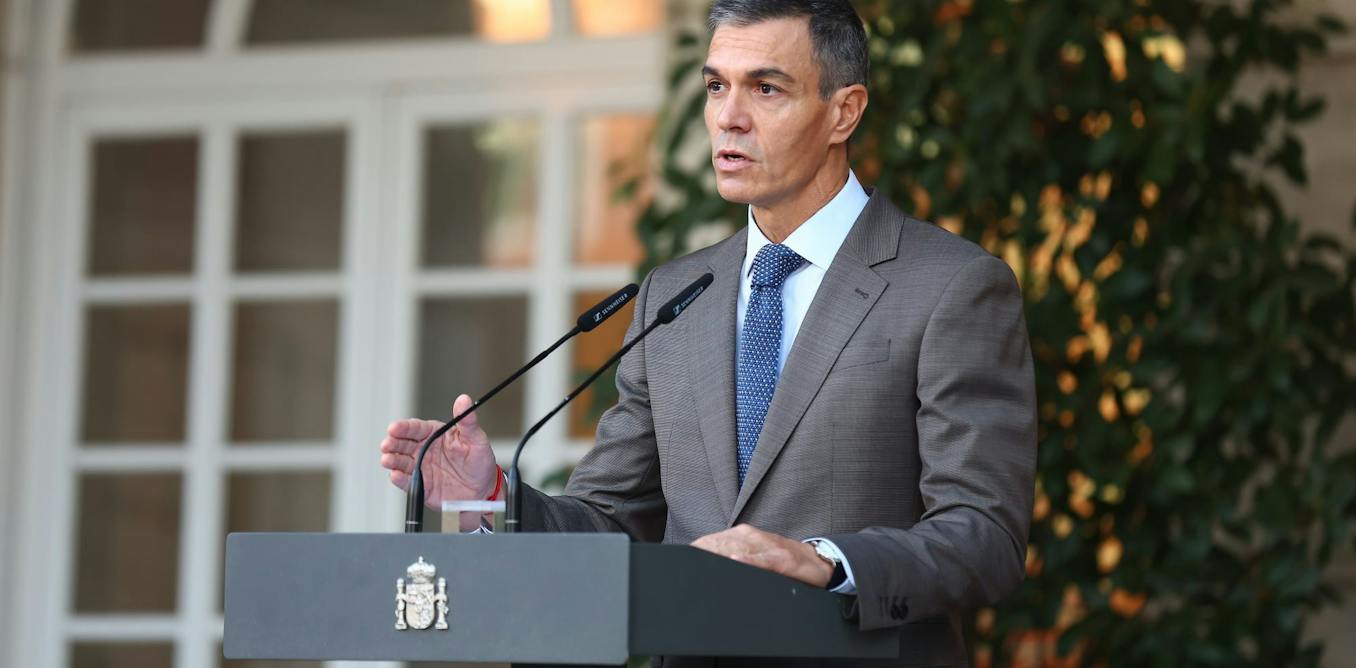
On October 5, Spain’s prime minister Pedro Sánchez called a snap general election for November 29, bringing the vote forward by 10 months. One of the main advantages of being in government is the ability to shape the political agenda. Spain’s system also grants incumbent leaders the power to call (or not call) early elections. So why is Sánchez calling elections now? On the face of it, it seems like like odd timing, as Sánchez’s Socialist party (the PSOE) and the government it leads have been under intense pressure for months. The inner circles of both the PSOE and Sánchez himself have been dogged by years of corruption allegations. The crisis in Ceuta has added further pressure – it shifted the migration debate towards security and deportations, and away from Sánchez’s position of regularisation, employment and inclusion. But recent events have placed housing front and centre. The eviction of Maricarmen Abascal – a disabled 87-year-old in Madrid whose rent was hiked by 230% after an investment fund bought her house – sparked protests across Spain, including encampments in major city centres. Demonstrators at a hosing protest in Madrid, Spain, on September 26, 2026. The banner reads ‘Not one more Maricarmen. Let’s name those responsible’. Barcex/Wikimedia Commons, CC BY-SA The government responded by approving two emergency housing decrees on September 29. Congress rejected both on October 2, with the conservative People’s Party (PP), far-right Vox and Catalan nationalist Junts voting against them. The defeat once again highlighted the government’s parliamentary fragility. But it also offered Sánchez an opportunity to shore up his mandate by campaigning on measures his coalition had proposed and parliament had rejected. For Sánchez, a debate about access to decent, affordable housing offers more promising political ground than corruption allegations, the controversial amnesty for those involved in Catalonia’s independence push, or the right’s portrayal of a migrant “invasion” in Ceuta. Shaping what a campaign is about can itself be a political victory. Sánchez’s timing indicates an attempt to frame the election around the issue of housing, and mobilise frustrated voters around it. Whether he can sustain that focus for two months, and turn it into votes, remains uncertain. Read more: How Spain’s socialist-led government fumbled the Ceuta crisis, and put itself on the back foot Housing at the centre The explosion of housing protests and encampments across Spain have already made one thing clear: ordinary people can shape the political agenda, and bring issues like housing to the centre of national debate. The mass mobilisation put pressure on the government to act, and Sánchez responded with the two emergency decrees. The decrees’ failure exposed a defining weakness of this legislature. The razor-thin parliamentary majority that returned Sánchez to office in November 2023 has never provided guaranteed support for his government’s legislation. Junts’ backing has proved especially fickle. In rejecting the housing measures, Junts once again joined the PP and Vox, both of whom fiercely oppose Catalan nationalism. But nationalist parties are not guided by independence alone – ideological differences and competing policy preferences may occasionally trump broader ideological concerns. Protest camp in Madrid in support of the right to housing. Eneko Torres Peco/Wikimedia Commons, CC BY-SA Another housing controversy has sharpened the political contrast. In July 2026, it was reported that Madrid’s regional PP-led government had spent €6.3 million on a luxury penthouse, to use as a temporary “office”. It was a powerful political image for the left: an elderly tenant forced from her home while the right bought a luxury flat with public money. Housing therefore offers Sánchez a way to keep taking the initiative as the election approaches. His challenge now is to turn the anger expressed on the streets into participation at the ballot box. He is already taking steps to sustain this momentum. With elections announced, the government has announced plans to push revised versions of the blocked housing decrees through Congress’s Diputación Permanente, a smaller parliamentary body that continues to exercise essential functions while Congress is dissolved. Party leaders The PSOE remains largely united around Sánchez, despite parliamentary setbacks and corruption allegations involving members of his party and family. Among the parties to the PSOE’s left, however, the situation is less clear. A new electoral alliance, Frente Amplio (Broad Front), still has to agree on its leaders and members. Former Barcelona mayor Ada Colau and Health minister Mónica García are among the names under discussion, while left-wing party Podemos has yet to confirm whether it will join. PP leader Alberto Núñez Feijóo, pictured here in Zagreb in January 2026, won the most votes in 2023 but failed to form a government. EPP/wikimedia commons, CC BY On the right, Vox’s leadership remains centred on Santiago Abascal, while Alberto Núñez Feijóo leads the PP into another attempt to reach government. Failure to become prime minister would put Feijóo under renewed pressure. Having finished first in 2023 without securing office, he would find a second unsuccessful attempt harder to explain. Regional and nationalist parties – in the Basque Country and Galicia as well as in Catalonia – will also shape the outcome, especially if the PP and Vox fall short of a majority. Read more: Politicians have long misunderstood the ‘working class’. The rise of the far right shows how mistaken they have been Tactical voting Spain’s electoral system could work in the PSOE’s favour. Congress is elected through proportional representation in provincial constituencies. But many provinces elect only a handful of MPs, making it difficult for smaller parties to win seats. The opportunities for representation in the rural provinces of Soria (2 seats) or Teruel (3) are therefore very different from the urban centres of Madrid (38), Barcelona (32) and Valencia (16). This creates an incentive for tactical voting. Some left-wing voters may choose the PSOE over a party closer to their preferences because they consider it better placed to win a seat and prevent a right-wing majority. Sánchez could benefit from that calculation, particularly if the parties to his left remain divided. But current polling paints a difficult picture for the left. Spanish national broadcaster RTVE’s polling average on October 5 put the PP and Vox together above 200 seats, comfortably over the 176 needed for an absolute majority. It suggested losses for the PSOE and a proportionally much steeper decline for leftwing alliance Sumar. These estimates only cover existing parties, meaning they do not acccount for the still-emerging Frente Amplio. Nevertheless, on those numbers alone, a PP-led government supported by Vox looks the most likely outcome. But RTVE’s polling average in 2023 also gave PP and Vox a majority, which failed to materialise on voting day. The PSOE increased its vote share, and Sánchez returned to office through an agreement with Sumar and support from regional and nationalist parties. Polls themselves are important. While they can inform voters and guide tactical voting, they can also influence elections themselves, either through a bandwagon effect that draws voters towards an apparent winner, or an underdog effect that galvanises support for a trailing party. For the left, the prospect of a PP-Vox government may itself encourage participation. One plausible interpretation of 2023 is that the right’s victories in the preceding local and regional elections mobilised voters by creating an underdog effect. Something similar could happen again on November 29, though the right’s current polling advantage is larger than it was in 2023. Housing could help the left recover support, and tactical voting could reinforce the PSOE. But the big question is whether either will be enough to stop a PP-Vox majority. A weekly e-mail in English featuring expertise from scholars and researchers. It provides an introduction to the diversity of research coming out of the continent and considers some of the key issues facing European countries. Get the newsletter!
Spain’s snap election: will Sánchez’s latest gamble pay off?
Full Article
Original Source
Read the full article at Theconversation →KhanList aggregates and links to publicly available news content. We do not host full articles from third-party sources. Always verify important information with original sources.