
I’ve lamented the transformation of Southwest Airlines away from its consumer-friendly maverick business model. But the truth is that the it simply could not keep being Southwest Airlines. The carrier’s transformation looks likea series of separate decisions, and something foisted upon it by an activist investor. Yet when you go through changes they’ve made like selling through Expedia; introducing basic economy; charging for checked bags and seat assignments and ending open seating; adding extra-legroom rows and airline partners; upgrading Wi-Fi; building lounges and launching a premium credit card (and devaluing Rapid Rewards points) – plus first class will almost certainly follow – each piece was the inevitable result of circumstances Southwest found themselves in. They did not really have a choice. These changes are one long chain of events. Southwest’s old model had stopped scaling. To reach more customers it had to show up where they shopped – on Google Flights and Expedia, not just their own website. That forced its bundled fares into direct comparison with stripped-down fares from competitors. To make those comparisons work it had to unbundle. And it needed to sell customers what they wanted, but once they offered premium seats they couldn’t have truly open seating. And once Southwest looked like every other airline but offered less, it had to add the products those airlines already had. The old business model needed updating. They were slow to do it, so they got an activist investor who forced not just an increased speed of change but some destructive changes that weren’t necessary, too. Yet becoming like everyone – industry mean-reversion – isn’t a formula for restoring Southwest’s historic valuation. Those days were likely over regardless. Why Southwest’s Old Model Stopped Scaling Southwest’s distinct features reinforced one another. It sold tickets directly, avoiding distribution costs and owning the customer relationship. It offered a simple, bundled fare with two free checked bags and no change fees. Open seating encouraged customers to arrive at the gate early and move quickly onto the aircraft. That reduced costs and improved scheduling efficiency and reliability. Free checked bags kept more luggage out of overhead bins, helping Southwest turn aircraft faster. One cabin and one aircraft family kept the operation simple. Each piece supported the airline’s low costs, high aircraft utilization and customer loyalty. Southwest could charge more than an ultra-low-cost carrier because customers understood what was included, while still positioning itself as the consumer-friendly alternative to the large network airlines. And they weren’t trying to do price comparisons side-by-side. But the same choices eventually became constraints. Southwest’s labor and operating costs rose. It had largely filled the markets where customers instinctively knew to visit Southwest.com. Adding cities meant more places for Dallas and Chicago and Baltimore passengers to travel, but residents of outstations weren’t as likely to see the flights. Southwest lacked regional jets to feed smaller cities, international partners to extend its network and premium products to capture more spending from affluent travelers already onboard. Southwest had largely exhausted what its model could do at its the scale they’d reached. Distribution Was The First Domino Southwest historically stayed off online travel agencies. That saved money and worked well in Dallas, Chicago, Denver, Baltimore and other cities where it had enough presence that customers knew to check its website. A route has two ends, though. Airlines usually carry a roughly balanced mix of customers who live at each end of a roundtrip market. In smaller Southwest stations, the airline’s passengers skewed heavily toward people originating in its largest cities. Many local customers never considered Southwest because its flights did not appear in the searches they used. That is why the airline joined Google Flights in May 2024 and began selling through Expedia in February 2025. Expedia already accounted for about 5% of passenger volume by the second quarter of that year. Southwest needed those customers. But broader distribution came with a price. A $149 basic economy fare without a seat assignment or checked bag looks cheaper in search results than a $179 Southwest fare that includes both. The competitor may cost more by the time the customer buys the same services, but the lower number gets the click. Expedia and Google Flights were not going to rebuild their displays around Southwest’s claim that its fare offered better value. The Biden administration nearly solved this problem for Southwest. Its airline fee rule required carriers and ticket agents to show critical charges up front, including carry-on and checked-bag fees. Southwest’s bundled price would have been compared with something much closer to a competitor’s fully loaded price. The Fifth Circuit stayed that rule in July 2024 and ultimately vacated it in February 2026 because the Transportation Department relied on a consumer study that it had not disclosed during notice and comment. Southwest was already committed to third-party distribution. Without the rule, it needed its headline fares to look like the fares displayed beside them. That meant a basic fare, paid seat assignments and checked-bag fees. Southwest’s own research had found that Bags Fly Free was its best-known benefit: 97% of travelers knew about it. The airline projected $1.5 billion in annual bag fee revenue if they charged but $1.8 billion in lost ticket sales for a net $300 million loss. Charging for bags looked like a bad decision considered by itself. And their actual revenue has lagged this to start. But once Southwest needed broad distribution and an unbundled entry fare, bag fees lowered the displayed price, provided a benefit to reserve for expensive fares and credit card customers, and avoided the 7.5% federal excise tax charged on domestic airfare but generally not optional bag fees. And after Southwest abandoned several other distinctions, free bags alone were less likely to generate enough loyalty to justify leaving the money and tax savings on the table. Southwest now charges $45 for a first checked bag and $55 for a second when the customer’s fare, status or credit card does not provide a waiver. Some of that revenue replaces lower fares. Some customers leave. More bags wind up in the cabin, slowing boarding and aircraft turns. Bag fee revenue is not pure profit. Premium Seats Made Open Seating Impossible Passengers have become more willing to pay for a better experience. This was already happening before the pandemic and accelerated coming out of it. Southwest carried plenty of affluent travelers, especially on shorter flights, but gave them almost nothing extra to buy. They either kept the savings or flew another airline when they wanted a better seat. Southwest wanted that revenue. And assigned seating was necessary to sell extra legroom seats effectively. Once Southwest Became Ordinary, It Needed Ordinary Airline Amenities Southwest stripped away its product differences to become ‘just like everybody else’ but it was the same in all the ways passengers hated, while offering an inferior product. It had no first class, no airport lounges, no seatback entertainment and historically awful Wi-Fi. Its points couldn’t take customers to Europe or Asia on partner airlines. The investments now coming—Starlink internet, lounges and almost certainly first class help close those gaps. The lounge plan is mainly about credit cards. Southwest Chief Operating Officer Andrew Watterson has explained that lounge customers used to be first class passengers; now they are “people with a credit card flying economy a lot.” Southwest recognized $2.6 billion in 2025 revenue from marketing, advertising and travel benefits associated with loyalty partner cash flows, primarily Chase. These are among the highest-margin dollars an airline earns. But Southwest didn’t have a product for customers willing to pay several hundred dollars a year for a premium card and a way to capture the spend from those premium customers. So Southwest is building at least 11 airport lounges and launching a premium Chase card in 2027. Honolulu is one of the first four locations because Hawaii has always been part of the airline’s credit card strategy: points need to take customers somewhere aspirational. Southwest now has several international airline partnerships, but Rapid Rewards points still cannot buy partner awards to Europe or Asia. A lounge provides value on the day of travel. An aspirational redemption motivates card spending throughout the year. And it makes little sense to build a premium ground experience and send every passenger into the same coach cabin. Frontier, Allegiant and JetBlue have all announced front-cabin recliners. Southwest is now the only major U.S. carrier that has not announced first class. The Entire Industry Is Converging Large network airlines moved downmarket by creating basic economy fares that let them advertise prices resembling Spirit and Frontier without discounting every seat. Now low cost airlines are moving upmarket to capture passengers willing to spend more. Frontier is adding first class. Allegiant will install eight 2-by-2 premium recliners on each aircraft beginning in spring 2027. JetBlue has opened lounges and announced BlueFirst. Spirit bundled its Big Front Seat with bags, priority services and free Wi-Fi before it went under. There is still a place for Frontier and Allegiant because their lower costs let them offer cheap transportation. Frontier reported adjusted costs excluding fuel of 7.42 cents per available seat mile in the second quarter. But neither airline wants to give up the chance to sell a better seat to someone willing to buy it. Frontier’s model has always been about upsells; the menu is simply expanding. Necessary Change Does Not Recreate Southwest’s Edge Southwest waited too long. Its technology aged, costs rose, Wi-Fi lagged, and the December 2022 operational collapse exposed how sclerotic the company had become. Management needed to challenge its old assumptions years earlier. As punishment for moving slowly, Southwest got an activist investor that forced faster and more extensive change than was probably necessary. The airline’s first companywide layoffs eliminated 1,750 corporate roles. Headquarters may have been bloated, but a hiring freeze and attrition could likely have accomplished much of the same work over a reasonable period without the damage to morale. The changes are generating revenue. Southwest’s second-quarter 2026 revenue rose 16.4% with capacity nearly flat. Yet competitors grew revenue by roughly 14% to 16% as well. And the clearest outsized gain came from a revised credit card deal not the bag and seat fees. Southwest’s old formula produced 47 consecutive profitable years before the pandemic. The pandemic accelerated changes that made that model no longer outperform. They’ve pivoted, but “the same as everyone else” isn’t a thesis for how to return to its historic valuations. Topics on this page
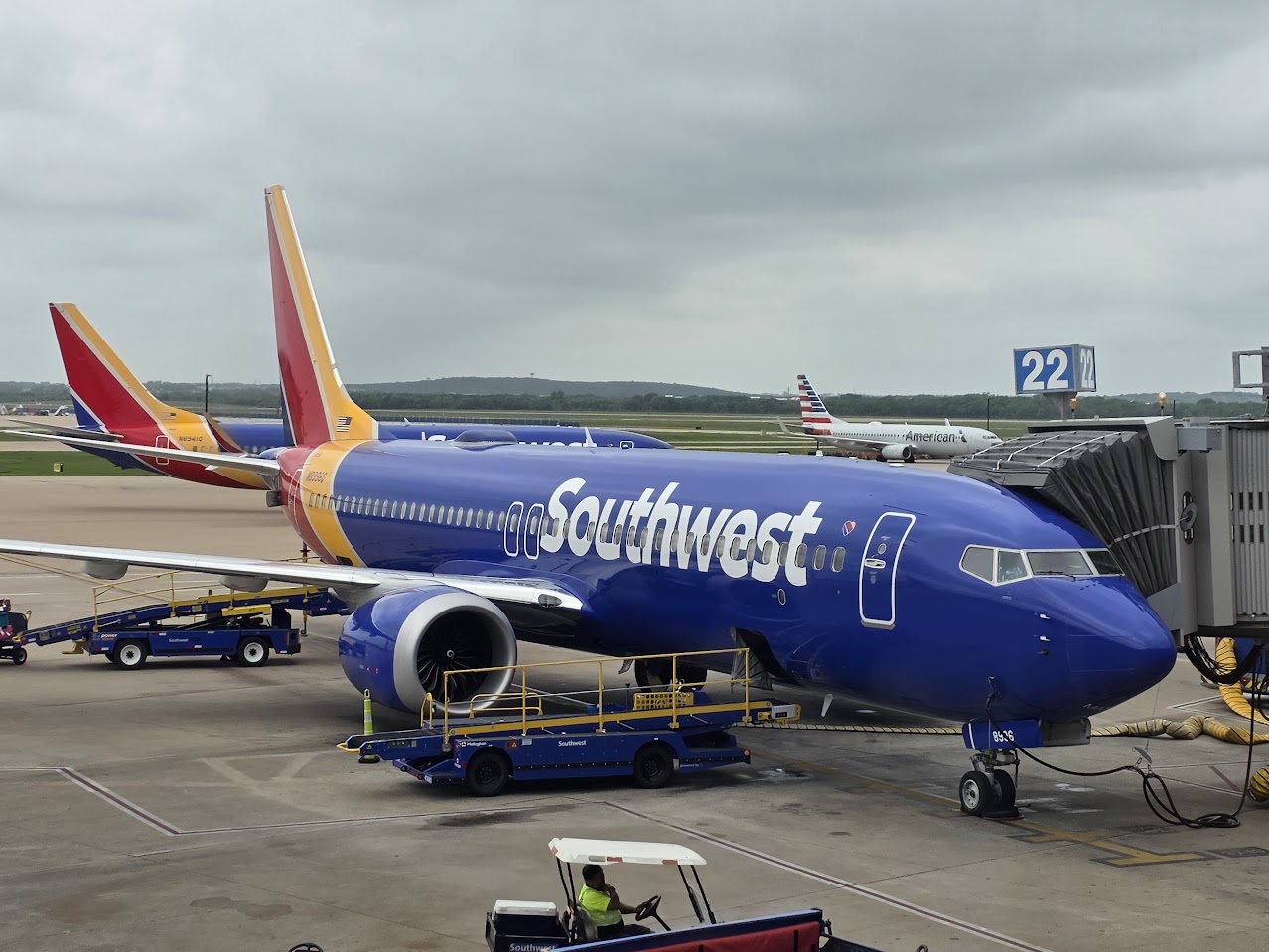
Southwest Had No Choice But To Abandon What Made It Great – Here’s Why They Became Like Every Other Airline But Worse
Full Article
Original Source
Read the full article at Viewfromthewing →KhanList aggregates and links to publicly available news content. We do not host full articles from third-party sources. Always verify important information with original sources.