
Published Oct 14, 2026, 5:21 AM EDT Journalist - Steven has a varied background in communications, and it was this passion for writing combined with his in-depth knowledge of the aviation industry that led him to Simple Flying. A keen linguist, he also has experience in translation and interpreting. Based in Palma, Spain Earlier this year, Southwest Airlines crossed a line that once seemed almost impossible to imagine. On January 27, 2026, the Dallas-based carrier ended its 54-year open-seating policy and began assigning seats across its network, replacing one of the most recognizable features of its business model with a system that looks much more like the rest of the US airline industry. The move was not made in isolation. It is part of a wider effort to generate more revenue, respond to changing passenger expectations and satisfy investors who have pushed Southwest Airlines to rethink how it sells its product. However, the first months have shown that removing open seating is easier than removing all the habits and expectations that developed around it, particularly at the gate, where old routines have proved surprisingly persistent. A 54-Year Tradition Ends Credit: Angel DiBilio | Shutterstock For more than five decades, Southwest Airlines treated the aircraft cabin differently from its competitors. Passengers generally did not receive a seat assignment, instead receiving a boarding position and choosing an available seat after stepping aboard the carrier's fleet of Boeing 737 aircraft. That process became deeply associated with the carrier, and for many loyal customers it was part of what made Southwest Airlines feel simpler and less rigid than other airlines. The new system began on January 27, 2026, giving every passenger an assigned seat while also introducing eight boarding groups. The change means travelers can select seats on eligible fares, while those purchasing Basic fares can receive an assignment at check-in. This new structure also gives greater value to passengers paying for higher fares, holding eligible status, or using qualifying Southwest Airlines credit cards. The change was years in the making, with Southwest Airlines first announcing the move in 2024 after extensive customer research. The low-cost carrier said that 80% of its existing customers and 86% of potential customers preferred assigned seating, while open seating was the number one reason customers cited for choosing a competitor. That made the policy increasingly difficult to defend as Southwest Airlines looked for ways to attract travelers who had become accustomed to selecting seats elsewhere. Revenue Drives The Change Credit: Elliott Cowand Jr | Shutterstock Assigned seating is about more than customer preference because it gives Southwest Airlines something its old system could not easily sell: a meaningful hierarchy of seats within the same aircraft. Extra-legroom seats can now command a premium, and Southwest Airlines has introduced them across every flight, creating another product that can be priced according to demand and passenger willingness to pay. The seating change is therefore closely tied to the airline's broader commercial transformation. Southwest Airlines expects its 2025-2026 initiatives to produce $1.8 billion in additional earnings before interest and taxes, with the new seating model playing an important role alongside changes to fares, baggage policies and other revenue opportunities. Investors have been pressing the airline to improve financial performance, making incremental revenue from the cabin particularly important. The new fare structure also makes the experience more familiar to travelers who routinely compare airlines on price and inclusions. Southwest Airlines now offers Basic, Choice, Choice Preferred and Choice Extra products, with higher tiers providing more favorable seat options and other benefits. Choice Extra includes extra-legroom seating and priority boarding, turning the physical cabin into a clearer extension of the fare ladder rather than a mostly uniform space. Boarding Gets Complicated Credit: Wenjie Zheng | Shutterstock Southwest Airlines expected assigned seating to eliminate one of the quirks of its old system: passengers no longer needed to race to check in exactly 24 hours before departure simply to secure a favorable boarding position. The old ritual of forming a line at numbered posts was also supposed to disappear, replaced by a conventional group-based process in which a passenger's assigned seat mattered more than being early to the gate. The launch, however, exposed an awkward reality. Reports described the opening weeks as turbulent, with passengers complaining about crowded boarding areas and full overhead lockers. Some travelers linked those problems to the new boarding process and to the simultaneous end of Southwest Airlines' long-standing 'bags fly free' proposition, which changed the incentives surrounding what passengers brought into the cabin. Southwest Airlines subsequently adjusted its boarding approach, and groups one and two were still being instructed to line up before boarding began. That was an ironic development because one of the attractions of assigned seating was supposed to be the disappearance of the old scramble for position. In practice, passengers could still find themselves preparing for boarding in advance, only now within a new set of groups tied to fare, status, cards, and seat type. Premium Seats Take Off Credit: Ryken Papy | Shutterstock Extra-legroom seating is central to the commercial logic of the new system because it creates a product that can be sold rather than simply occupied. Passengers who want more space can pay for Choice Extra or upgrade to an available extra-legroom seat, while elite travelers and some credit card holders can receive earlier boarding opportunities under the new structure. That creates a more segmented cabin experience for Southwest Airlines, even though the physical aircraft remains familiar. A traveler paying for a premium fare can receive a better seat and earlier boarding, while a Basic passenger can be assigned a seat later and board in one of the final groups. The airline is therefore moving closer to the revenue-management practices already common among major US carriers. Aircraft Number In Fleet Number On Order Boeing 737-700 288 - Boeing 737-800 192 - Boeing 737 MAX 7 - 269 Boeing 737 MAX 8 323 177 Total 803 446 The latest data from ch-aviation shows that Southwest Airlines currently operates a fleet of 803 Boeing 737 aircraft, including 323 Boeing 737 MAX 8 aircraft, making it the world's largest operator of the type. The carrier is also awaiting delivery of the new 737 MAX 7 aircraft, as outlined in the table above. For passengers, the benefit is greater certainty about where they will sit, especially when traveling with family or colleagues. Under open seating, groups had to board together and find seats together, and late-arriving passengers could face fewer choices. Assigned seating removes that particular uncertainty, but it replaces it with another question: how much should a traveler pay to obtain the seat they actually want? Satisfaction Takes A Hit Credit: Avi Johnson | Shutterstock The early response suggests that the transition has come with a measurable reputational cost. A 2026 study by the American Customer Satisfaction Index gave Southwest Airlines a score of 77, down 4% from 80 in 2025. Southwest Airlines consequently fell from the top position it held in the previous study, while Delta Air Lines moved into first place with a score of 79. The American Customer Satisfaction Index found some softness in specific aspects of Southwest Airlines' service, including ratings for flight crew courtesy, gate staff courtesy, and call centers. The organization also noted that the airline's policy changes, including assigned seating and changes involving larger passengers, may have contributed to reputational pressure. However, the data does not establish that the seating change itself caused the decline. That distinction matters because Southwest Airlines is changing several parts of its proposition at the same time. The airline has been reshaping fares, baggage rules, credit card benefits, and its international strategy while also changing seating. A passenger unhappy with the new experience may therefore be reacting to the combined effect of those decisions rather than to an assigned seat alone, making the company's transition harder to evaluate through any single metric. A New Southwest Takes Shape Credit: Jeramey Lende | Shutterstock The most revealing part of the transition may be that Southwest Airlines has not simply copied the seating model used by its competitors. It has had to adapt the boarding process after seeing how customers responded in real-world airport environments, demonstrating that a policy designed on paper can behave differently once thousands of passengers, bags, and gate agents interact with it. The airline's challenge is to capture the financial benefits of segmentation without making the journey feel unnecessarily complicated. Southwest Airlines historically built loyalty around straightforward rules and a distinctive culture, so adding more fare tiers, seat choices, boarding groups, and paid benefits risks weakening some of the simplicity that made the brand recognizable. Assigned seating is therefore likely to remain one of the clearest symbols of Southwest Airlines' transformation. The airline has no obvious path back to the old model after investing in premium seating and revenue management. As such, the early operational adjustments suggest that the more important story is now how effectively it can make the new system feel natural as the airline continues adapting its product, operations and customer messaging. The carrier has also been keen to build its Rapid Rewards loyalty program in recent years. The biggest change in Southwest Airlines' history is no longer a future plan. Rather, it is a live experiment in whether a long-standing airline can change its economics without losing the customer experience and operational performance that built its identity.
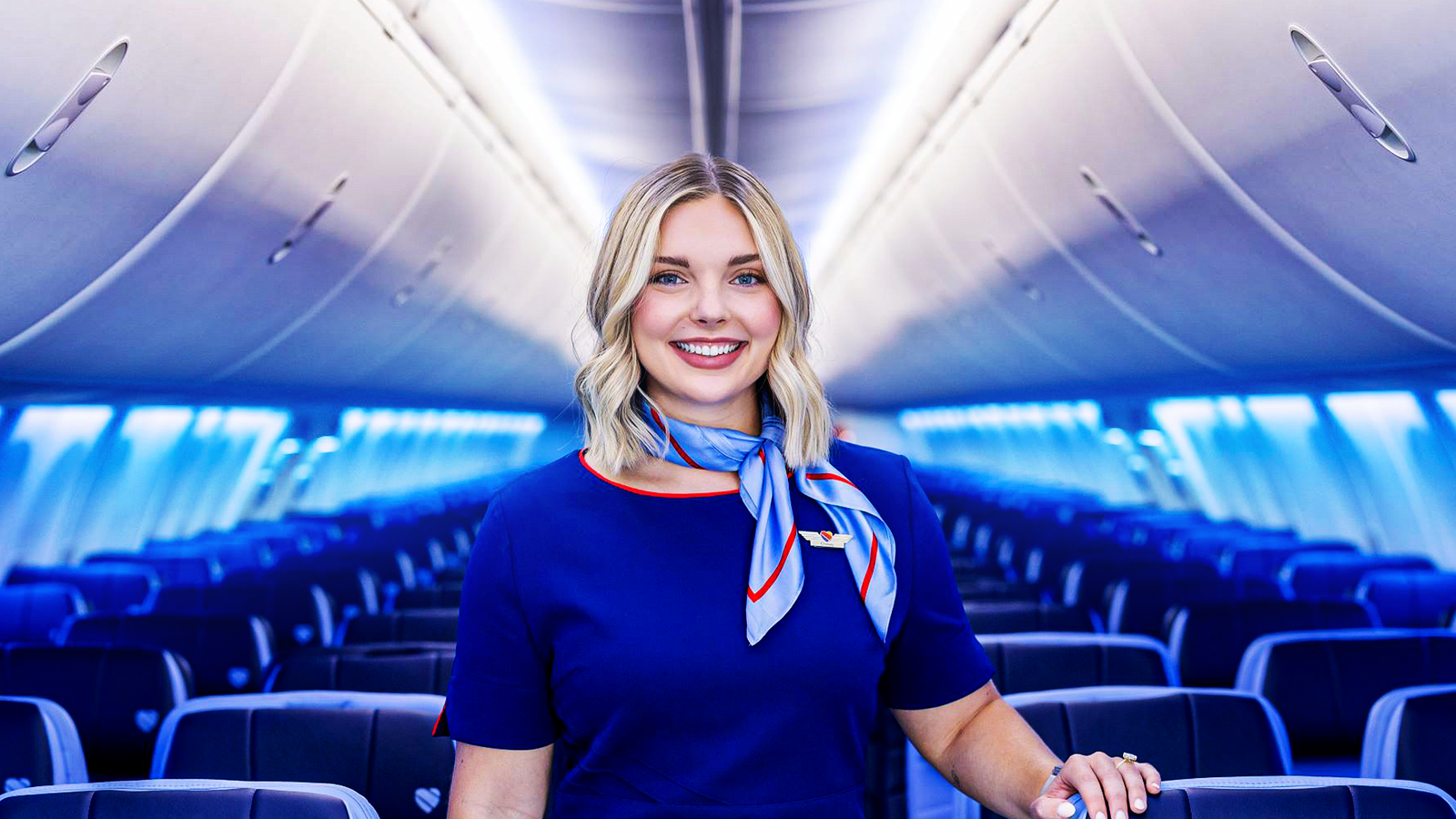
Southwest Airlines' Assigned Seating: How The Biggest Change In Its History Is Playing Out
Full Article
Original Source
Read the full article at Simpleflying →KhanList aggregates and links to publicly available news content. We do not host full articles from third-party sources. Always verify important information with original sources.