
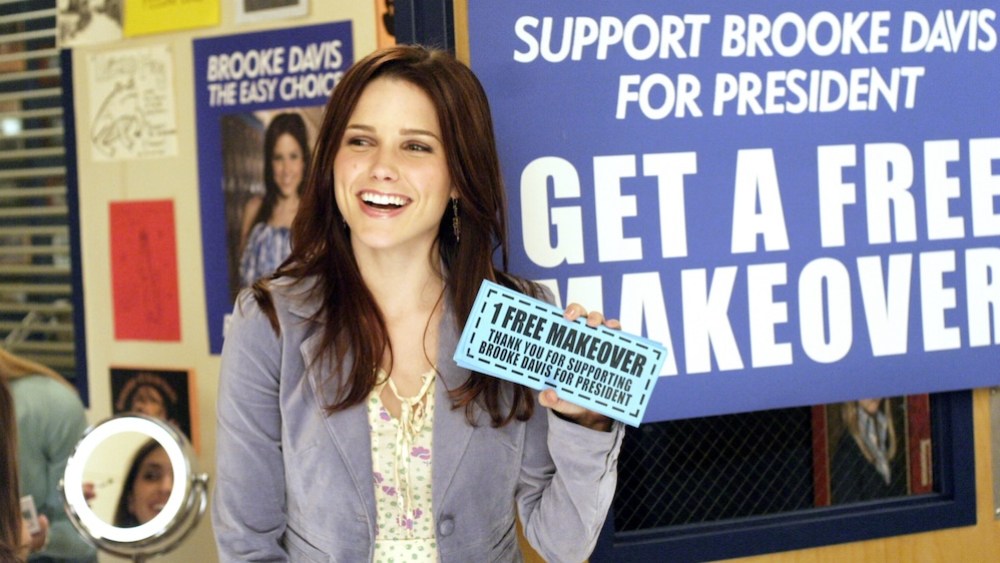
Sophia Bush is telling her story. In her upcoming memoir, “And I Will Tell You Mine: Notes From a Life in Progress,” the actress doesn’t hold back, speaking openly and honestly for the first time about her upbringing, the ups and downs of her Hollywood career, her activism, and her personal relationships, taking readers beyond the headlines. In an exclusive excerpt below, Bush details her audition process for One Tree Hill, on which she starred as Brooke Davis for nine seasons from 2003 to 2012. The book is available Oct. 27. THE GIRL BEHIND THE RED DOOR Popular on Variety ONE TREE HILL WASN’T SUPPOSED TO HAPPEN THE WAY IT DID. The show, which had originally been written as a feature film, was called Ravens at first. Filmed in the same city popularized by the recently wrapped hit Dawson’s Creek, it was set in a fictional North Carolina town and followed a new group of teenagers trying to make their way in the world. Like other shows of the era, it had an edge to it. The four leads—Peyton Sawyer, Lucas Scott, Nathan Scott, and Haley James—were all going through an inordinate amount of tough stuff, including dead parents, abandonment, financial struggles, narcissistic abuse, public pressure, and private loneliness. The network liked what it saw in the pilot episode and picked up the series. There was just one problem, according to the executives in charge. “All these fucking characters are so fucking depressing,” a producer, Joe Davola, later explained to me in his heavy New York accent, peppered with his famously favorite expletive. “They make you want to fucking kill yourself.” Harsh, to be sure, but that’s Joe for you. It was also kind of true. There was a lot of brooding and a lot of tortured-artist energy—which was workable, it was determined, if there was something to offset it. A character who wasn’t miserable. A fiery addition who could offer comic relief and stir the pot. A little bit of sass, a little bit of joy! Thus, Brooke Davis was born. Well, sort of. Her original name was Tara. But before they could figure out what her name would be, they needed to figure out who would play her. Producers started calling around, and one got in touch with my agents, which felt like a big deal and second chance of sorts. I’d been sent the sides to read for Peyton during the initial casting rounds for Ravens, and my first reaction had been a disbelieving laugh. “I am not punk rock!” I’d said to my manager, appreciating the opportunity but knowing I wasn’t a fit. That same pilot season, I was in the running for a family show for ABC and felt it aligned more with what I wanted. I got that part, filmed the pilot, and loved the process—but that show ultimately wasn’t picked up. When the call came to read for the new girl in Tree Hill, I remembered how much I’d liked the script, despite not seeing myself in it, and figured, why not? As my initial meeting with the producers approached, my biggest nightmare wasn’t memorizing lines or how I’d play a cheer captain. It was choosing what to wear. I figured I couldn’t go wrong with a short white skirt I owned that looked a bit like a tennis skirt—cheer skirts were pleated, too, right?—and pink chunky heels with rainbows over the toes and a fitted pink t-shirt. Cheery! (iykyk). The day of, I drove to Warner Bros. Studios in the Valley. I had fun reading for the people in the room; it felt good to make them laugh. But afterward, my manager passed along some feedback.“We love her,” the executives explained, “but we aren’t sure she’s . . . sexy enough?” They asked if we could try again. Oh dear. Even in my candy-colored fuchsia and white and rainbow teenage dream costume, something wasn’t right? Had my tomboyishness been showing? Or my all-girls school late-bloomer energy? This character, as was made very clear, had a maturity to her, so I figured it was time to act like I knew more about the world than I actually did. For the second audition, I went hot-girl-meets-punk-rock—a military miniskirt, stilettos with sharp gold heels, a dark, low-cut tank top, and smudgy eyeliner. The response? “This is too much. We want high school sexy, not college sexy.” I was at a loss. Wasn’t this why shows had entire wardrobe departments? To dress characters and help create their looks? I wasn’t an authority on dressing myself—I had only been doing it outside of a high school uniform for three years, so I definitely wasn’t an expert on how to dress up as someone else. By the time they called me in for the network test, I was incredibly anxious about the whole thing. Thankfully, a woman from casting offered to help me find “the happy medium”—sexy but not too sexy, cute but not so cute it wasn’t sexy, high school but not so juvenile it was too innocent, advanced but not so advanced that I looked like I should be in college. My head was spinning. The day of, I brought an entire L.L.Bean boat and tote full of outfit options, and she met me in the hallway downstairs to help finalize the look. I put on one outfit: a red Henley t-shirt with the top two buttons open, a pleated khaki skirt—wide pleats like a cheer skirt this time, not narrow tennis pleats—and these very 2000s canvas red-and-white sneaker heels. When I emerged in the ensemble, she nodded in approval. “This is perfect. Spot on!” When we were ready to go, I tucked the bag of just-in-case clothes under my chair in the hallway/holding area and walked past the seated line of other waiting girls through the door. I didn’t know it at the time, but one of them was Bethany Joy Lenz. She was in the office testing for a recast of Haley after, funnily enough, she had read for Brooke and wasn’t a fit. We didn’t really chat that day aside from pleasantries—all the girls were trying to focus on their lines—but when we met later, she told me she remembered wondering who “the girl with all the luggage” was.
Sophia Bush Was Told She Wasn’t ‘Sexy Enough’ to Play Brooke After First ‘One Tree Hill’ Audition — and ‘Too Much’ After Second
Full Article
Original Source
Read the full article at Variety →KhanList aggregates and links to publicly available news content. We do not host full articles from third-party sources. Always verify important information with original sources.