
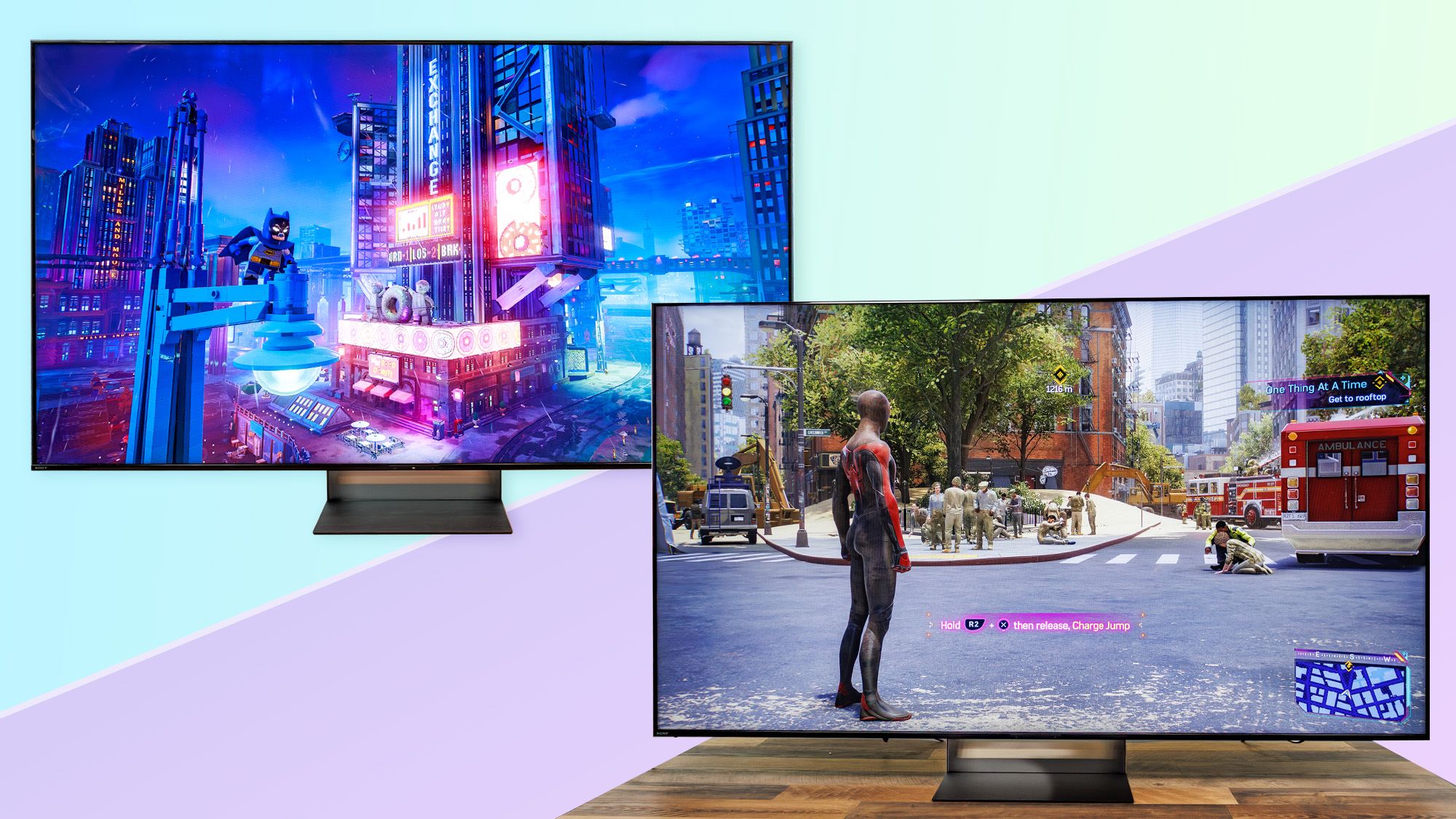
(Image credit: Tom's Guide) The Sony Bravia 9 II is the brand’s top True RGB TV in 2026 and one of the best TVs of the year. It's earned praise on account of its a searingly bright, colorful picture and Sony's incredible engineering, but it's also one of the priciest TVs you can buy.The Bravia 7 II is the most affordable True RGB TV in Sony's lineup this year. It's not as bright or as finely tuned as the flagship-level Bravia 9 II, but it still showcases an awesome picture and plenty of features for a much lower price.They're among the best Sony-branded TVs on shelves this year and they share many of the same features, but we've tested both models and I'm deeply familiar with both. Let's see how they compare. The Bravia 9 II is Sony's top True RGB TV for 2026, which means its picture is tremendously bright and colorful. It's arguably the best-performing, non-OLED TV you can buy (and Sony's TVs are typically priced at a premium), so you will have to shell out quite a bit for the privilege of putting one in your living room. The Bravia 7 II isn't as bright as the Bravia 9 II, nor is its backlight as nimble as that of its step-up sibling. That said, it comes with many of the same features, and its picture is better than what you'll see on most mid-range Mini-LED TVs. Factor in its lower price, and it's easy to see why the Bravia 7 II is a better buy for most people. Sony Bravia 9 II vs Bravia 8 II: Specs compared Swipe to scroll horizontally Header Cell - Column 0 Sony Bravia 9 II Sony Bravia 7 II Sizes 65", 75", 85", 115" 50", 55", 65", 75", 85", 98" Ports 2x HDMI 2.1, 2x HDMI 2.0 2x HDMI 2.1, 2x HDMI 2.0 Resolution 3,840 x 2,160p 3,840 x 2,160p Refresh rate 120Hz 120Hz HDR Dolby Vision, HDR10, HLG Dolby Vision, HDR10, HLG Smart TV software Google TV Google TV ATSC 3.0 support? Yes Yes Processor XR Processor 4K XR Processor 4K These Sony TVs share many of the same specs. The biggest difference between their listed specs has to do with screen size availability.Both sets come in 65-, 75- and 85-inch options, but the Bravia 7 II offers a more-flexible slate of sizes. This includes 50- and 55-inch options (the latter of which is one of the most popular screen sizes for TVs).Aside from that, their respective specs are mostly a wash. Both TVs support Dolby Vision (a popular, enhanced HDR format), and both carry just a pair of HDMI 2.1-compatible inputs out of four total. They also support ATSC 3.0 for 4K over-the-air broadcasts and offer a native refresh rate of 120Hz. The edge here goes to the Bravia 7 II. It offers two more size options below 65 inches, which is critical for viewers with smaller living spaces.Winner: Sony Bravia 7 IIGet instant access to breaking news, the hottest reviews, great deals and helpful tips.Sony Bravia 9 II vs Bravia 7 II: Design (Image credit: Tom's Guide)Both the Bravia 9 II (seen above) and the Bravia 7 II carry Sony's latest bit of design ingenuity: the so-called Mirage-style stand.Essentially, the center pedestal that props up their panel is built around a special lenticular lens that, when viewed from the front, obscures the sight of any cables that might be dangling directly behind the TV. It's an effective illusion, and one that's sure to be appreciated by folks who value a tidy home theater.The biggest difference in these TVs' design approach concerns the screen itself. The Bravia 9 II sports a matte-style screen, which does an effective job of blunting the impact of direct glare. Compared to Samsung's own Glare Free finish, Sony's isn't as aggressive in its flattening of light, so it doesn't create the grayish-purplish tint that can often be seen on some Samsung TVs that make use of the coating.The Bravia 7 II's screen — while effective in combating glare — doesn't come with a matte-style finish. This makes it slightly less capable in a room flanked by windows. (Image credit: Tom's Guide)The rest of the Bravia 7 II's design (seen above) is similar to the 9 II. Just like Sony's flagship, the Bravia 7 II is built with sturdy plastic and offers plenty of height clearance for soundbar placement.And, if you're picky about your remote controls like I am, I've got good news: Both TVs ship with the same excellent clicker. It's slim, full of all the necessary buttons and, best of all, is backlit for easy use in the dark.Both the 7 II and 9 II are thoughtfully designed TVs, but the Bravia 9 II offers just a touch more versatility. Its glare-free finish is better suited for people with many windows or intense light sources.Winner: Sony Bravia 9 IISony Bravia 9 II vs Bravia 8 II: Performance (Image credit: Tom's Guide)Before we dive into which of these TVs is the better performer, let's compare their test results. (Both TVs were set to Sony's Professional picture mode when these tests were taken.) Swipe to scroll horizontally Header Cell - Column 0 Sony Bravia 9 II Sony Bravia 7 II SDR Brightness (10%, in nits) 101 100 Delta-E (lower is better) 3.6 4.7 HDR Brightness (10%, in nits) 3,903 2,077 UHDA-P3 Gamut Coverage 99.18% 99.94% Rec. 2020 Gamut Coverage 89.23% 87.17% Input latency (milliseconds) 9.8 10.4 Both the Bravia 9 II and 7 II deliver superb, accurate picture quality in both SDR and HDR. If you're in the market for bright, punchy performance that handles the little things better than most TVs, either set will be just fine.This is a testament to Sony's top-notch engineering. For instance, in Sony's most-accurate picture mode (Professional), both TVs hit a bullseye of around 100 nits of brightness on a 10% white window in SDR, as this is considered the standard during SDR mastering.But if you're looking for the absolute best performance between the two, the Bravia 9 II takes the cake. In HDR, it's capable of nearly twice the brightness, which goes a long way towards imbuing the picture with depth. As a result of brighter HDR highlights, the 9 II looks significantly more OLED-like than the 7 II.Another benefit of the Bravia 9 II that contributes to that eye-popping, OLED-like presentation is that it leverages a more complex array of RGB LED backlights. It's the most sophisticated RGB LED-based hardware that Sony offers, and its driven by the brand's best processing. (Image credit: Tom's Guide)The Bravia 7 II is anything but a slouch. But the Bravia 7 II is anything but a slouch. In fact, Sony's True RGB technology is better realized in this class than most of the entry-level RGB LED TVs I've seen from other brands.It may not be quite as adept at managing the dizzying amount of backlight management as its higher-end sibling, but to my eye, its picture is better than most mid-range TVs that rely purely on Mini-LEDs and quantum dots. This is another testament to Sony's expert engineering.As mentioned, the Bravia 7 II doesn't get as bright as the Bravia 9 II, but with over 2,000 nits of horsepower under its hood, HDR movies, shows and games are dazzling. And, while Sony's flagship is slightly more accurate out of the box, the Bravia 7 II's color range is almost as wide thanks to Sony's True RGB technology.Both sets are punchy enough for bright-room viewing, and both offer better color than just about any garden-variety Mini-LED TV on the market. However, the Bravia 9 II delivers arguably the best picture quality one can get from a non-OLED TV this year.Winner: Sony Bravia 9 IISony Bravia 9 II vs Bravia 7 II: Smart platform and features (Image credit: Future)These Sony TVs offer a similar set of gaming and streaming enhancements, and both are built around the Google TV smart platform. All things considered, it's one of my preferred choices for everyday streaming, thanks to an easy-to-use interface, Chromecast functionality and a seemingly endless library of downloadable apps.Both sets are limited to just a pair of HDMI 2.1 inputs, which is admittedly kind of a bummer, as one of those high-bandwidth port also serves as a dedicated eARC port. This means that folks with more than one gaming device and an eARC-enabled soundbar will have to do some juggling.Fortunately, these HDMI 2.1 inputs support 4K gaming up to 120Hz on both Bravias, which is the top 4K spec for current-generation consoles. They also support Variable Refresh Rate (VRR) and Auto Low Latency (ALLM) for smoother gameplay.All told, the software experience is generally the same across both sets.Winner: DrawSony Bravia 9 II vs Bravia 7 II: Verdict (Image credit: Tom's Guide) Swipe to scroll horizontally Header Cell - Column 0 Sony Bravia 9 II Sony Bravia 7 II Specs (25) 22 23 Design (25) 25 24 Performance (25) 24 22 Features (25) 22 22 Total Score (100) 93 91 Despite the handful of features it leaves on the table — and despite its less-impressive performance — the Bravia 7 II is the TV I recommend to most people shopping for a Sony True RGB TV. It may not be the crown jewel of Sony's lineup, but its sort of like getting 80% of the Bravia 9 II for about half the price.The Bravia 9 II is, in many ways, the best LED TV Sony has ever made. It's a luxury purchase, and its price reflects that luxuriousness. The 65-inch Bravia 9 II is $3,599 at Best Buy right now, and it gets even pricier as you move up the size chart.The Bravia 7 II isn't a budget-friendly TV by any means, but its price tag won't have you seeing stars. Currently, the 65-inch Bravia 7 II is $1,999 at Best Buy , which is a bit more than what you can expect to pay for a 65-inch, mid-range OLED TV from LG or Samsung. Bear in mind, too, that the Bravia 7 II is available in 50- and 55-inch size options while the Bravia 9 II is not.Here's another way to look at it: The Bravia 9 II is the best Sony TV I've seen all year, but the Bravia 7 II is the Sony TV I've recommended the most. Follow Tom's Guide on Google News and add us as a preferred source to get our up-to-date news, analysis, and reviews in your feeds. More from Tom's GuideI tested Sony’s $3,600 Bravia 9 II True RGB TV — here's my verdictSony’s new Bravia 7 II has a secret weapon that makes it so goodSony TV report card 2026: Is the 'Sony tax' still worth paying? Michael Desjardin is a Senior Editor for TVs at Tom's Guide. He's been testing and tinkering with TVs professionally for over a decade, previously for Reviewed and USA Today. Michael graduated from Emerson College where he studied media production and screenwriting. He loves cooking, zoning out to ambient music, and getting way too invested in the Red Sox. He considers himself living proof that TV doesn't necessarily rot your brain.
Sony Bravia 9 II vs Bravia 7 II: After testing both, one True RGB TV is the better buy
Full Article
Original Source
Read the full article at Tomsguide →KhanList aggregates and links to publicly available news content. We do not host full articles from third-party sources. Always verify important information with original sources.