
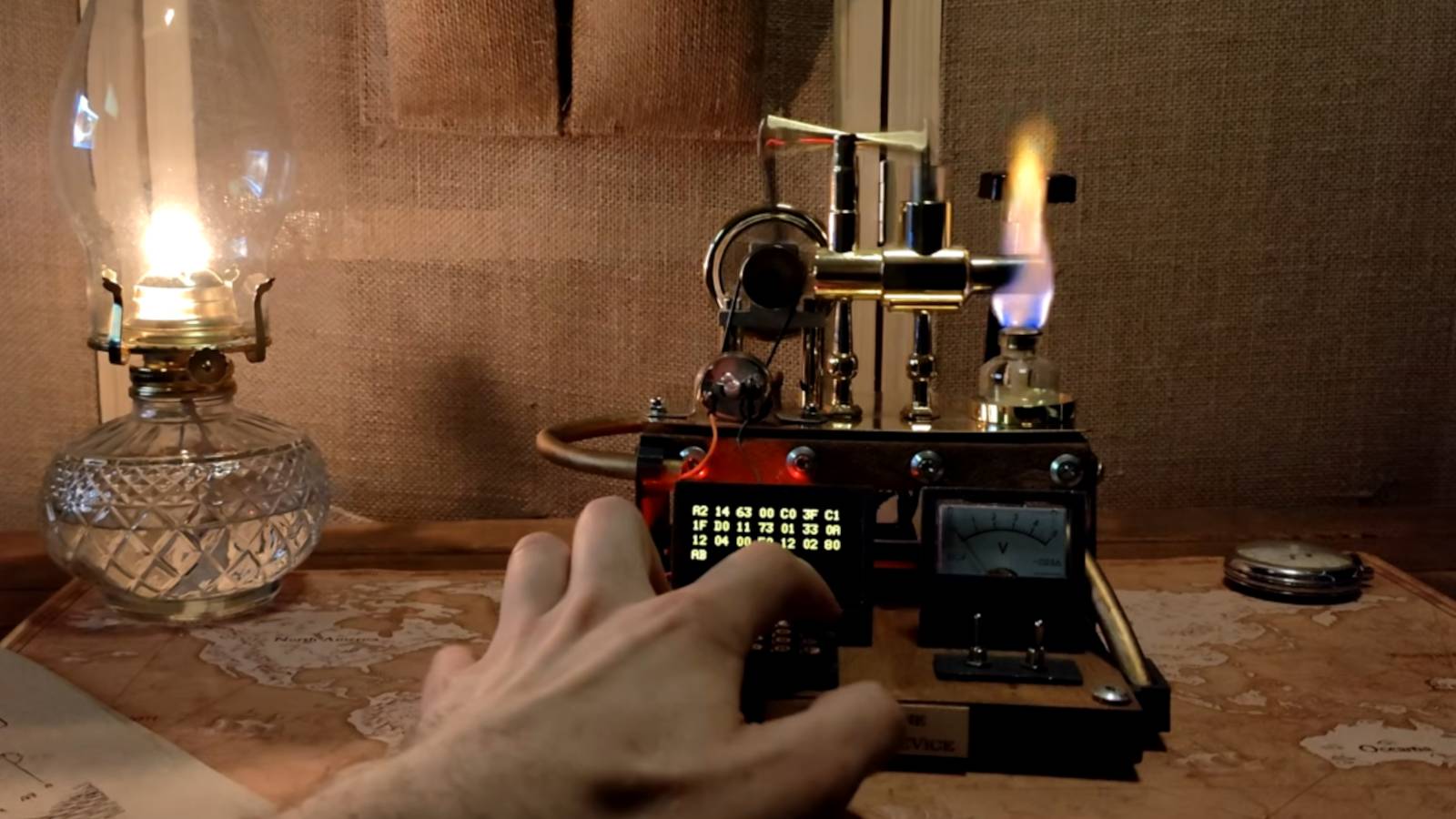
Credit: PickentCode Published Aug 27, 2026, 8:32 PM EDT Simon is a Computer Science BSc graduate who has been writing about technology since 2014, and using Windows machines since 3.1. After working for an indie game studio and acting as the family's go-to technician for all computer issues, he found his passion for writing and decided to use his skill set to write about all things tech. Since beginning his writing career, he has written for many different publications such as WorldStart, Listverse, and MakeTechEasier. However, after finding his home at MakeUseOf in February 2019, he would eventually move on to its sister site, XDA, to bring the latest and greatest in Windows, Linux, and DIY electronics. Sign in to your XDA account Summary This flame-powered cyberdeck uses a Stirling engine that spins a flywheel to run an ESP32 microcontroller. A Victorian-style wood case features a laser-engraved Robert Stirling portrait, achieved using Floyd–Steinberg dithering. The ESP32 runs raw machine code, making the flame-driven build actually programmable and useful. Every time there's a power cut, there's a part of me that wishes my computer was flame-powered. Sure, changing the fuel out mid-game would prove to be a challenge, but it'd save on the electrical bills. Well, it turns out someone has actually made a computer that runs off the heat from a flame, and while it won't power your gaming rig any time soon, it's still a really cool little invention. This fire-powered ESP32 computer feels like a cyberdeck from the Victorian era How much fuel can your rig store? As spotted by Hackster, this cool computer was the idea of PickentCode on YouTube. It's a cyberdeck that has a cool steampunk theme to it, and it's powered by a flame. The flame heats up part of a Stirling engine, which rotates a flywheel, which in turn powers an ESP32 microcontroller that runs the setup. As long as you have access to a flame, the PC will keep going. The Stirling engine is pretty simple. It uses the heat from the flame to warm up the air within the piston, pushing it inward. Once it reaches the end, the system brings in cooler air from the outside, which chills the air in the piston and makes it retract again. And it can do this at a rapid pace, too; some moments in the video make me think the entire engine would tear itself apart. To build it, PickentCode made a custom 'case' using Victorian-style wood oil, then used the Floyd-Steinberg dithering algorithm to engrave a detailed portrait of inventor Robert Stirling directly into the wood with a blue laser. Plus, the ESP32 itself allows people to create programs using raw machine code, turning this otherwise neat project into an actual usable system to do stuff on.
Someone made a fire-powered ESP32 computer, and it's a steampunk enthusiast's dream
Full Article
Original Source
Read the full article at Xda-developers →KhanList aggregates and links to publicly available news content. We do not host full articles from third-party sources. Always verify important information with original sources.