
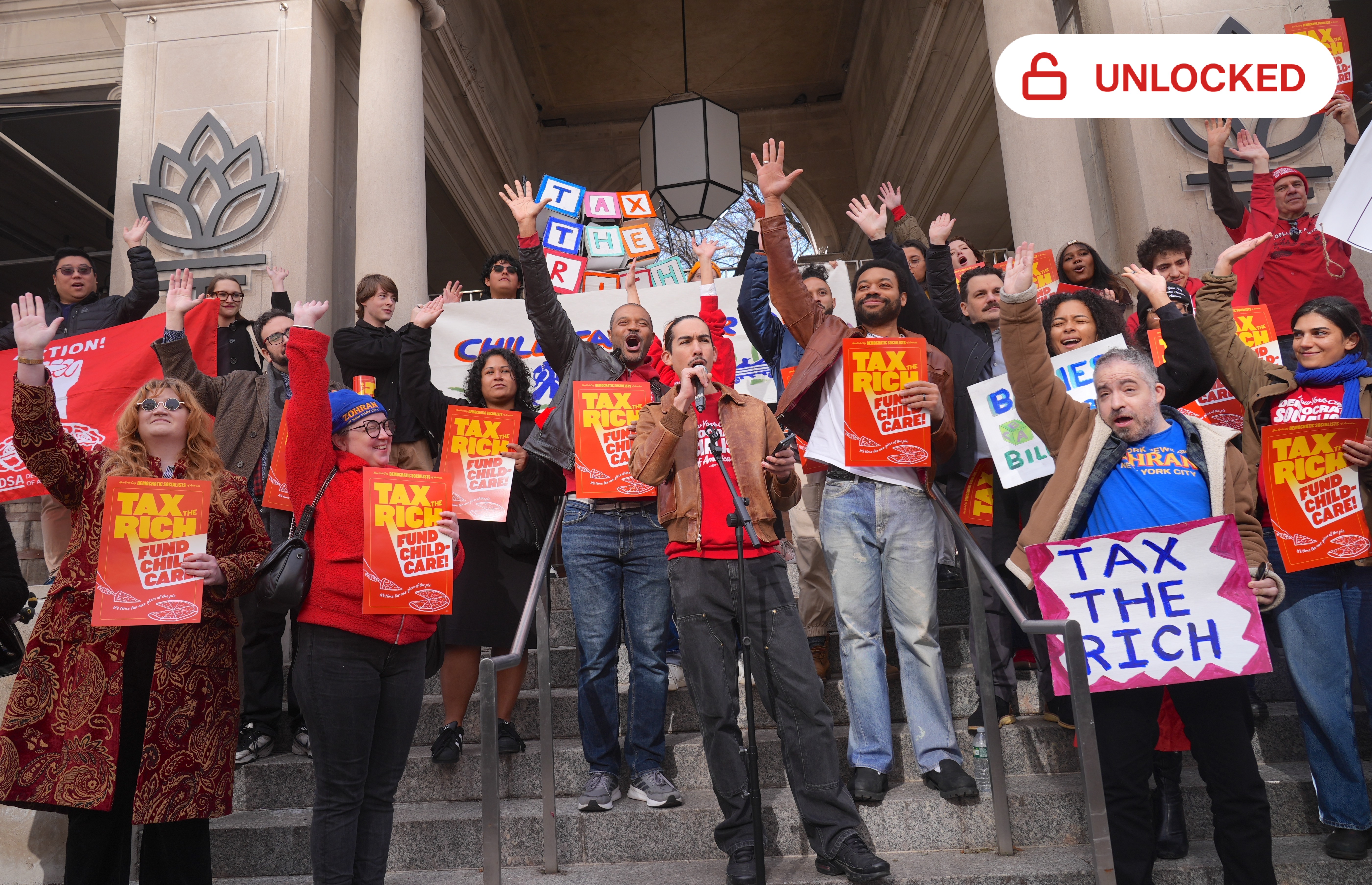
Turn any article into a podcast. Upgrade now to start listening. Members can share articles with friends & family to bypass the paywall. The Democratic Socialists of America are having a moment. The group’s membership passed 120,000 members in July, overtaking the Eugene Debs-era Socialist Party of the early 20th century as the largest socialist organization in American history. New York Mayor Zohran Mamdani is a democratic socialist, and DSA candidates won a handful of primary elections over the summer. The DSA’s rise is often attributed to inequality, resentment, or ambition. But critics have pointed out that many DSA members are highly educated or come from wealthy families, so something else must be at play. People compete for more than income. They compete for reputation, recognition, influence, and rank. The economist Fred Hirsch described such goods as “positional” in his Social Limits to Growth (1976). More food, housing, or energy can make many people better off simultaneously. Status works differently. Simply handing out more titles within a single hierarchy does not create more prestige, because relative rank within any given ladder is zero-sum. Joseph Schumpeter identified a related problem in Capitalism, Socialism and Democracy (1942). He argued that prosperous societies would educate more people than established prestige systems could absorb. Many would acquire the education and expectations associated with elite positions without obtaining them. Some, he thought, would respond by turning against the source of that prosperity—the free-market system. Schumpeter’s prediction has not aged badly. Status competition is most consequential when many people depend on the same hierarchy for recognition, income, or professional identity, especially when alternatives are scarce and exit is costly. Academia illustrates the mechanism. Scholars compete for jobs, tenure, publications, grants, and recognition within the same institutional system. Years of specialized training can make exit difficult. A scholar who has invested a decade acquiring specialized skills may have few opportunities to obtain comparable income and standing elsewhere. Relative advantage can be pursued by improving one’s own position or by reducing the standing or opportunities of competitors. The first can involve producing research, teaching, or discovery. The second can involve challenging a rival’s competence or fitness for membership without producing an equivalent intellectual contribution. That does not mean criticism is illegitimate or that every dispute is driven by status. Ideological disagreements can be sincere, and institutions need mechanisms for identifying error and misconduct. The narrower point is that institutional arrangements affect incentives. When one hierarchy controls a large share of available rewards, the potential payoff from influencing membership and advancement within it increases. For much of the 20th century, journalism operated in a similar way. A small number of newspapers, magazines, and television networks controlled access to national audiences. Losing a position at an important publication could mean losing both income and public visibility. The internet changed that. Journalists and commentators can now reach audiences through newsletters, podcasts, YouTube, and other platforms. A writer rejected by a newspaper can publish directly on Substack or a personal website and promote work via social media. A broadcaster without a network contract can still reach millions on X or YouTube. Competition for status remains and has arguably grown harsher, but failure in one hierarchy no longer determines a person’s prospects elsewhere. Academia is beginning to experience the same change. Scholars can reach readers through subscription platforms, podcasts, and online lectures. Preprint servers allow research to circulate before journals approve it. Private laboratories and research institutes offer employment outside conventional departments. Organizations such as Arcadia Science and the Arc Institute are experimenting with funding scientists rather than rigid project proposals, providing multi-year support to follow promising questions without the constraints of predefined deliverables. Alternative teaching institutions are also emerging outside legacy university systems. The University of Austin—founded as an independent, tenure-free institution dedicated to open inquiry—enrolled its first undergraduate class in 2024. Meanwhile, Peterson Academy bypasses campus infrastructure entirely, offering low-cost, recorded university-level courses that have attracted more than 80,000 subscribers. These institutions remain small, but they do not need to replace established universities to matter. They need only provide credible alternatives for some students, teachers, or scholars. Those alternatives remain incomplete. Scientific research can require laboratories, equipment, teams, and funding that individuals cannot access or provide independently. Credentials still matter in medicine, law, and other professions. Capital requirements and network effects can also concentrate opportunities. Government policy can strengthen or weaken this concentration. When research funding, accreditation, licensing, or other forms of authorization channel people through the same institutions and evaluation systems, policy can reinforce common hierarchies. Dispersing authority among independent funders, accreditors, jurisdictions, and institutions can create more routes to advancement. The objective should not be to eliminate hierarchy. Reputation conveys information. Organizations need ways to identify competence. Competition for recognition can motivate effort and discovery. Relative rank cannot become abundant in the way food or energy can. The objective should be to multiply independent arenas in which people can succeed. That is one reason economic and technological dynamism matters beyond higher income. New firms, industries, technologies, and institutions create new occupations and forms of achievement. The automobile created the mechanic and the highway engineer. Software created the programmer and the product manager. Each of these technologies built ladders that did not exist before. Stagnation creates fewer such openings, and collectivist policies tend to yield stagnation, whether they come from the left or the right. Ambitious people must compete for a more fixed set of positions, making success or failure within existing institutions more consequential. A free-market economy does not abolish the competition for status, but it gives people more places to compete. Marian L. Tupy is the founder and editor of HumanProgress.org, a senior fellow at the Cato Institute’s Center for Global Liberty and Prosperity, and co-author of Superabundance: The Story of Population Growth, Innovation, and Human Flourishing on an Infinitely Bountiful Planet.
Solving the Conundrum of Status Competition
Full Article
Original Source
Read the full article at Thedispatch →KhanList aggregates and links to publicly available news content. We do not host full articles from third-party sources. Always verify important information with original sources.