
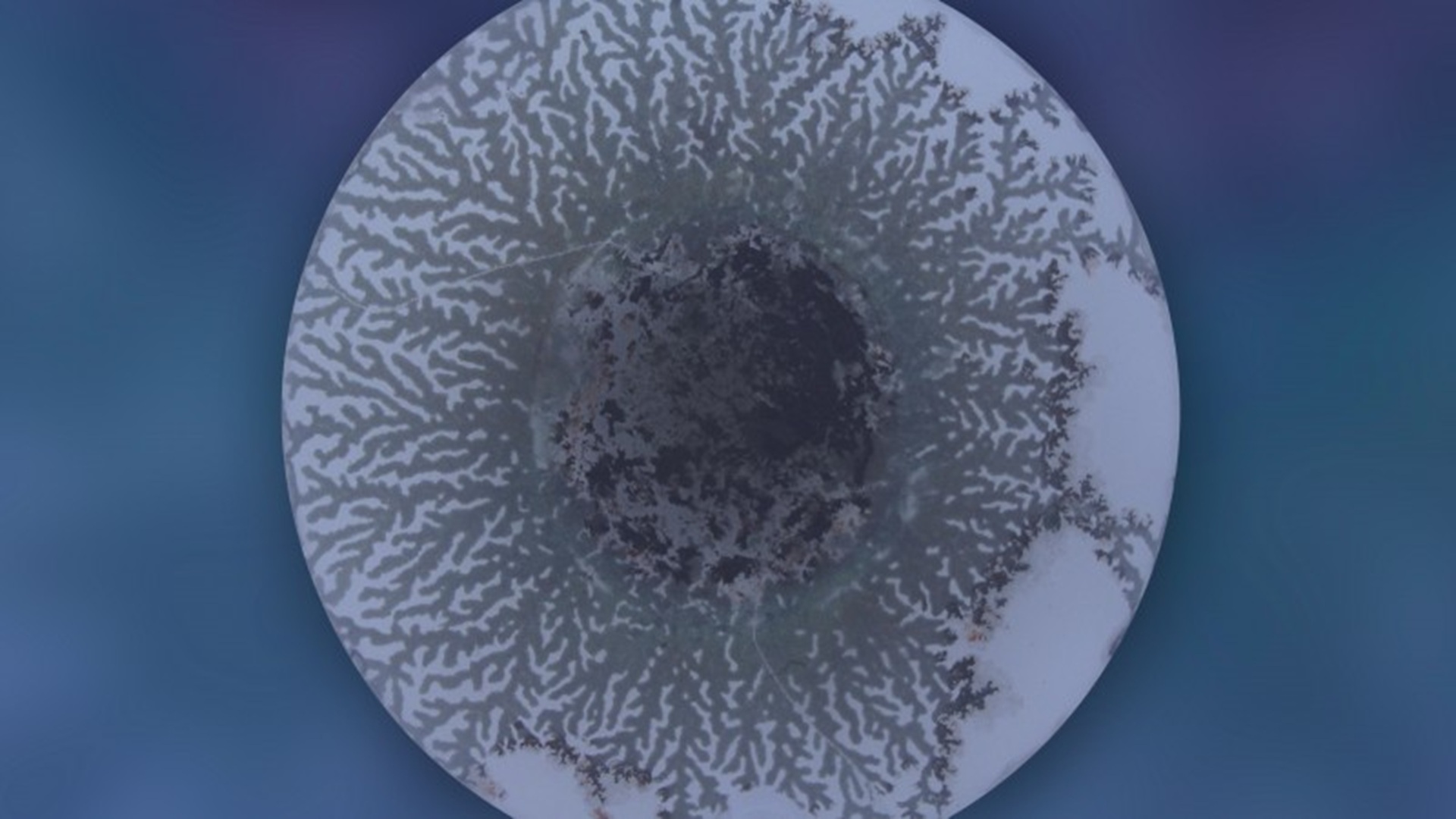
Solid-state batteries could avoid a major failure problem with a surprisingly simple fix: squeeze them. Researchers at SLAC National Accelerator Laboratory and Stanford University found that mechanically compressing the solid electrolyte can redirect lithium dendrites before they reach the electrodes and cause a short circuit. The finding could help address one of the biggest barriers to solid-state batteries. Unlike conventional lithium-ion cells, these batteries replace the liquid electrolyte with a solid ceramic material, potentially enabling higher energy density and improved reliability. During charging, lithium ions travel through the ceramic electrolyte toward the negative electrode. Some can enter tiny defects in the material and turn into metallic lithium, forming needle-like structures called dendrites. When those structures grow toward the opposite electrode, they can bridge the battery and trigger a short circuit. Researchers have debated for years whether these dendrites begin at the electrolyte’s surface or deeper inside the material. A squeeze redirects lithium growth The team used a shape-memory alloy ring to compress the solid electrolyte. When heated to 170 degrees Celsius, the ring contracted and squeezed the battery. The compression did not stop dendrites from forming altogether. Instead, it changed how they grew. Rather than propagating vertically toward the electrodes, the dendrites spread horizontally inside the electrolyte. That difference proved critical. The horizontally growing dendrites did not reach the electrodes, allowing the battery to continue operating instead of short-circuiting. The researchers also used X-rays at SLAC’s Stanford Synchrotron Radiation Lightsource to track what was happening inside the electrolyte. The measurements showed that internal dendrites formed at defects such as pores and grain-boundary junctions. The results provide direct evidence that dendrites can originate inside the electrolyte, helping resolve a long-running question in solid-state battery research. “We generated an unprecedented number of dendrites,” said Teng Cui, who conducted the research while a postdoctoral researcher at Stanford University and is now an assistant professor at the University of Waterloo, Canada. “But the dendrites did not short the battery. It shows that there is this intimate relationship between mechanics and electrochemistry that could lead to new design strategies for batteries.” The researchers found another important result: the compressed batteries continued working for thousands of charge cycles despite developing many internal dendrites. That durability suggests compression could become more than a laboratory testing method. Engineers could potentially design solid-state batteries so their electrolytes remain under constant mechanical pressure during operation. Another approach would be to make electrolytes with fewer internal defects and extremely low electronic leakage, reducing the sites where lithium dendrites can begin. Solid-state batteries are attractive because they could ultimately deliver roughly twice the energy density of current batteries, while potentially improving safety and reliability. But dendrite formation has remained a major obstacle to achieving those benefits in practical cells. “This research shows us several of the steps that need to happen to make that possible,” Cui said. The researchers will next study the interfaces between the cathode, anode and solid electrolyte, where maintaining good contact remains another challenge for solid-state cells. “Insights synthesized in this work provide an actionable pathway to advance solutions for the energy-storage grand challenge,” said William Chueh, who co-led the study with Stanford associate professor Wendy Gu. The study was published in the journal Nature. Get the latest in engineering, tech, space & science - delivered daily to your inbox.With over a decade-long career in journalism, Neetika Walter has worked with The Economic Times, ANI, and Hindustan Times, covering politics, business, technology, and the clean energy sector. Passionate about contemporary culture, books, poetry, and storytelling, she brings depth and insight to her writing. When she isn’t chasing stories, she’s likely lost in a book or enjoying the company of her dogs.
Solid-state batteries survive thousands of cycles, thanks to a squeeze on dendrites
Full Article
Original Source
Read the full article at Interestingengineering →KhanList aggregates and links to publicly available news content. We do not host full articles from third-party sources. Always verify important information with original sources.