
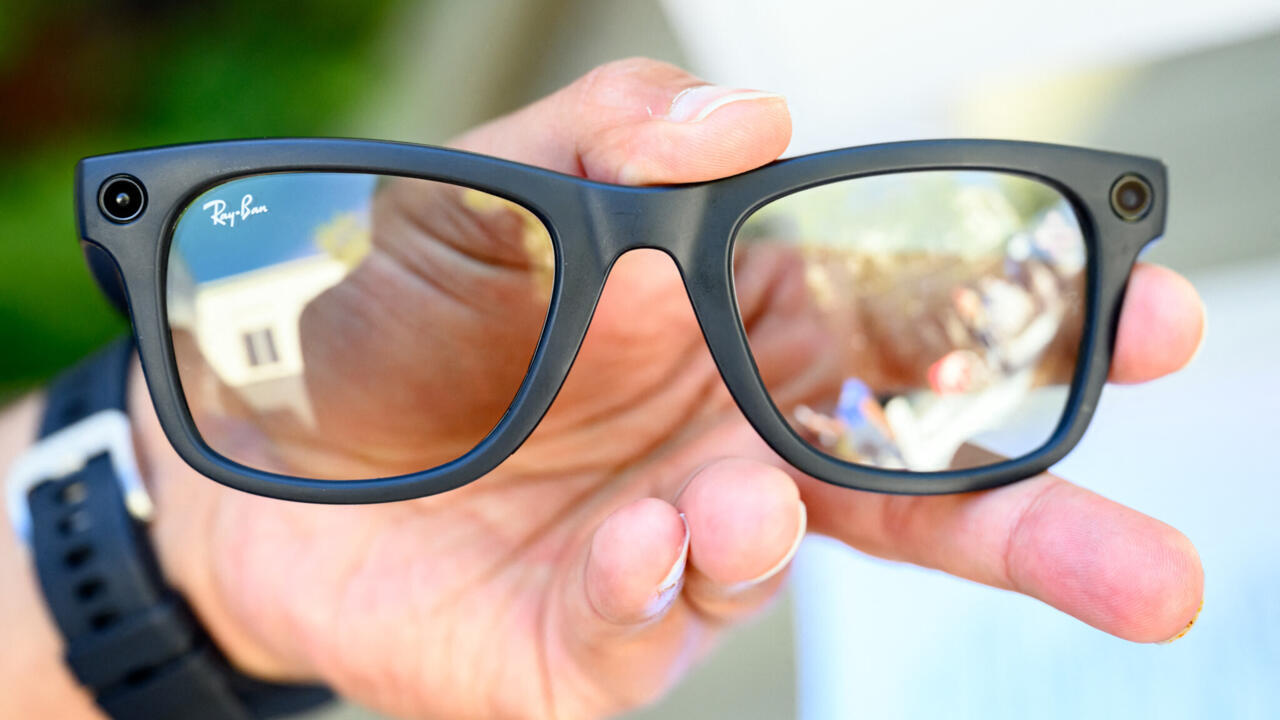
French prosecutors have opened a criminal investigation into suspected sexual harassment involving smart glasses, as the increasingly popular wearable devices come under growing scrutiny over privacy, surveillance and their use to film people without consent. Issued on: 18/09/2026 - 09:13 3 min Reading time The Paris prosecutor’s office said it had recently launched at least one investigation following complaints linked to a social media trend in which women are filmed on the street using smart glasses, often without their knowledge, before the footage is posted online. Prosecutors did not identify the make of glasses involved. Smart glasses combine conventional eyewear with cameras, microphones and, increasingly, artificial intelligence. Several models are now available, although glasses produced by US technology giant Meta with Franco-Italian eyewear group EssilorLuxottica dominate the market, accounting for an estimated 76 percent of global sales. Meta’s AI-enabled glasses contain a small embedded camera allowing users to take photographs and record video discreetly. Around seven million pairs were sold last year, while EssilorLuxottica has reported “exponential growth” in 2026. But their rapid success has also prompted closer scrutiny from regulators, prosecutors, privacy campaigners and businesses. EU accuses Meta and TikTok of breaching social media transparency rules Privacy concerns grow The Paris prosecutor’s office said its cybercrime unit tested smart glasses two weeks ago to better understand the types of offences the devices could potentially facilitate. It declined to provide further details. Meta said privacy had been incorporated into the development of its AI glasses from the outset. “We have built privacy into our AI glasses from the ground up,” a spokesperson said, adding that the company would continue strengthening protections as the technology became more advanced. EssilorLuxottica declined to comment. France’s data protection authority, CNIL, has meanwhile received fewer than 10 complaints involving smart glasses being used in workplaces and said it was increasingly being contacted by employers asking whether they could ban them. Concerns are also emerging elsewhere. Australia said on Thursday it was considering banning camera-equipped smart glasses in government workplaces over privacy and security concerns, while some UK cinemas have already prohibited them. A German consumer rights group has also filed a criminal complaint against Meta and other companies involved in selling the devices, citing data protection laws. Nacera Bekhat, CNIL’s head of economic affairs, said the technology raised “real challenges” over informing people that they were being recorded and obtaining consent when required. AI-enabled wearable devices in Europe fall under the EU’s AI Act and the General Data Protection Regulation, or GDPR. French law also provides privacy protections, with penalties of up to one year in prison and a €45,000 fine for recording a person in a private place without their consent. However, regulators and legal experts say enforcement is more difficult when recordings are made in public or quickly disseminated online. EU steps up AI regulation as new transparency rules come into effect Who bears responsibility? Smart glasses generally include a small light on the frame indicating when the wearer is filming. But rights groups argue that this does not amount to consent and may shift responsibility onto people around the wearer to notice they are being recorded. “Seeing a light come on doesn’t mean that you consent to being filmed, nor to have your image distributed to thousands of people afterwards,” said Ines Legendre, a legal expert with French internet safety organisation e-Enfance. Campaigners say women have been particularly exposed to abusive uses of the technology. Ines Girard, who works on technology-facilitated gender-based violence at feminist organisation Hubertine Auclert, said technology companies needed to do more to prevent misuse. “We can’t respond to a surveillance technology by telling the people being surveilled that they should be more vigilant,” she said. “This places an additional burden on these individuals, particularly women, gender minorities and people already exposed to violence, online abuse and scrutiny in public spaces.” As smart glasses become more widely used, regulators are examining how existing privacy and data protection rules apply to the devices, particularly when people are recorded without their knowledge or consent. (with newswires)
Smart glasses come into focus in Paris sexual harassment investigation
Full Article
Original Source
Read the full article at Rfi →KhanList aggregates and links to publicly available news content. We do not host full articles from third-party sources. Always verify important information with original sources.