
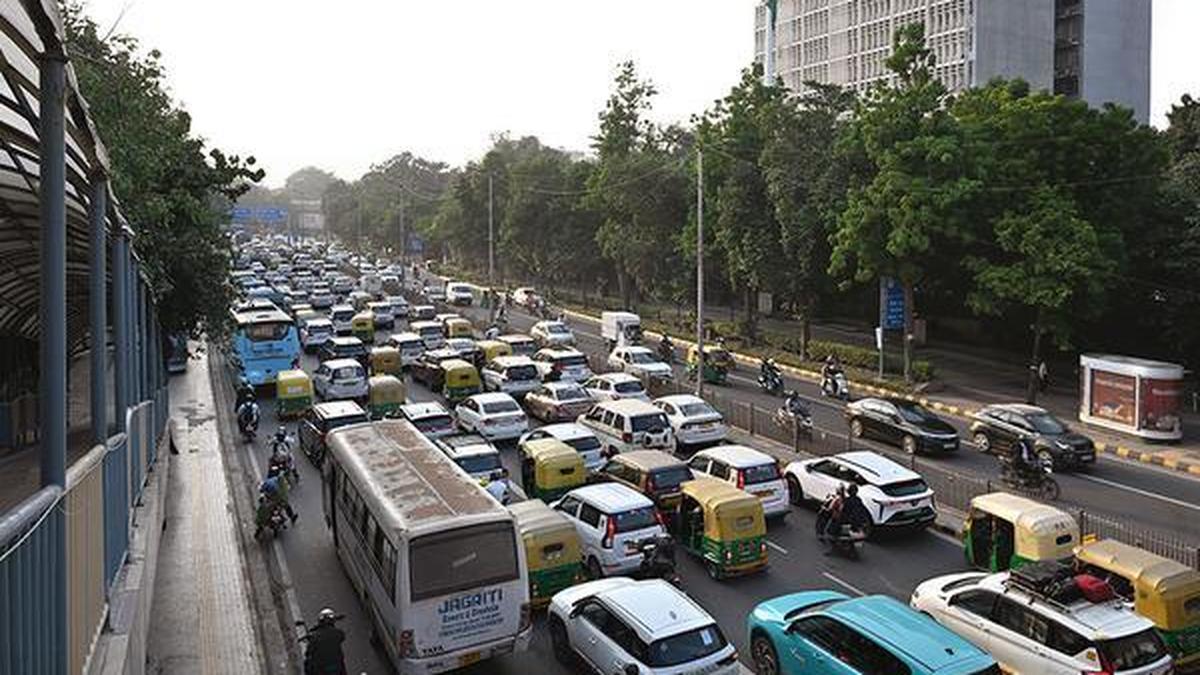
Delhi’s air quality remained in the ‘moderate’ category for the second consecutive day. File | Photo Credit: Sushil Kumar Verma Environment Minister Manjinder Singh Sirsa on Sunday (October 25, 2026) held a virtual meeting with officials from neighbouring districts and said that air pollution is a regional issue that requires coordinated action by Delhi and neighbouring NCR states.The meeting focused on strengthening inter-state coordination and ensuring effective implementation of pollution-control measures under the Graded Response Action Plan (GRAP) and directions issued by the Commission for Air Quality Management in NCR and adjoining areas (CAQM).“The Delhi government is working in close coordination with the Government of India and Central agencies, with continued support for measures aimed at improving air quality, strengthening clean mobility, reducing road dust and ensuring coordinated enforcement across the NCR,” Mr. Sirsa said. Senior traffic police officials from Noida, Faridabad, Gurugram, Sonipat and Bahadurgarh participated in the meeting, and Delhi Police Special Commissioner (Traffic) and the Transport Commissioner of Delhi were also present.Mr. Sirsa said that traffic movements will be synchronised, and adequate traffic personnel will be deployed at identified high-traffic corridors and congestion-prone locations, particularly near NCR border areas, to ensure smoother traffic flow and minimise vehicular emissions caused by prolonged congestion.“Vigilance and enforcement of Pollution Under Control (PUC) norms will be strengthened. Visibly polluting vehicles will be stopped, and strict action will be taken, including impounding vehicles and imposing the maximum permissible penalties, wherever applicable,” an official statement said. The directions of the Supreme Court regarding the diversion of truck traffic not destined for Delhi through the Eastern and Western Peripheral Expressways will be strictly enforced to reduce unnecessary heavy-vehicle movement through the city, according to officials. Also, existing restrictions on the plying of overage diesel and petrol vehicles, along with other restrictions, will be strictly implemented.The Minister said that effective border management, strict enforcement, smoother traffic movement, cleaner public transport and coordinated action against non-compliant vehicles will remain important components of Delhi’s winter pollution-control strategy.Meanwhile, Delhi’s air quality remained in the ‘moderate’ category for the second consecutive day on Sunday.The 24-hour average AQI stood at 153 (moderate) at 4 p.m. on Sunday (October 25, 2026), down from 191 (moderate) a day earlier, according to the Central Pollution Control Board’s (CPCB) daily bulletin, which provides the official AQI for the day. A higher AQI indicates worsening of air quality. The air quality of Delhi is expected to deteriorate to the “poor” category on Monday and remain at the same level till Wednesday (October 28, 2026), as per Sunday’s (October 25, 2026) bulletin by the Central government’s ‘Air Quality Early Warning System for Delhi’. Every winter, air pollution spikes in Delhi-NCR and many parts of the larger Indo-Gangetic Plains, mainly due to meteorological factors such as lower wind speeds and a drop in temperature. Also, pollution from stubble burning during October and November and the bursting of firecrackers during the festive season add to existing pollution from vehicles and dust, worsening the air quality. Published - October 26, 2026 03:15 am IST
Sirsa chairs meeting with NCR officials, reiterates need for regional cooperation to fight air pollution
Full Article
Original Source
Read the full article at Thehindu →KhanList aggregates and links to publicly available news content. We do not host full articles from third-party sources. Always verify important information with original sources.