
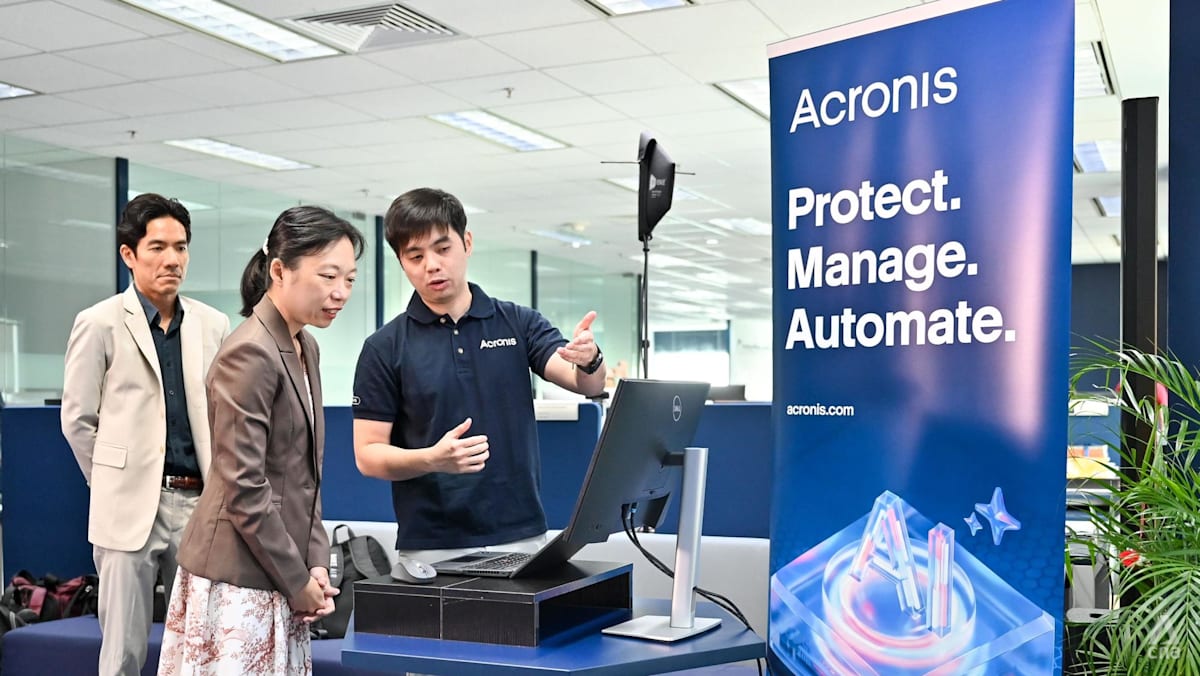
SINGAPORE: Retrenchments in Singapore rose to 4,620 in the second quarter of 2026, reaching the highest level since Q4 2020, the latest labour market data showed on Monday (Sep 21).This raised the retrenchment incidence to 2.0 per 1,000 employees, up from 1.6 in the previous quarter.The higher retrenchments were driven by business reorganisation and restructuring in outward-oriented sectors like manufacturing, information and communications, and financial services, according to the Ministry of Manpower (MOM).MOM said the labour market remained resilient, with continued employment growth and low unemployment. But other indicators showed "signs of softening". "Conditions became less favourable for some resident workers, as resident employment growth moderated, retrenchments increased and six-month re-entry outcomes weakened," the ministry said in a press release.For the April to June period, the rate at which workers re-entered the workforce six months after retrenchment slowed to 54.9 per cent, lower than the 60.7 per cent recorded in the previous quarter. The 12-month re-entry rate remained stable at 69.8 per cent.Resident employment growth also slowed to 2,200 from 5,400 in the previous quarter.Overall employment grew by 11,400, with non-resident employment growth driven by work permit holders in construction and manufacturing. This is higher than the growth of 9,400 in the first quarter of 2026.Unemployment remained low and stable at 1.9 per cent overall, 2.9 per cent for residents and 3 per cent for citizens.Long-term unemployment – referring to those out of a job for at least six months – was 1 per cent in June, inching up from 0.9 per cent in March.Job vacancies fell to 68,600 in June from 73,300 in March. The decline mainly reflected a fall in professional, manager, executive and technician (PMET) vacancies in financial services and information and communication.MOM said that the labour market remained relatively tight, with vacancies still exceeding those out of work, at a rate of 1.48 vacancies per unemployed person in June.Entry-level PMET vacancies remained broadly stable, at 31,700 vacancies or 45.3 per cent of all vacancies in June, compared to 32,800 vacancies or 43.6 per cent of all vacancies in March.Speaking to reporters during a visit to cybersecurity firm Acronis, Acting Manpower Minister Jasmin Lau noted these "signs of change"."Fewer job vacancies were added this quarter, and some workers are finding the transition into their next role taking slightly longer. This is a concern for some Singaporeans," she said.Although job opportunities remain, moving from one job to the next can be challenging, said Ms Lau.She pointed to career conversion programmes, which target mid-career workers, as one way the government will support workers."Instead of learning a new skill and then hoping to find a job that uses it, workers train for actual roles that companies need. They learn on the job, gain real experience, and build on the skills they already have," she said."This is the shift I hope we can all make together – learning new skills not just to protect what we have, but to open up more possibilities for what comes next."Many things will change – the economy, industries and job roles that are available. But when we keep building on our skills, we can face these changes with more confidence."Our government is committed to supporting our workers and creating pathways for Singaporeans to build these new skills and to move into job opportunities," said the acting minister.Mr Ang Boon Heng, MOM's director of manpower research and statistics, said that consecutive quarters of rising retrenchments warranted monitoring.But he said there were no forward indicators suggesting that this will be sustained. He pointed out that the number of workers placed on short work-week and temporary layoffs, which are an early indicator of retrenchments, fell to 700 in Q2 2026.The quarterly retrenchment incidence of 2 per 1,000 workers is also slightly above the non-recessionary norm of 1.7, which is the quarterly average measured from 2014 to 2019. But it remains below the levels seen during a recession, said Mr Ang. Acting Minister for Manpower Jasmin Lau speaking to the media at Acronis, a global cybersecurity company located at Suntec Tower 3, Sep 21, 2026. (Photo: CNA/Alyssa Tan) OLDER WORKERS ABOVE 50MOM highlighted that unemployment indicators among older resident workers aged 50 and above warranted closer monitoring.For those in their 50s, the unemployment rate rose to 3.1 per cent in June from 2.9 per cent in March. Long-term unemployment edged up to 1.2 per cent from 1.1 per cent.For those aged 60 and above, the unemployment rate rose to 2.2 per cent in June from 1.8 per cent in March. Long-term unemployment was 0.7 per cent, up from 0.6 per cent.Workers in their 50s continued to record the highest incidence of retrenchment at 3.6 per 1,000 resident employees in Q2 2026."The high retrenchment incidence among residents in their 50s, coupled with their higher long-term unemployment rate, suggests they are at greater risk of involuntary displacement and may face greater job search challenges," said MOM."Skills upgrading and career conversion programmes can help equip these workers with relevant skills to support their transition into new job opportunities."BUSINESS SENTIMENTPolls of businesses pointed to a positive but cautious labour market outlook, said MOM.Near-term hiring expectations improved across more sectors. The share of firms intending to hire in the next three months rose to 48.7 per cent in July from 43.9 per cent in June.The proportion of firms intending to raise wages eased slightly to 27.9 per cent in July from 29.3 per cent in June.Despite the improvement, both hiring and wage expectations remained below their February levels, said the ministry.
Singapore retrenchments rise sharply in Q2 amid falling vacancies and fewer laid-off workers finding jobs
Full Article
Original Source
Read the full article at Channelnewsasia →KhanList aggregates and links to publicly available news content. We do not host full articles from third-party sources. Always verify important information with original sources.