
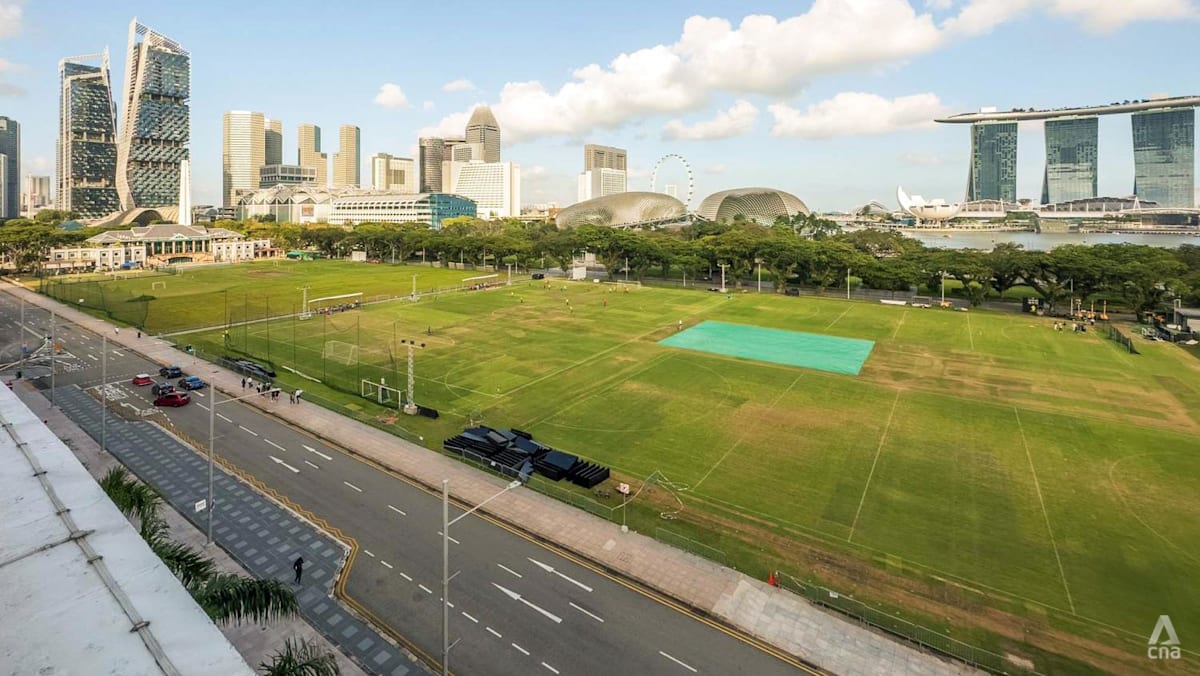
SINGAPORE: Singapore will not proceed with plans to nominate the Padang and its surrounding historic buildings as a UNESCO World Heritage Site, after an assessment found that additional planning measures could affect future development in the wider Civic District.The National Heritage Board (NHB) on Tuesday (Nov 3) said a preliminary assessment of the site, named The Padang Civic Ensemble, by UNESCO’s World Heritage Centre and the advisory bodies revealed “significant challenges” to the nomination.The preliminary assessment report had recommended establishing a larger buffer zone than Singapore had proposed, protection of important views to and from the site, and controls on future developments to preserve its heritage significance.But implementing these measures “would introduce additional consideration and consultation requirements for future planning and development” across the wider Civic District, including areas well beyond the Padang, said NHB.Singapore would, for instance, have to consult the United Nations Educational, Scientific and Cultural Organization (UNESCO) on future developments that could impact the site's historical and heritage significance, including modifications to existing buildings or new plans in the surrounding areas that could affect important views to and from the Padang. “Following the preliminary assessment, we have deliberated over the additional measures recommended for the site which may affect future plans for the Civic District, including the impact on the many existing buildings in the district, beyond the protected national monuments,” said Ms Jean Wee, director of the preservation of sites and monuments division at NHB."After consideration, we have decided not to proceed with pursuing the nomination of the Padang Civic Ensemble as Singapore’s next World Heritage Site.”Singapore's decision “reflects the need to strike a careful balance between safeguarding the heritage significance of The Padang Civic Ensemble and retaining sufficient flexibility for any future plans in the larger Civic District”, said NHB. At a media briefing on Tuesday, it said UNESCO's requirements could span decades and change over time, raising concerns that the long-term implications could be quite substantial even if Singapore went ahead with the nomination and succeeded.The board had initial reservations about the potential implications of the nomination, but voluntarily undertook the preliminary assessment to obtain official inputs from UNESCO's experts.NHB saw this as an opportunity to get formal advice on the potential nomination in an efficient, low-cost manner, the board said in the briefing on Tuesday. The preliminary assessment allows countries to receive early guidance from UNESCO's advisory bodies before submitting a full nomination. The process will become mandatory for all World Heritage Site nominations from 2027.The Padang Civic Ensemble was placed on Singapore’s tentative list for UNESCO World Heritage status in March 2023, given its historical significance. It began a voluntary preliminary assessment process in September that year. The preliminary assessment report recognised the heritage significance of The Padang Civic Ensemble, including its role in Singapore’s transition from colonial rule to nationhood and its significance as an example of a British colonial civic square in the tropics. It also acknowledged the site’s potential for a World Heritage Site nomination.The report was completed by end 2024 and various government agencies and stakeholders were engaged to discuss the findings, said NHB. LARGER BUFFER ZONE NEEDEDResponding to CNA’s queries on why UNESCO’s advisory bodies recommended a larger buffer zone than Singapore had initially proposed, NHB said the recommendation reflected UNESCO's emphasis on stronger protection for World Heritage Sites.NHB said it had hoped the evaluators would take into account Singapore's unique circumstances as a small, densely developed city-state.The board also hoped that the preliminary assessment would be a good way to see how Singapore could balance heritage preservation versus urban development, given that these are issues confronting many global cities around the world, and potentially set an example for others to follow.NHB said a larger buffer zone would be challenging given the high-rise buildings in the vicinity, including new constructions along River Valley and Beach Road. The expanded zone could potentially subject private commercial buildings to additional planning restrictions. A World Heritage Site generally comprises a legally protected area containing features of outstanding universal value that justify its designation.Surrounding the site is a buffer zone, where complementary legal restrictions on land use and development provide protection for the site, its immediate surroundings, important views and other areas supporting its heritage significance.NHB also pointed to overseas examples illustrating the potential long-term implications of UNESCO's conservation requirements.Liverpool Maritime Mercantile City in the United Kingdom was stripped of its World Heritage status in 2021 following developments that UNESCO considered detrimental to the site's heritage significance.In Seoul, South Korea, UNESCO issued a letter last year urging authorities to suspend approval of a high-rise complex outside the buffer zone of the World Heritage-listed Jongmyo Shrine, citing concerns about its potential impact on the shrine’s surrounding landscape.On whether alternatives had been considered before Singapore decided not to proceed with the nomination, NHB said that it engaged in a clarification call with UNESCO after receiving the preliminary assessment report, but did not engage in back and forth with the organisation.NHB also consulted several government agencies and stakeholders on the findings, including those it had engaged in 2023 before Singapore decided to explore the nomination. "NHB has engaged relevant stakeholders on the proposed nomination and informed them of the preliminary assessment's findings and the decision,” said the board. “We will continue to engage stakeholders and consider their feedback, as part of our ongoing efforts to safeguard the Padang’s heritage significance.”Despite the decision, NHB said it remains committed to protecting the heritage of the Padang and surrounding National Monuments.The Padang and key buildings within the Civic Ensemble – such as the Asian Civilisations Museum, Former Supreme Court, Former City Hall, Fullerton Hotel, Old Parliament House, Victoria Theatre and Concert Hall, and St Andrew’s Cathedral – are already accorded the highest status of preservation and protection in Singapore as national monuments. Singapore's first and only UNESCO World Heritage Site is the Singapore Botanic Gardens, which was inscribed on the World Heritage list in 2015.NHB said that together with NParks, it remains focused on the continued protection and promotion of the Singapore Botanic Gardens as a UNESCO World Heritage Site and a "green lung in the heart of the city loved by Singaporeans and visitors from around the world." "Singapore will also continue efforts to protect and pass on our living heritage, including hawker culture and the kebaya, which are inscribed on UNESCO’s Representative List of the Intangible Cultural Heritage of Humanity, alongside ongoing multinational nominations for Chingay and zapin," said NHB.
Singapore drops UNESCO World Heritage bid for Padang, surrounding historic buildings over potential development restrictions
Full Article
Original Source
Read the full article at Channelnewsasia →KhanList aggregates and links to publicly available news content. We do not host full articles from third-party sources. Always verify important information with original sources.