
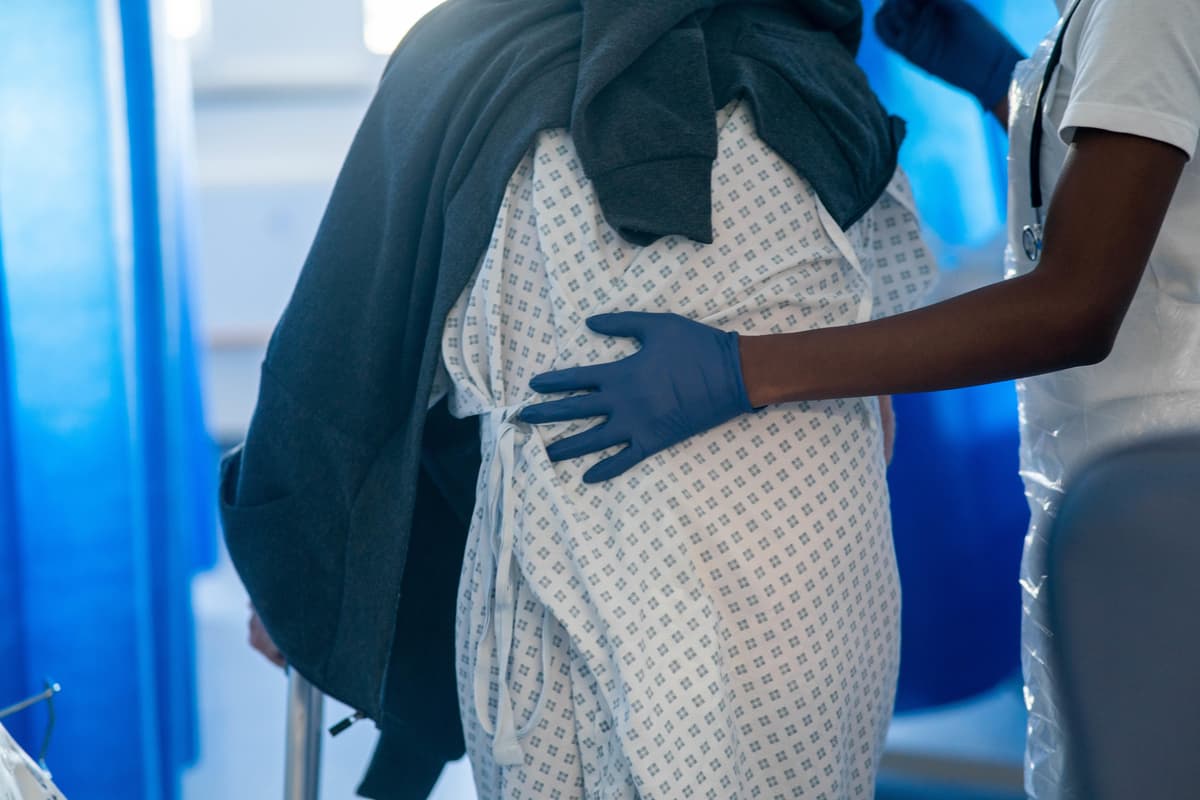
A simple test that looks at cells in urine and vaginal fluid could help rule out womb cancer in women who experience bleeding after the menopause.The approach has the potential to “transform care” for thousands of women each year, researchers said, and could spare patients from “invasive, uncomfortable” tests that can be costly for the health service.Bleeding after the menopause is a common symptom and would trigger an urgent cancer referral.Tests include ultrasounds, biopsies of the womb lining, and a hysteroscopy, where a camera is passed into the womb.However, researchers at the University of Manchester and Manchester University NHS Foundation Trust, claim “most of these investigations are unnecessary” as only 5% to 10% of women with this symptom have cancer.The new test looks at cells collected from the urine and vaginal fluid.A study published in the Lancet Obstetrics, Gynaecology and Women’s Health included 1,864 women attending hospital with postmenopausal bleeding.Before routine tests, patients provided samples of urine and vaginal fluid, which were examined by specialists.When urine and vaginal cell sample results were combined, the test correctly identified 80% of cancers.It also had a negative predictive value of 98.8% for womb cancer, meaning women with a negative result were highly unlikely to have the disease.Meanwhile, the test detected almost all aggressive cancers, identifying 95.8% of high-grade tumours and 96.4% of cancers that had already spread beyond the uterus.It also picked up 100% of cancers in black women.The test of vaginal fluid performed slightly better than urine alone, according to the study.Researchers said the test could be used to triage women suspected of having endometrial cancer, and could “support rapid diagnosis, provide quick reassurance, and reduce the burden of invasive testing for women with postmenopausal bleeding”.Read MoreProfessor Emma Davidson, of the University of Manchester and honorary consultant in gynaecological oncology at MFT, said: “Bleeding after the menopause is understandably alarming for women because it can be a sign of cancer, but the vast majority of those investigated will not have the disease.“At the moment, many women face invasive, uncomfortable tests that can be stressful as well as costly for health services before cancer can be ruled out.“Our study shows that a simple test using urine and vaginal samples could help identify the women most likely to have cancer while safely reassuring many others much earlier in the diagnostic pathway.“If further studies confirm these findings in routine practice, this approach has the potential to transform care for thousands of women every year.”
Simple test could ‘transform care’ for thousands of women with suspected womb cancer
Full Article
Original Source
Read the full article at Standard →KhanList aggregates and links to publicly available news content. We do not host full articles from third-party sources. Always verify important information with original sources.