
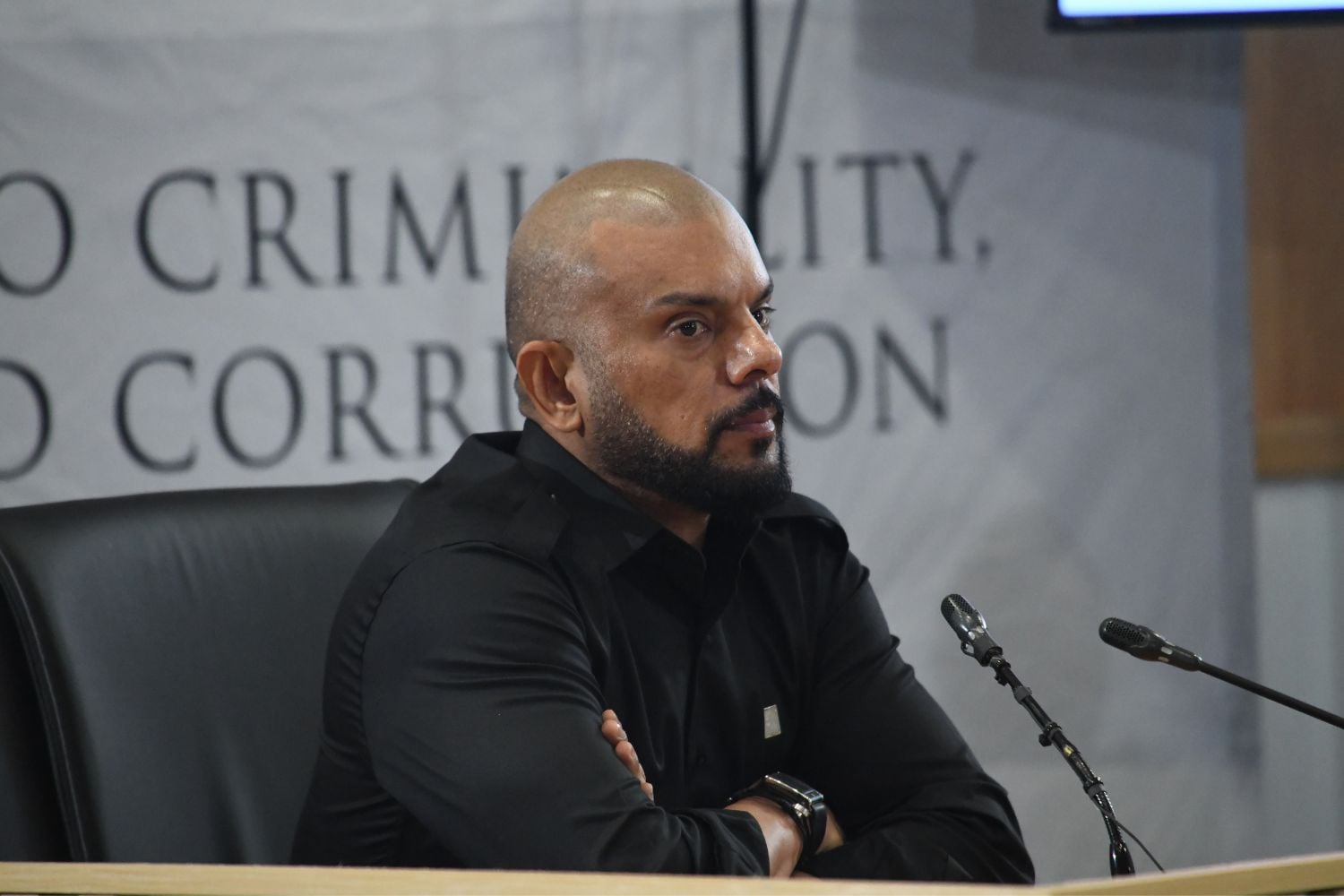
The prosecutor accused Carrim of changing his testimony and questioned his credibility. North West businessman Suliman Carrim’s health came under scrutiny in his bail application, with the state accusing him of relying on his medical condition when it suits him while repeatedly failing to honour his obligation to testify before the Madlanga commission. The allegation emerged during closing arguments in the Pretoria Magistrate’s Court on Monday, 19 October 2026, where the prosecution maintained that Carrim could not be trusted to attend future proceedings if released on bail. Carrim spent the weekend at the Kgosi Mampuru II Correctional Centre following his arrest last Thursday at OR Tambo International Airport in Kempton Park, Ekurhuleni. He was arrested while preparing to board a flight to Dubai in the United Arab Emirates (UAE). Missed Madlanga commission appearances leads to arrest Carrim faces a charge of failing to appear before the Madlanga commission after a criminal complaint was lodged against him over alleged contempt of court. The businessman, who previously claimed that he faced death threats, last appeared before the commission on 9 and 10 March 2026 and was due to return on 15 April. However, he allegedly suffered a heart attack two days before the scheduled appearance. Carrim’s repeated absences on ill health between April and July prompted concerns from the commission. He was eventually ordered to appear in person on 14 August, but failed and did not return to the inquiry. State opposes Suliman Carrim bail At the start of Monday’s proceedings, Advocate Hendrik Potgieter informed the court his mandate to represent Carrim had been terminated after the businessman changed his firm of attorneys. Advocate Dawie Joubert took over the defence. State prosecutor Donald Shiko subsequently informed the court that Carrim’s residential address in Leopard Park, Mahikeng, had been verified. The state also confirmed Carrim had a return flight ticket dated 27 October 2026, after previously raising concerns that he could flee the country. However, Shiko maintained these developments did not change the prosecution’s position on bail. “I have also informed my colleagues further that, inasmuch as such were confirmed to be positive, the state is still opposing the release of the accused,” the prosecutor told the court. He argued Carrim’s conduct surrounding his absences from the commission remained a significant concern. The state also highlighted that the accused’s response during cross-examination raised questions about whether he would remain available to attend his trial. “This court, the very same court, could find itself in a position where the applicant does not remain in attendance of the proceedings. “This is prompted by the applicant’s response to a question to him under close examination that said that should he be granted bail and does not get any better, he is not going to be in attendance of the proceedings.” Carrim defends overseas travel plans During his testimony last week, Carrim told the court that he had planned to travel to Saudi Arabia and Pakistan for “spiritual upliftment”. He maintained that the trip had been recommended by his doctor as a result of the stress, anxiety, and panic attacks he has been experiencing over the past few months. It was previously revealed at the Madlanga commission that the businessman received a “psychiatric diagnosis“. Carrim denied intending to remain outside South Africa. While the state raised concerns about the five bags of luggage he carried at the airport, Carrim claimed the bags largely contained sweets and snacks for “humanitarian” purposes in Pakistan. To support his explanation, he produced his travel itinerary and return ticket. He also submitted a South African Police Service (Saps) clearance certificate to demonstrate that he had no criminal history. This followed the state’s allegation that he had previously faced fraud and negligent driving cases, which were subsequently withdrawn. Carrim further told the court that he wanted to improve his health before returning to the Madlanga commission to complete his testimony. Prosecutor challenges credibility In his closing submissions, Shiko questioned the businessman’s intended departure from South Africa, including the circumstances surrounding his arrest at the airport. He highlighted that investigating officer Captain Kubayi had testified that Carrim’s passport had been flagged and the police were notified of his intention to leave the country. Carrim was subsequently arrested at approximately 8.43pm. The state further argued Carrim had not disclosed all his residential properties, claiming that he owned two properties in Johannesburg and another in Cape Town, in addition to his home in Mahikeng. “The applicant only gave [the police] his Mahikeng address,” Shiko argued. The prosecutor accused Carrim of changing his testimony, particularly when explaining why he had failed to return to the commission. “The applicant was not a credible witness as he was tailoring his version to seek his narrative. “He was evading most questions put to him by the state.” State questions medical justification Shiko also pointed to what he described as inconsistencies in Carrim’s explanations about his health and his ability to participate in legal proceedings. He contended Carrim had been able to testify in court last week and challenge propositions he disagreed with, despite maintaining he had been unwell since April. “When asked about this, he then resorted to saying that he was advised by his doctor that he should not be subjected to cross examination. “His legal representative advised him to go through the process because they understood the implication of him not testifying. “However, such advice was not given to the applicant that he needed to go to the commission for his testimony to be finalised.” The prosecutor emphasised that, according to his own account, Carrim’s condition had not improved. “The health of the applicant arises every time when it suits him, particularly under cross-examination.” Middle East conflict cited as flight risk concern Shiko also raised concerns about the potential impact of the ongoing US-Israel war against Iran on Carrim’s ability to return to South Africa had he successfully left the country. The prosecutor argued that the conflict in the Middle East had affected airline operations and could have disrupted the businessman’s travel arrangements. “The UAE has been affected by the ongoing war and, as such, most airlines were suspended and some were cancelled. “The applicant had been successful in flying out, and whilst on the trip the war intensified, there would have been a likelihood that the applicant was not going to be able to fly back to South Africa.” The state maintained that Carrim’s history of missed appearances strengthened its opposition to bail. “What I would also like to place on record is the fact that the applicant was ready to be on a trip that takes between 12 and 15 hours, which was encouraged by his doctor; however, he failed to appear at the proceedings that lasted for about 8 to 10 hours in the commission.” Defence disputes state’s case against bail Joubert, in his closing arguments, rejected the prosecution’s position, arguing that the state failed to provide sufficient grounds to oppose Carrim’s release. “There must at least be substance and a greater deal of possibility that what they believe will happen,” he told the court. The defence lawyer highlighted that Carrim’s residential address had been verified and that he possessed a return flight ticket. Joubert also argued that his client’s evidence had gone largely unchallenged, adding that Carrim had no outstanding cases against him. The court postponed the matter until Wednesday, 28 October, for judgment on the bail application.
‘Sick’ Suliman Carrim’s health issues arise ‘every time it suits him’
Full Article
Original Source
Read the full article at Citizen →KhanList aggregates and links to publicly available news content. We do not host full articles from third-party sources. Always verify important information with original sources.