
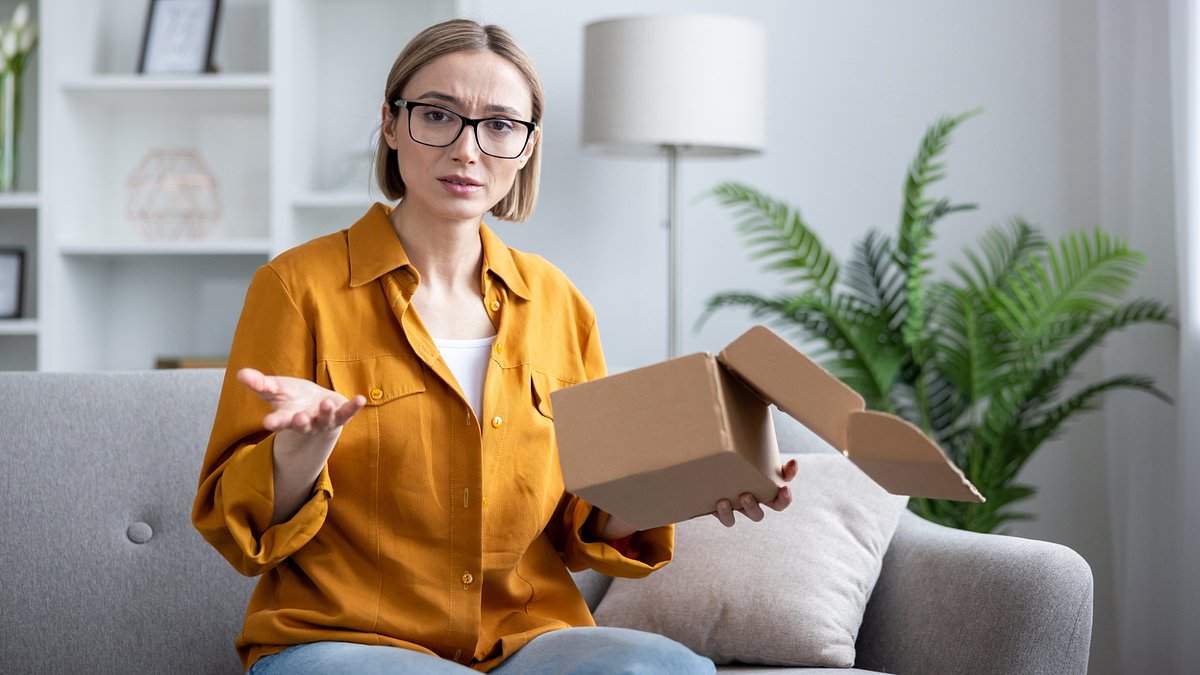
The golden age of online shopping – when you could order a whole wardrobe, try it all on from the comfort of your bedroom and then ship the rejects back for free – may be coming to an end.Shoppers are increasingly being charged to return unwanted purchases, given less time to send them back and – in some cases – warned that too many returns could put future refunds in jeopardy.Data from e-commerce returns platform Loop Returns shows that around 68 percent of retailers now charge a fee for returns at least some of the time, up from 43 percent five years ago.Returns cost an average of 27 percent of a product's purchase price to process, according to returns-management firm Optoro.That means the carefree ritual of ordering three sizes and keeping one could become an expensive game of retail roulette.Neil Saunders, managing director of GlobalData's retail division, told the Daily Mail that retailers were tightening their policies after years of flexibility encouraged consumers to take full advantage of returns.'Returns are a costly part of ecommerce, and most of this stems from the fact that retailers have previously been flexible and liberal with policies which has encouraged consumers to take full advantage of returning things,' Saunders told us.'That's now changing as retailers look to trim costs, and policies are being tightened with things like more restricted returns windows and sometimes charges.' Shoppers are increasingly being charged to return unwanted purchases, given less time to send them back and, in some cases, warned that too many returns could put future refunds in jeopardy Neil Saunders, managing director of GlobalData's retail division Saunders said the changes made sense from a business perspective, but warned retailers against going too far and alienating loyal customers who spend heavily with them.For shoppers, however, the biggest sting can come when a fee or restriction only becomes obvious after the order has already been placed.Taylor Cunningham, a senior director at Trustpilot, told The Wall Street Journal that the fiercest anger is often caused not by stricter rules themselves but by a lack of transparency.Trustpilot's analysis found that mentions of return policies correlate with a roughly 1.6-star drop in merchants' ratings, suggesting customers are particularly unforgiving when the small print comes as a surprise.One shopper, Jordan Clark, took to X after claiming Amazon sent damaged copies of a book in a torn paper envelope and then refused to refund or replace them.'So @amazon sent me a bunch of damaged copies of my book that they just threw into a paper envelope (that arrived torn) and refuse to give me a refund or send me new copies,' Clark wrote.And it is not just the fees that are shrinking – shoppers are also getting less time to make up their minds.Loop says return windows among larger brands have fallen 12 percent over two years, from 43 days to 38 days.Macy's, Talbots and Home Depot have all tightened their policies, with Home Depot now allowing just 30 days for certain Halloween and holiday decorations.Some portable heating and cooling products have an even more brutal seven-day deadline, compared with a previous 90-day window for many of those items.Home Depot spokesman Tyler Pelfrey said the changes align with industry standards for seasonal merchandise while allowing the retailer to continue offering a wide selection of popular holiday products. Amazon has also started flagging some listings as 'frequently returned' and asking customers why they are sending certain products backBut behind the crackdown is a problem retailers can no longer ignore: Sending something back is far from free, even when the customer has barely touched it.Companies can be left paying for shipping, handling, payment processing and inspection before deciding whether an item can be resold at full price.Some returned merchandise is instead sold to liquidators or marked down because it has lost its original packaging or condition.Amazon has also started flagging some listings as 'frequently returned' and asking customers why they are sending certain products back.The company sends informational messages to a tiny fraction of customers whose return rates are around 10 times higher than typical, although Amazon insists the notices are intended to help shoppers make better purchases rather than punish them.Third-party return-verification company The Retail Equation says around one to two percent of the consumers it tracks receive warnings that future return claims could be denied based on their return and refund patterns.But shoppers argue that retailers helped create the return culture in the first place by making online purchases feel virtually risk-free.One Reddit user explained that free returns were originally designed to lure people away from physical stores, writing that retailers offered them because customers wanted to 'see it, feel it, hold it, try it on' before buying clothes, shoes and furniture.The same commenter argued that shoppers are now more accustomed to e-commerce, meaning retailers no longer need to absorb the cost of such generous policies. Macy's, Talbots and Home Depot have all tightened their policies, with Home Depot now allowing just 30 days for certain Halloween and holiday decorationsAnother Reddit user took the opposite view, arguing that retailers had effectively captured the online market before making the service worse'They squeezed out brick and mortar, so now they can implement customer hostile policy with less consequence and pad their bottom line,' wrote the Reddit userHeavy returners also insist that online shopping has an obvious limitation: a photograph or product description cannot tell you exactly how something will fit, feel or look in person.But there is also plenty of blame aimed at shoppers, with Redditors pointing out that some people order multiple sizes or even use products before sending them back, leaving retailers with merchandise they can no longer sell as new.Saunders advised consumers to check return policies carefully before ordering and double-check sizes, fits and product reviews to help ensure they buy the right item and minimize the need for returns.
Shoppers upset about surprise fees and shorter deadlines as online retailers crack down on free returns
Full Article
Original Source
Read the full article at Dailymail →KhanList aggregates and links to publicly available news content. We do not host full articles from third-party sources. Always verify important information with original sources.