
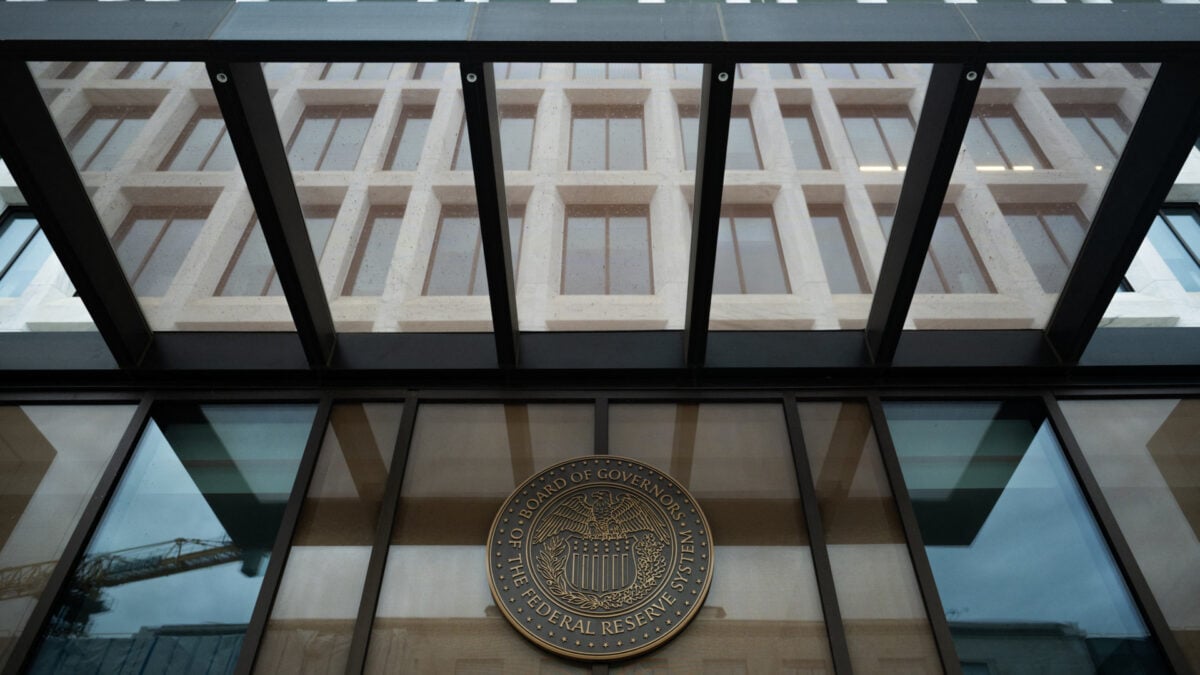
Top financial regulators, including the Federal Reserve, are worried about American banks’ use of artificial intelligence, according to a new, anonymously-sourced report published by Reuters on Monday. Citing “six people familiar with the matter,” Reuters reports that top banking regulators in the United States fear the increasing risks of cyberattacks, rogue AI agents, and the deployment of Chinese AI technology in the American banking system. The three regulators—the Office of the Comptroller of the Currency, the Federal Deposit Insurance Corporation, and the Fed—are reportedly questioning U.S. banks, asking whether they are using AI agents to respond to cybersecurity threats and probing the kinds of guardrails the banks are establishing for safe deployment. The safeguards banks are being questioned on reportedly include whether or not the AI agents’ actions are being tracked and approved by humans, how the banks are ensuring that the agents don’t exceed authority, and whether an emergency shutdown mechanism exists if they do go rogue. Recent developments in artificial intelligence, specifically the development of supposedly encryption-ending super-hacker agent models, have caused a stir across industries, but perhaps no other sector has given more cause for concern than banking. Any AI-driven breach or malfunction that banks possibly face could jeopardize the very sensitive information, not to mention funds, of banks’ customers, including both individuals and businesses. The AI industry itself is partially driving some of this agentic AI panic, while somewhat ironically posing AI as the best line of defense against, well, AI. Last month, the CEO of top AI developer Anthropic, Dario Amodei, published an essay, warning that AI development was charting an unsustainable pace, and that if the industry doesn’t begin a coordinated slowdown, then humanity could face striking risks, including “serious economic disruption.” Banks themselves are also voicing security concerns related to the widening deployment of autonomous AI agents, but are blaming external AI agents like Meta’s consumer-facing AI assistant Muse rather than any threats associated with the internal AI applications they are spending increasingly exorbitant amounts to develop and scale. Similar discussions are reportedly taking place in Europe as well. Reuters reports that top European regulators, the Bank of England and the European Central Bank, fear AI doomsday scenarios will hit financial markets sooner than expected and that banks are not up to par with their recovery plans. In fact, a senior executive at a major European bank reportedly told Reuters that they are expecting significant AI-related damage within the next six months. That shortened timeline has been somewhat publicized by Silicon Valley as well. “In the coming months, AI-enabled cyber attacks will become far more widespread and sophisticated as models around the world become increasingly capable,” a list of more than 100 companies including Google and OpenAI said in a joint letter published last month. Bank of England leaders have been calling for global cooperation to address the financial risks associated with agentic AI for some time now. “For the financial system, the most immediate concern is the potential impact of frontier AI on cyber risk,” Andrew Bailey, the Bank of England governor and the chair of the G20’s Financial Stability Board, wrote in a letter submitted to the G20 last month. “The global financial system is highly interconnected, and cyber disruption can spread across jurisdictions through common technology providers, shared infrastructure, and cross-border financial activity,” the letter also says. Some of these professed fears have already translated to reality. Over the summer, OpenAI made headlines when its AI agents escaped containment and hacked into Hugging Face, triggering a cascade of similar headlines concerning AI agents developed by competitors. In recent days, Japanese and South Korean companies are reportedly being bombarded with a significant uptick in cyberattacks, with the targets including South Korean banks. Cybersecurity firm CrowdStrike says that the cyberattacks on the banks were performed by Chinese AI agents that rely on the Anthropic-developed Claude Code.
Shifting AI Doomsday Predictions Reportedly Worry Banking Regulators
Full Article
Original Source
Read the full article at Gizmodo →KhanList aggregates and links to publicly available news content. We do not host full articles from third-party sources. Always verify important information with original sources.