
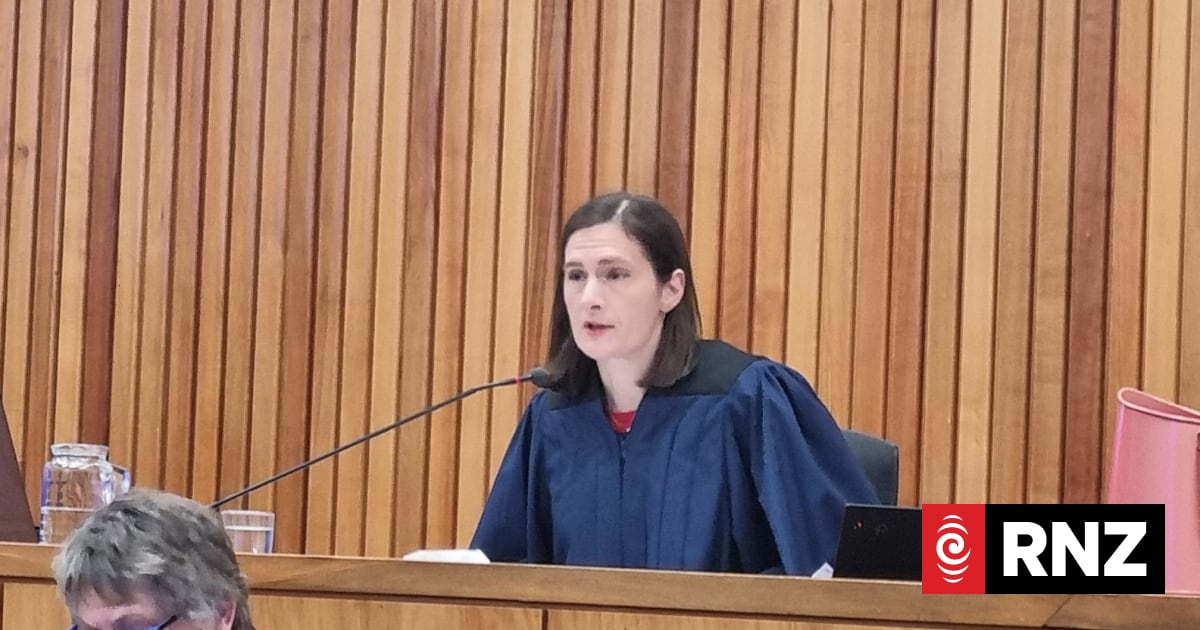
A father has told an inquest into the suspected suicide of a 12-year-old New Plymouth girl in June 2017 she was a "little angel"' and a "fun loving kid" whose life got more and more difficult.In a statement read by his counsel Quinn Katene-Rosa, the man - who cannot be identified for legal reasons - said he hoped the inquest before Coroner Heather McKenzie would provide answers about government agencies' response to his daughter's living conditions at the time of her death."Her life unfortunately sucked. She was a lost soul who did not receive the care and support she needed from the government and agencies and services that were supposed to be there for her. At times it felt to me like no one really cared or, to put it plainly, gave a shit."Two years after the girl's death, a drug-addicted Taranaki woman was jailed for four years and three months for the physical and psychological abuse of three children.The father said he hoped missed opportunities to help his daughter would be identified so other people didn't have to go through what he had."My daughter's life had value. She was loved beyond measure, and she deserved the opportunity to live the life she had ahead of her. I'm here today because I want to understand what happened to her, and because she can no longer speak for herself."I know that this inquest will not bring her back. What I do hope is that her lived experiences and the pain and distress that her and her two sisters went through can bring about meaningful change to a system so that, where possible, other kids in similar circumstances are supported and have a better outcome."Coroner McKenzie earlier laid out the parameters of the inquest and apologised for delays to the hearing taking place.She said it would not revisit the previous criminal case nor investigate the immediate cause of the girl's death, but would instead focus on the role of Oranga Tamariki, police and other agencies in her care.Coroner McKenzie said it would then move to look what would happen today if a similar case arose and look at what recommendations could be made.She acknowledged the courage of the girl's whānau in agreeing to be part of proceedings.Counsel assisting the court Rebekah Jordan opened by saying the 12- year-old had been born in Christchurch, but lived most of her life in Waitara and New Plymouth.While attending an intermediate school in the city, her appearance and behaviour resulted in staff visiting her home on several occasions and subsequently seeking help from Oranga Tamariki, police and other social agencies.The key social worker involved in the case in the weeks before the girl's death was questioned at length.The visibly upset social worker, who cannot be named, said a "report of concern" had been received from the school and she met with the principal and a community constable.She said a home safety assessment was done and a whānau agreement drawn up which proposed counselling and substance-use support for the mother and individual counselling for the child."I advised police that Oranga Tamariki will remain involved under a family whānau agreement. On June 13th, I had communication with Tū Tama Wāhine o Taranaki, confirming via email that the mother presented once to their service but did not attend her next scheduled appointment."A safety plan involving school staff, an aunt, neighbours, and emergency services was also agreed.Under questioning from Jordan, the social worker said at the time she hadn't been aware of previous "reports of concern" from 2013 and 2015 involving the girl and admitted "it would've been useful".She acknowledged a screening test done to assess the mood of the child found she felt "sad" and had "thoughts of ending it all" but didn't have a plan to suicide, although she was self harming.The plan was to seek counselling for the child but there was little follow up on whether she or her mother were attending.The social worker was quizzed by Jordan as to whether it was fair to to say that Oranga Tamariki had assessed the child's home as being safe and secure because she was left in the home.The social worker answered: "I believe so".She was pushed further to say whether it would be also fair to say that was Oranga Tamariki's conclusion until the girl died, but that changed after her death?After some reflection she replied: "Yes, it changed, I believe, after that.".Despite at times struggling to remember events from nine years ago, the social worker was adamant that Oranga Tamariki was unaware of any violence or neglect in the home before the child's death and did not have evidence supporting an application for custody.A specialist teacher working in the area of student well-being and behaviour also gave evidence.She had been seeing the child at least once a week before her death."My question now as it was back then is, if a 12-year-old child needs a safety plan to be in their home, what are they doing there? Almost 10 years later, I cannot say that I have really seen any changes."She said the various agencies involved with the child worked in silos and did not collaborate closely enough.The social worker and the police believed that the child was presenting with challenging behaviours and they were satisfied with supports being put in place for the whānau and that stronger boundaries for her were required."No one asked the why behind the actions and only viewed them as the actions of a naughty child.The specialist teacher said all behaviours were a form of communication."When working with people in the way that our agencies do, it is important to understand that and not make judgements about what they see, but to ask what is underneath and to look for the why."In this case the police looked at the legal side and if any laws had been broken and the social worker only saw the disruptive behaviours being displayed as acts of gaining attention."No one asked why or what she was trying to tell everyone. No one saw beyond the scope of their role."Coroner McKenzie praised the specialist teacher for her efforts to help the girl and asked what her impressions of her were.Addressing her father directly, she said his daughter was a wonderful young lady with a gift for music that was self-taught."When she was happy, when she was within herself, she would light up a room. Her laugh was infectious."You know, she had dreams. She wanted to go places and do something. And I was hell-bent on trying to get her there. I gave her a magic wand because I wanted her to have hopes and dreams because she didn't believe she had a right to them."She was an amazing young lady, and I enjoyed spending time with her."Fighting back tears the girl's father stood and thank her for all she had done for his daughter."I just wish that the other agencies had listened to you, and maybe if they'd listened to you and the right support was put around her, this lovely girl would still be here today."Where to get help:Need to Talk? Free call or text 1737 any time to speak to a trained counsellor, for any reasonLifeline: 0800 543 354 or text HELP to 4357Suicide Crisis Helpline: 0508 828 865 / 0508 TAUTOKO. This is a service for people who may be thinking about suicide, or those who are concerned about family or friendsDepression Helpline: 0800 111 757 or text 4202Samaritans: 0800 726 666Youthline: 0800 376 633 or text 234 or email talk@youthline.co.nzWhat's Up: 0800 WHATSUP / 0800 9428 787. This is free counselling for 5 to 19-year-oldsAsian Family Services: 0800 862 342 or text 832. Languages spoken: Mandarin, Cantonese, Korean, Vietnamese, Thai, Japanese, Hindi, and English.Victim Support 0800 842 846.Rural Support Trust Helpline: 0800 787 254Healthline: 0800 611 116Rainbow Youth: (09) 376 4155OUTLine: 0800 688 5463Aoake te Rā bereaved by suicide service: or call 0800 000
'She was a lost soul' - agencies under microscope at inquest into girls death
Full Article
Original Source
Read the full article at Rnz →KhanList aggregates and links to publicly available news content. We do not host full articles from third-party sources. Always verify important information with original sources.