
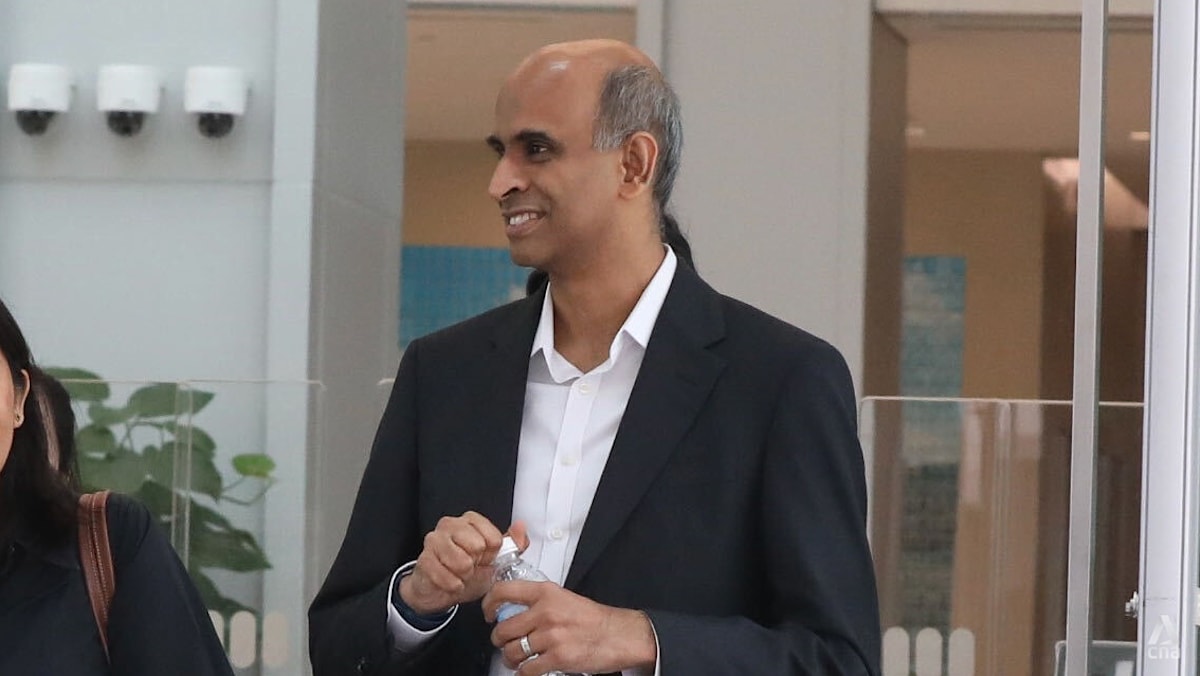
SINGAPORE: The head of neurosurgery at the Singapore General Hospital (SGH) is being investigated for failing to report a patient's death to the coroner as required under the Coroners Act.Clinical Assistant Professor Jai Prashanth Rao heads the neurosurgery department of the National Neuroscience Institute (NNI) at SGH.The investigation came to light on Wednesday (Oct 14) during the opening of a coroner's inquiry into the death of Madam Tan Suan Lin, 75, who died six days after undergoing surgery by Dr Rao. The operation was meant to remove a brain tumour.Complications during the surgery on Jan 3, 2024, led to brain swelling and about 3L of blood loss, prompting Dr Rao to abort the operation and close the wound.Dr Rao testified on Wednesday that he had initially told Mdm Tan's daughter and husband that he had to report the case to the coroner.However, he changed his mind out of compassion and a desire to give the family closure and instead issued a death certificate.Dr Rao explained that "probably my heart overruled my brain" and said he did not push back against the family's reluctance to have the case reported to the coroner. They did not want Mdm Tan to undergo an autopsy or sustain any more cuts.The death certificate stated the cause of death as "malignant neoplasm – brain, unspecified", which Dr Rao said was intended to indicate that Mdm Tan had died from a brain tumour.However, a forensic pathologist from the Health Sciences Authority (HSA) indicated that a possible cause of death was instead bleeding complications during surgical intervention for the tumour.The case was flagged to the coroner by the National Neuroscience Institute (NNI) only about a year later in February 2025, following which a police report was filed in March 2025 over Dr Rao's failure to report the death.No autopsy was performed as a result of the delay.THE CASEThree witnesses took the stand for the state on Wednesday, the first of whom was investigation officer Benedict Lim Wei Sheng.He said that Mdm Tan first had progressive vision deterioration in her left eye from early 2023.A brain MRI scan later revealed that a large brain tumour was pressing against her optic nerve.She was counselled by Dr Rao and agreed to undergo brain surgery to remove as much of the tumour as possible.The surgery proceeded largely uneventfully on Jan 3, 2024, until the team encountered extreme difficulty stopping the bleeding.There was massive surgical blood loss of about 3,000ml, the brain began to swell and would have come out of the skull cavity if the swelling had continued.Dr Rao thus stopped the operation and closed the skin before telling Mdm Tan's husband and daughter outside the operating theatre about the complications and her poor prognosis.The patient was transferred to the intensive care unit, but her condition later deteriorated, and she died on Jan 9, 2024.In the interim, Dr Rao told the family that Mdm Tan's likelihood of survival was not high.He also told them there was a possibility that an autopsy would have to be done, although he was not the one to make that decision.Dr Rao, who testified as the second witness, said that Mdm Tan's husband was not keen on this at first, but he tried to accept the rationale with further explanation.However, Mdm Tan's daughter said many times that she did not want her mother to go through the process, Dr Rao recounted.He said that she wanted her mother to retain "dignity in death".MISTAKEN IMPRESSIONDr Rao said he had been under the mistaken impression that only deaths occurring within 24 hours of a surgery required mandatory reporting to the coroner.He thus assumed that he had discretion over whether to report the death.He said he told the family that he would prefer to report the death to the coroner, but was motivated by the desire to "demonstrate compassion" and provide closure, as well as prevent further distress.State Coroner Adam Nakhoda questioned whether Dr Rao had received any training on determining when a report should be made to the coroner.Dr Rao said that such training occurs "when we are very junior". He added that he has since refreshed his memory and knows now that he ought to have reported the case."I work in a specialty that, unfortunately, when complications happen, they are severe," he said. "This is the only death I've had in 12 to 13 years."He also said he was not sure where he got the mistaken impression that he only had to report deaths that occurred within 24 hours of surgery.Dr Rao added that there were no unexpected events during the surgery that deviated from standard operating procedures, except for the brain swelling at the end."I couldn't explain the cause," he said. "But from my medical expertise, it seemed like a seizure to me."He said Mdm Tan had been given the usual medication to reduce the electrical activity that causes seizures before the surgery, but such medication is not 100 per cent effective.When questioned about the exact wording of the cause of death on Mdm Tan's death certificate, Dr Rao explained that a junior doctor had signed it.This is because death can happen at any time, and junior doctors are usually on site.Dr Rao said he had given instructions to indicate the cause of death as a brain tumour, but the junior doctor then went into the electronic system and selected the relevant category.He was not required to review the cause of death after the junior doctor selected it, Dr Rao added.An independent expert witness, who was called by the state, told the court it was obvious to him that the case should have been reported to the coroner, but said he empathised with Dr Rao."Yes, the death should have been reported because that is in our training and experience from the time we started this speciality, that has been one of the things that is highlighted," the expert said."However, the academic knowledge of it sometimes can be marred by emotions."He added that as a surgeon himself he understood that the main surgeon is the one who bears "the most emotional burden", and it is "entirely reasonable" that this burden can sometimes cloud one's judgment.The coroner's findings will be delivered at a later date.Under the Coroners Act, any person who becomes aware of a death that is, or appears to be, a reportable death, must make a report to the police as soon as reasonably practicable.Failure to do so without reasonable excuse is an offence, punishable by up to one month's jail or a fine of up to S$1,500, or both.The Coroners Act lists examples of reportable deaths, including an unnatural or violent death, a death that resulted directly or indirectly from medical treatment or care, and any death in Singapore where the cause or manner is unknown.CNA has contacted NNI for more information.
SGH head of neurosurgery under probe for failing to report patient's death to coroner
Full Article
Original Source
Read the full article at Channelnewsasia →KhanList aggregates and links to publicly available news content. We do not host full articles from third-party sources. Always verify important information with original sources.