
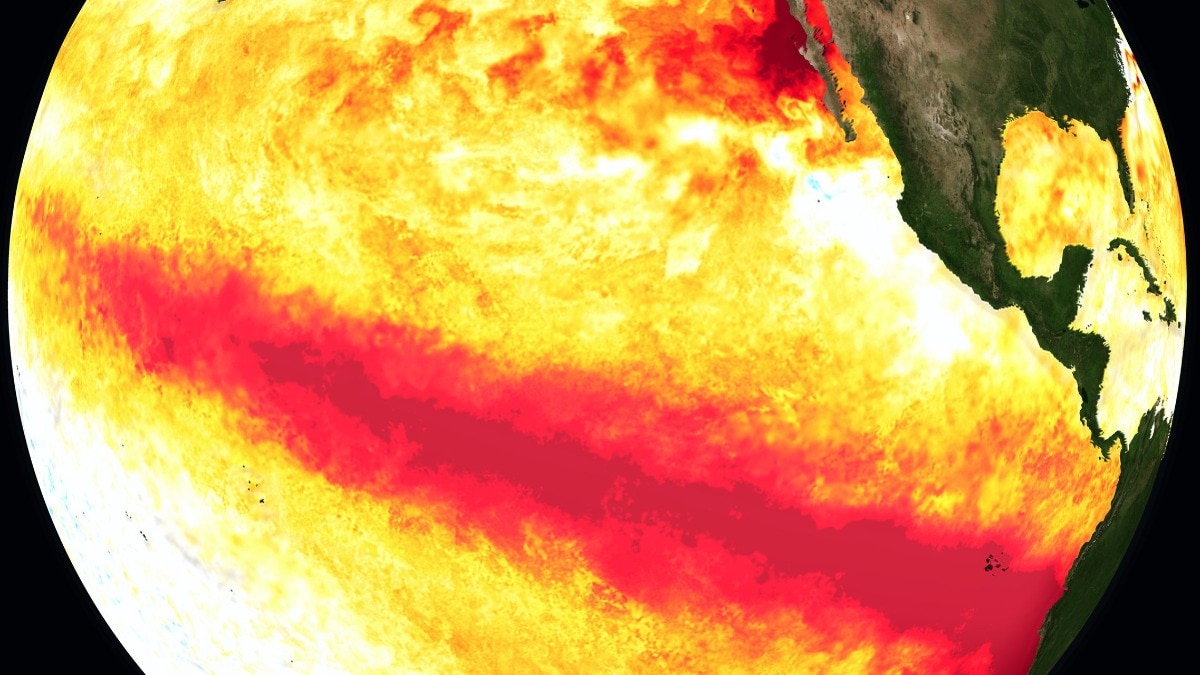
The world has just endured another month of exceptional heat, with the concern no longer confined to breaking temperature records.September 2026 was the second-warmest September ever recorded, as the Pacific Ocean continued to heat up under a strengthening El Nino and Antarctic sea ice remained unusually low. A woman splashes water on her face amid a heatwave in France. (Photo: AP) Together, these developments are shouting and pointing to the growing risks of a warming planet as countries prepare for the UN climate summit, COP31, in November.Global temperatures in September were 1.63°C above pre-industrial levels, and was the second consecutive month in 2026 to cross the 1.5°C mark, following August, according to data from the Copernicus Climate Change Service (C3S), operated by the European Centre for Medium-Range Weather Forecasts (ECMWF). August was the joint-hottest month ever recorded globally, matching July 2023, with temperatures 1.65°C above pre-industrial levels. (Source: C3S) September just fell short of becoming the warmest September in history, as it was just 0.11°C cooler than September 2023, the warmest one in the Copernicus record.EL NINO BRINGS ANOTHER PROBLEM The warming, as on land, was also evident in the oceans.Average sea surface temperatures across oceans outside the polar regions reached 21.05°C in September, the highest for the month in the Copernicus record.In the central tropical Pacific, the ocean region scientists used to monitor El Nino recorded its highest monthly sea surface temperature yet, at 29.70°C.El Nino is a natural climate pattern in which parts of the tropical Pacific become unusually warm, influencing rainfall and temperatures across the world. A patch of a warm Pacific Ocean is captured by a satellite image. (Photo: Windy) As it strengthens, El Nino could add to the warming already driven by human-caused climate change. What's more worrying is that scientists expect the current run of months above 1.5°C to continue into 2027.DROUGHT AND SINKING SEA ICE RING ALARMSThe effects of unusual warmth and dry conditions were visible across regions.Europe recorded its third-warmest September, with river systems seeing record-low September flows, disrupting shipping, water supplies and agriculture. Wreckage a WW-II German warship emerged due to drought in the Danube river. (Photo: AP) India, too, is facing concerns about extreme heat and water availability.The India Meteorological Department (IMD) reported that the 2026 southwest monsoon ended with rainfall 12.6% below normal, making it the fourth-lowest seasonal total since 2001.A highly deficient and uneven rainfall led to water shortfalls across the nation, with states declaring widespread drought and being forced to ration water. A man stands on a drought-struck patch of land due to lack of rain and dry conditions. (Photo: PTI) Meanwhile, Antarctic sea ice reached its third-lowest winter maximum in the satellite record, about 6% below average. Arctic sea ice also remained below average.The development has emerged as the world begins to prep for the latest edition of the UN Climate talks, COP31, scheduled for November 9–20 in Antalya, Turkiye.Unsurprisingly, governments face growing pressure to cut greenhouse gas emissions and limit how far, and for how long, the planet overshoots the warming threshold. (Source: C3S) If anything, September seems to have made a good case for what needs to be done.- Ends
September 2026 was world's second-hottest on record: Should we be worried?
Full Article
Original Source
Read the full article at Indiatoday →KhanList aggregates and links to publicly available news content. We do not host full articles from third-party sources. Always verify important information with original sources.