
Abdul El-Sayed will soon become the first epidemiologist in the Senate at a moment that would keep anyone with a public health background up at night. More than 5,000 Americans have been sickened by the measles this year and the United States is expected to lose its formal measles elimination status by the end of the month. Dengue fever is spreading in Florida, respiratory virus season is underway, and the United States just weathered a foodborne illness outbreak that sickened more than 20,000. In a wide-ranging interview with STAT, the Michigan Democrat emphasized that he is hopeful the United States can fix its growing trust-in-science problem, but he expressed frustration — at Health and Human Services Secretary Robert F. Kennedy Jr., at drug and insurance companies, and at the field of public health — for leading America down this path. “We’ve created the space for a few grifters to come in and in effect lie to the public,” El-Sayed said. “To create a level of distrust in science and in public health that has had disastrous consequences.” Below, El-Sayed speaks about his plan to rebuild trust in science and public health, his intentions toward Kennedy, and how gatekeeping has kept scientific discoveries from the public. The interview has been edited for length and clarity. As the senator-elect from Michigan, how can you help restore trust in health and science? What can you do from Washington to improve these issues? Well, No. 1, I think you can start taking on greed. Which is why I support “Medicare for All,” because it gets the greed of the insurance industry and the greed of the pharmaceutical industry and the greed of the hospital corporations out of the way so folks can benefit from the incredible things that science creates. No. 2, I think you have to show the grifters for who they are and how they are, the ways that they use big words that they don’t understand to trick the public, the ways that there’s always a catch at the end where they’re making money off of their grift. And No. 3, I want to reinvigorate a movement for public health that is willing to stand up to the power of big corporations. … I think we need to be willing to pick a righteous fight in service of the public health. You’ve mentioned your eagerness to investigate RFK Jr. Are you concerned at all that grilling RFK could serve to further polarize the people that do believe in him? Well, depending upon how you grill him. What do you mean? You can grill a steak and get it to perfect medium rare, or you can grill a steak and it’s well done and inedible, the way the president likes it. The mistake would be to focus on areas that are polarizing. I wanna understand why he DOGE’d away or he allowed the DOGE’ing away of the CDC [Centers for Disease Control and Prevention] and the FDA [Food and Drug Administration] in ways that left us eating crap lettuce. I want to understand why he hasn’t led the effort to take on the pesticides that are in our food or the additives in our food, why he’s kowtowing to the same corporations he said he was going to stand up to. I want to understand that. Let’s start there. Why Kennedy supporters should trust him I’m curious if you have a message to the people that do support Kennedy on why they should trust someone like you on issues of public health. Well, he told you he’s gonna stand up to the corporations. He hasn’t. I have. There’s no candidate who’s taken more spending against them in a primary election in their own party than I have, not in history. So at least you know I’m gonna stand up. I’ve spent my whole career trying to make people healthier, trying to address the greed in our health care system. There’s all this talk of back and forth: Should RFK Jr. be investigated? Should he be removed? What’s your latest thinking on this? I think we focus too much on him. I think the bigger question is how do we build the CDC and FDA and NIH [National Institutes of Health] that are worthy of the people that they serve, and that’s gonna always be my focus. So any investigation that we’re doing is about trying to correct the problems and address the flaws and the faults rather than trying to achieve any sort of retribution. The people are struggling. They are suffering. They can barely afford groceries, can barely afford gas, can barely see a doctor, are worried about the air they’re breathing, the water they’re drinking, the quality of groceries they’re even buying for an exorbitant price. My job is to serve them. The personalities involved are secondary to me. My job is to go in and figure out what went wrong, how do we fix it, and how do we hold accountable the people who — if they knowingly broke something — how we do we hold them accountable for it. It’s that simple. It’s less about the personalities. I think we focus too much on that. Working with RFK Jr. There’s been this desire among folks within your party to find common ground with RFK on issues. Are there issues that you think you could work with RFK and his team on, or are we kind of past that? If he actually wants to show up and start doing the things he said he was going to do on pollutants, on additives, sure. I’ll work with anyone. He could be wrong on 95 things, but if he’s right on five, I’ll work with him on those five and hold him accountable for the 95. Obviously Democrats can’t fix all of these issues. Trust issues started before RFK and I’m sure they’ll go on past RFK. How do you think about how we should judge Democrats’ progress on these issues? Are we achieving goals that keep people healthy, reduce their costs, empower them. … If we’re doing that, then we’re winning and we’re succeeding. If not, then we’re not. I want people to be able to be their healthiest and their wealthiest. That’s really the bottom line. It seems like a foregone conclusion, the U.S. will lose its measles elimination status. Do you have thoughts on that? It’s a travesty. We didn’t have to get here. In a lot of ways, obviously, I blame mis- and dis-information mongers like RFK Jr. for that, but I also blame our collective scientific and health care apparatus for creating the circumstances where somebody like him could step in, and he would have a willing audience willing to listen. Where did we go wrong in making health care so untrustworthy that somebody with such limited cognitive ability and who is so obviously a grifter, where he could step in and change so many minds? That’s on us. Science is ‘a beautiful, incredible gift’ The belief that the measles vaccine causes autism is going up over time, and it’s been debunked for 20 years. … How do we break through here? It starts with basic science education. … Too often the way that scientists speak is about speaking to other scientists to make themselves sound smarter rather than speaking to the public, to help the public feel as smart as they really are. By making sure that everybody understands how and why these things work. Science for the public good … that ethos is something that we’ve forgotten. And I really, desperately want us to remember it. Science is a gift. It’s a beautiful, incredible gift, and we missed the opportunity to communicate it in all of its elegance because too often it is this thing that is sort of held among the scientific community for consumption by the scientific community. And then we allow a lot of our best science to sit behind paywalls people can’t hop over. So there’s a resentment that happens in publicly funded science for the most part, and we’re keeping [it] out of the hands of people who need it most. These are big structural questions that ought to animate the way we do science for the rest of the 21st century, and I’m hoping that I can use my role as a doctor and a scientist in the Senate to start driving that conversation among the folks in science. You can focus on RFK Jr. all you want, but he identified a set of weaknesses that those of us who have committed our lives to science and the public’s health that we allowed to exist in the first place. How hopeful are you that we can solve these trust issues? I wouldn’t be doing this if I didn’t believe we could. Science always wins. I just hope that it wins quickly. But the beautiful thing about science is that in the end it always finds the right answer. STAT’s coverage of trust in science and public health is supported by the Dana Foundation, Greenwall Foundation, John Templeton Foundation, and Boston Foundation. Our financial supporters are not involved in any decisions about our journalism.
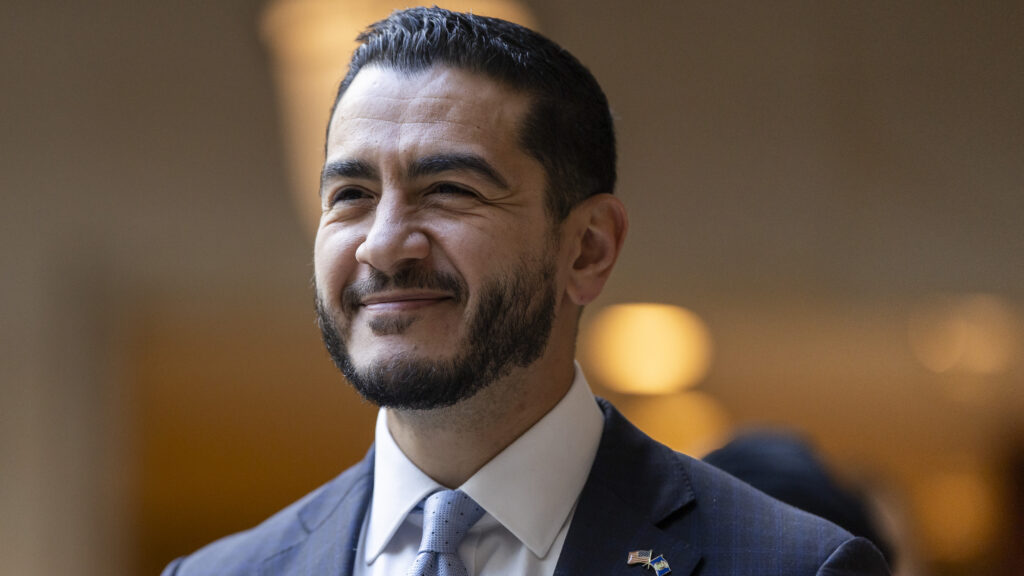
Senator-elect Abdul El-Sayed on restoring trust in science, the state of public health, and RFK Jr.
Full Article
Original Source
Read the full article at Statnews →KhanList aggregates and links to publicly available news content. We do not host full articles from third-party sources. Always verify important information with original sources.