
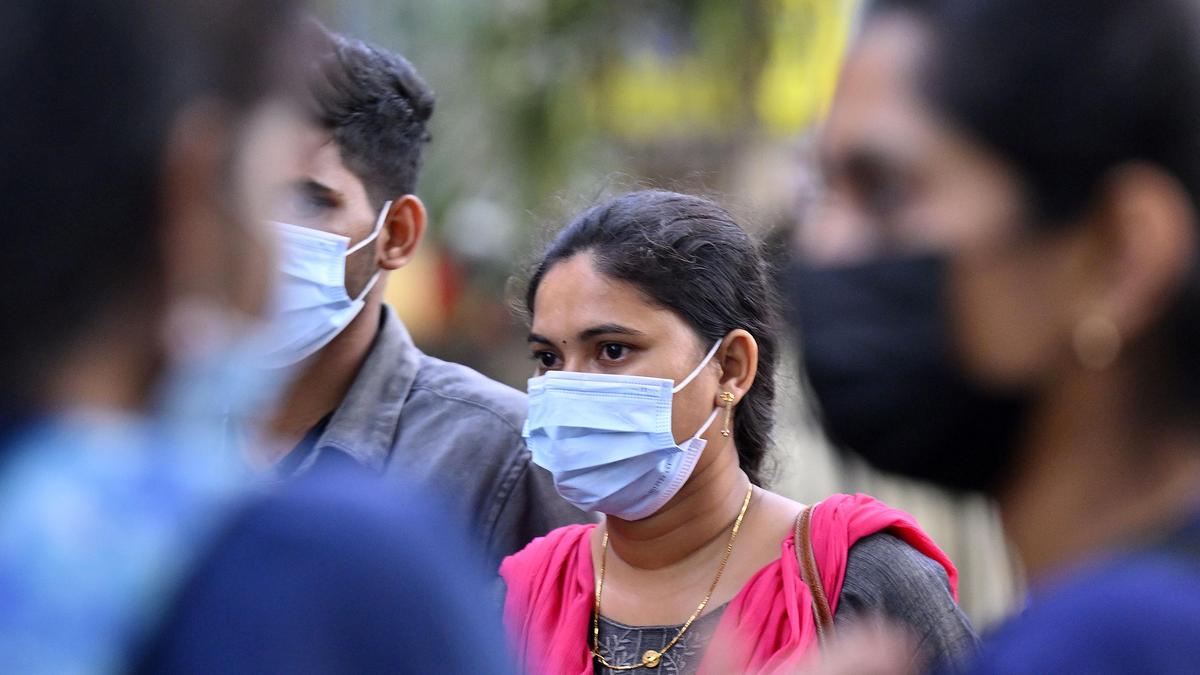
Wearing a mask, especially for those who are vulnerable, is important. If somebody is not well, the best thing to do is stay home and take a few days off. File image used for representational purposes only | Photo Credit: The Hindu Many common infections that we see are primarily related to the weather. Ahead of the northeast monsoon in Tamil Nadu, there are a lot of viral infections going around, especially respiratory viral infections including influenza, and other related viruses such as Covid-19. There is also a rise in dengue, because of mosquito breeding secondary to the rains. There has also been a rise in other bacterial infections: there are cases of gastroenteritis, as well as a significant number of typhoid cases.Seasonal influencesThe increase is attributable to the change in season. Respiratory viral infections are extremely seasonal and are related to rainfall. The monsoon has a very heavy effect on the transmission of respiratory viruses. Across India, there has been significant rainfall and, therefore, a huge spike in respiratory viral infections. Chennai usually does not see a spurt during this season, but this year, since there has been a little more rain than probably usual in August-September, there is a significant spike in respiratory viral infections.Dengue and influenza are also viral infections. Generally, most viral infections are short-lasting. Bacterial infections such as typhoid may last for more than a week. If you have a non-specific fever where you don’t feel so bad, meaning you may feel very tired and febrile, but you don’t have any major organ system involvement, or there is clearly respiratory involvement such as a running nose and sneezing, it is most likely a viral illness.When to see a doctorThe best thing to do is to get a physician’s advice. It is not a good idea to self-diagnose. A physician should be consulted if the fever is going on for five days or longer and is not getting better. Medical attention is also important if there is other organ system involvement, such as shortness of breath, burning while passing urine, persistent diarrhoea, jaundice or any other symptoms involving a specific organ. High-grade fever with shivering or shaking chills also requires medical attention as soon as possible. These symptoms can indicate that there is some kind of infection in the bloodstream.Self-medication, beyond paracetamol, is not advisable. It is best to seek a doctor’s advice. Just because a fever looks the same as an earlier bout doesn’t mean it is the same disease. Fever is a symptom, not a disease, and fever can happen in every and any infection, so it is not specific to an infection. Certain non-infectious conditions can also cause a rise in temperature. Just because you have a fever doesn’t mean you need an antibiotic or a specific antibiotic.Precautions to takePrecautionsthat we learned during the Covid-19 pandemic become very important when dealing with respiratory viral infections. Wearing a mask, especially for those who are vulnerable, is important. If somebody is not well, the best thing to do is stay home and take a few days off. Hand hygiene etiquette is absolutely clear. Not allowing water to collect, washing hands frequently, and ensuring safe water and safe food are common-sense measures that are very helpful.Workplaces are generally a little bit of a challenge because most workplaces are centrally air-conditioned and there is very little sunlight. The two things most germs hate are a fresh air supply and good sunlight. When you don’t have that, germs will multiply. These places are therefore even more important for respiratory etiquette, frequent cleaning and hand hygiene.What to keep in mindA fever may be less likely to be just a viral fever if it lasts more than five days or if there is high-grade fever with shivering. Another important factor is the presence of clear localising symptoms. If you are coughing out quite a bit and there is thick, gunk-like sputum, shortness of breath, pain while passing urine or burning while passing urine, these can suggest an infection of an organ system, most likely bacterial. Such cases may need further evaluation and possibly an antibiotic.Testing is not always needed. This is in line with the guidance from the government of India. The recommendation for testing is only for patients who are sick enough to go to the ICU. For patients who are otherwise well or only have mild-to-moderate symptoms, the recommendation is to go ahead and treat them empirically, rather than test them and delay the window of opportunity for appropriate treatment. Always pay attention to chronic underlying medical conditions. If you are a diabetic, make sure your blood sugars are under control. These factors also make a difference in terms of long-term outcomes and the risk of falling severely sick.(Dr. Subramanian Swaminathan is senior consultant, infectious diseases, Gleneagles Chennai. drsubramanians@gmail.com) Published - September 29, 2026 03:11 pm IST
Seasonal infections are doing the rounds: what you should know
Full Article
Original Source
Read the full article at Thehindu →KhanList aggregates and links to publicly available news content. We do not host full articles from third-party sources. Always verify important information with original sources.