
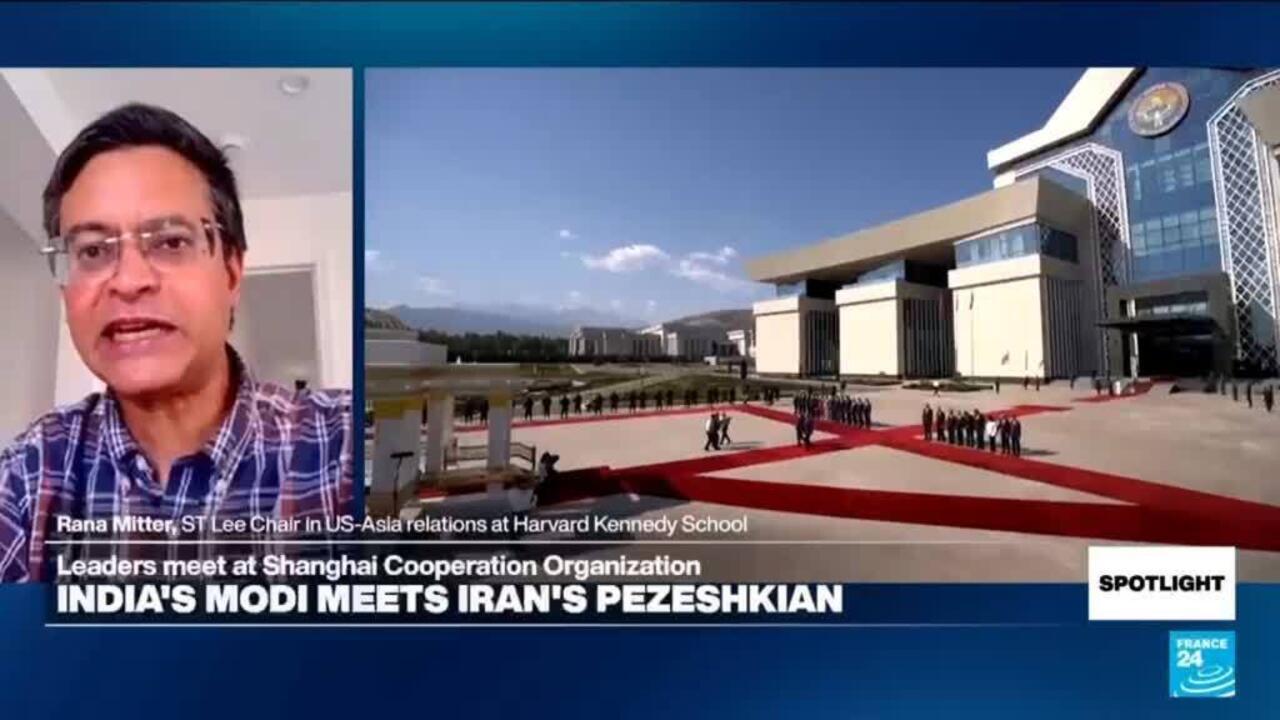
François Picard is pleased to welcome Rana Mitter, historian, author and ST Lee Chair in US-Asia Relations at the Harvard Kennedy School. He sees the significance of the Shanghai Cooperation Organization as it pertains to the evolution of a changing international system. Once largely a symbolic vehicle for China and Russia to signal their distance from a US-led order, the SCO is quickly becoming a forum in which Asian powers increasingly coordinate around the material foundations of security: energy, technology, infrastructure and trade. Mitter's analysis resists the simple narrative of an emerging anti-Western bloc. India, in particular, illustrates a more fluid order in which major powers can participate in rival institutions while pursuing their own strategic interests. What is emerging, in his view, is therefore not necessarily a replacement for American hegemony led by China, but a more fragmented and transactional system shaped by the long-term movement of economic and demographic weight toward Asia. Even a change of administration in Washington, Mitter argues, is unlikely to restore the unipolar order of previous decades. Bishkek thus offers a glimpse not simply of today's geopolitical alignments, but of a world whose economic and strategic center of gravity is steadily moving toward the Pacific. Our guests Rana MITTER Director of the University of Oxford China Centre
'Sea Change: Much of the world's economic GDP has moved to the Asia-Pacific region' - Rana Mitter
Full Article
Original Source
Read the full article at France24 →KhanList aggregates and links to publicly available news content. We do not host full articles from third-party sources. Always verify important information with original sources.