
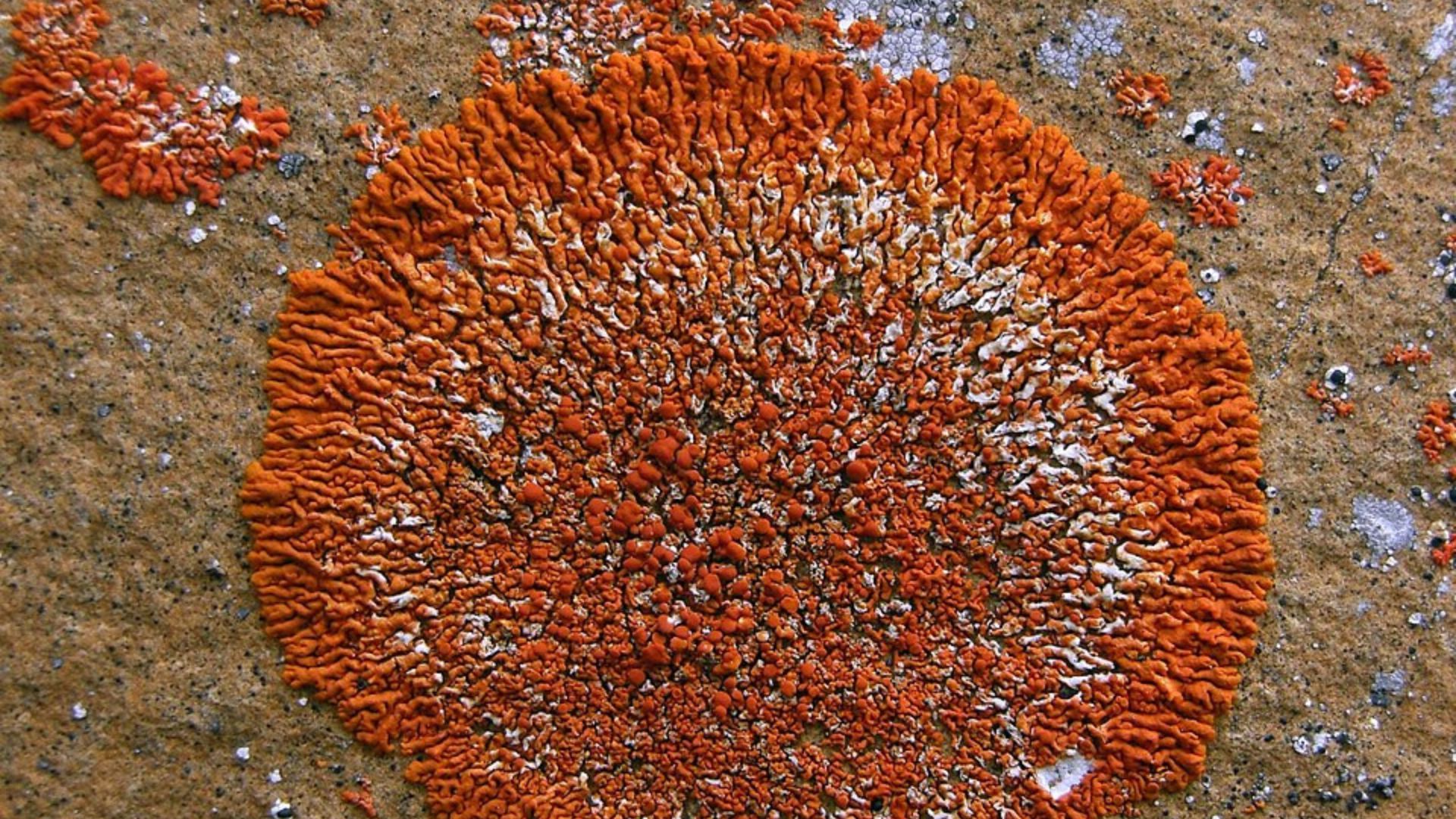
The world’s next high-tech gold rush might start with a tiny organism clinging to a backyard rock. Researchers in China have discovered that Xanthoria elegans could serve as a biological map leading straight to untapped rare earth elements. Tracking these coveted minerals usually takes years of costly geological guesswork. Now, prospectors might need to look for a splash of neon orange. Xanthoria elegans is an orange-yellow lichen found around the globe. “When integrated with remote-sensing techniques, this new biological proxy could offer a rapid, low-cost, and environmentally friendly means to detect REE-bearing carbonatites, offering a valuable complement to traditional exploration strategies,” the researchers noted. Nature’s geolocation tag A team led by Professor Li Yang of Peking University and the Chinese Academy of Sciences revealed that this colorful crust acts as a natural field indicator for rare earth-enriched carbonatite rocks. The development is a rare shift in modern prospecting. Reportedly, it is only the second time Chinese scientists have identified a clear biological indicator for mineral deposits; the first was “copper grass” found back in the 1950s. As per the research paper, this new study was conducted at the world-leading Bayan Obo deposit in Inner Mongolia. It shows that the lichen Xanthoria elegans acts as a reliable, cost-effective, and eco-friendly biological indicator for discovering rare earth element (REE)-enriched carbonatites to support the clean energy transition. X. elegans selectively colonizes REE-bearing carbonatites while remaining scarce on other lithologies, making it an easily visible field proxy on exposed rock. The correlation between Xanthoria elegans and rare earth deposits is remarkably strong: the lichen colonized 85 percent of surveyed carbonatites at this site. And the lichen also avoids non-bearing rocks like granite, sandstone, and quartzite, where its occurrence dropped to less than one percent. Chemical analysis further reveals this connection, suggesting that the lichen absorbs massive amounts of rare earth elements directly from its host stone, packing concentrations ranging between 3,500 and 17,000 parts per million. “This lichen contains exceptionally high REE concentrations (ΣREE = 3,500–17,000 ppm), which correlate closely with the REE contents of its substrates,” the study noted. Exploration scope The organism acts like a natural sponge. As underlying rock weathers, microscopic particles of rare earths and barium get woven directly into the lichen’s organic layers. Also, its strontium (Sr) and lead (Pb) isotope signatures are virtually identical to those of the underlying carbonatite rock. Prospecting without a guide is pure guesswork. As the organism’s distinctive brownish-orange tint comes from its own pigments rather than the minerals it absorbs, it stands out clearly against dull stone. Geologists might be able to spot it from impressive distances. Drone-mounted hyperspectral cameras scan the terrain for the lichen’s distinct color signature, letting survey teams bypass barren ground and zero in on high-potential targets instantly. Scientists still aren’t sure why the lichen prefers these specific rocks, but early evidence suggests the phenomenon isn’t localized. The South China Morning Post reported that the survey teams high in the West Kunlun Mountains have already reported similar sightings. Further broader global testing could confirm the link. And it could ultimately become the key to unlocking global tech resources by seeing just a patch of orange crust growing in the wild. Get the latest in engineering, tech, space & science - delivered daily to your inbox.Mrigakshi is a science journalist who enjoys writing about space exploration, biology, and technological innovations. Her work has been featured in well-known publications including Nature India, Supercluster, The Weather Channel and Astronomy magazine. If you have pitches in mind, please do not hesitate to email her.
Scientists are tracking beautiful bright orange lichen for rare earth deposits in China
Full Article
Original Source
Read the full article at Interestingengineering →KhanList aggregates and links to publicly available news content. We do not host full articles from third-party sources. Always verify important information with original sources.