
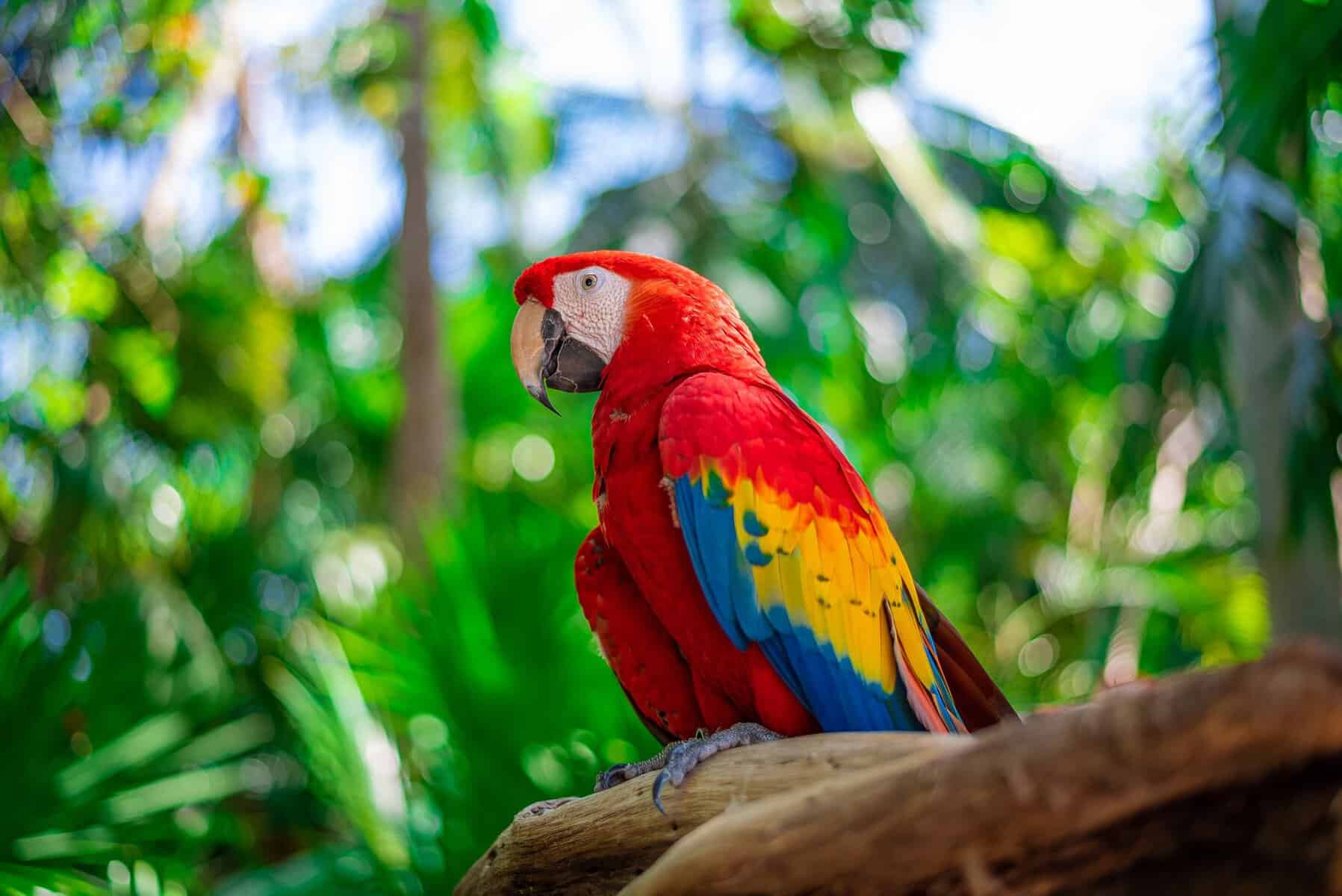
Scarlet macaws (Ara macao) on Costa Rica’s Central Pacific coast have begun pairing off for a new breeding season, and anyone with a phone or computer can watch part of it unfold from inside the nest. Punta Leona Beach Club & Nature Resort, in Garabito near Tárcoles, has added three camera-equipped artificial nests to its scarlet macaw conservation program, bringing the total to 11 for the 2026 season. The new nests were installed with support from Grupo INS, the state-owned insurance group. The cameras stream live on the program’s website, lapasrojaspuntaleona.com, which also has an English-language version. The birds are wild, not captive or handled, and the cameras let researchers follow them without disturbing the nests. According to the program, courtship runs from October through December, when pairs form, search for cavities and prepare nest sites. Egg-laying and incubation follow, with the first eggs and chicks expected between December and January 2027. The nesting period runs through June. The cameras will record how many eggs are laid in each nest, how many hatch and how many chicks survive to leave it, along with the toll taken by natural predators. Figures the program released in February show that eggs take 23 to 28 days to hatch and chicks spend 78 to 90 days in the nest before their first flight. Across the 2017 to 2025 seasons, the program recorded 98 scarlet macaw eggs in its monitored nests. Of those, 69 hatched and 46 chicks fledged, according to the same February figures. The 11 artificial nests are named Guanacaste, Guayabón, Wisconsin, Ceibo Bajo, Ceibo Alto, Pochote, Panamá, Camíbar, Espavel, Guayacán and Alfa. In February, the program reported monitoring 17 nests, 10 natural and seven artificial. The new announcement does not say how many natural nests are being followed this season. Each fiberglass nest stands about 1 meter (3.3 feet) tall and 50 centimeters (20 inches) across, with a cavity designed to mimic a tree hollow. The nests are mounted in trees 15 to 20 meters (49 to 66 feet) tall and lined with a layer of wood chips. Biologist Christopher Vaughan, who coordinates the project, said the program began 36 years ago and that early studies of natural nesting cavities shaped the design of the artificial ones. The first nests were built from wood, plastic and other materials in a workshop at Punta Leona, he said. Vaughan said some of the residents who joined the nest-building effort had been poachers known as laperos, who took macaw chicks from the wild. Today they are the ones who build the artificial nests, he said, calling it an excellent example of habitat management. That history still matters. In other parts of the country, poachers continue to target macaw chicks in the Osa region during breeding season. The program says about 215 scarlet macaws were counted in the area in the early 1990s and that current monitoring puts the number near 800, a nearly fourfold increase. Earlier program materials put the 1992 baseline at 226 birds. In April, Vaughan estimated that about 70 of the roughly 800 wild scarlet macaws in the Central Pacific live at Punta Leona itself. Alongside the nests, the program has protected habitat and set up nurseries of native trees to reforest the region, providing future nesting trees and food sources. According to the program, the macaws nest in trees such as ceiba, gallinazo and javillo, and feed on seeds from species including royal palm, ojoche, espavel, teak and beach almond. Scarlet macaws are now also recorded in communities including Esparza, Orotina, San Mateo, Acosta and Parrita, and around La Cangreja National Park, the program says. Nearby Carara National Park remains one of the most reliable places in the country to see them in flight. Gerald Jiménez, Punta Leona’s corporate relations manager, said the resort aims to go beyond sustainability and leave its surroundings better than it found them. The resort also called on other companies to join conservation efforts, as Grupo INS has done. Punta Leona has also spoken out on the keeping of wild birds. In April, it opposed a draft revision of Costa Rica’s wildlife regulations that critics said could open the door to keeping macaws and parrots in captivity. The program’s long-running work with scarlet macaws rests on the opposite idea, that the birds breed and fly free. The nest streams run around the clock, and activity inside the nests is expected to pick up from December, when the first eggs are due.
Scarlet Macaws Start Nesting in Costa Rica, and You Can Watch Live
Full Article
Original Source
Read the full article at Ticotimes →KhanList aggregates and links to publicly available news content. We do not host full articles from third-party sources. Always verify important information with original sources.