
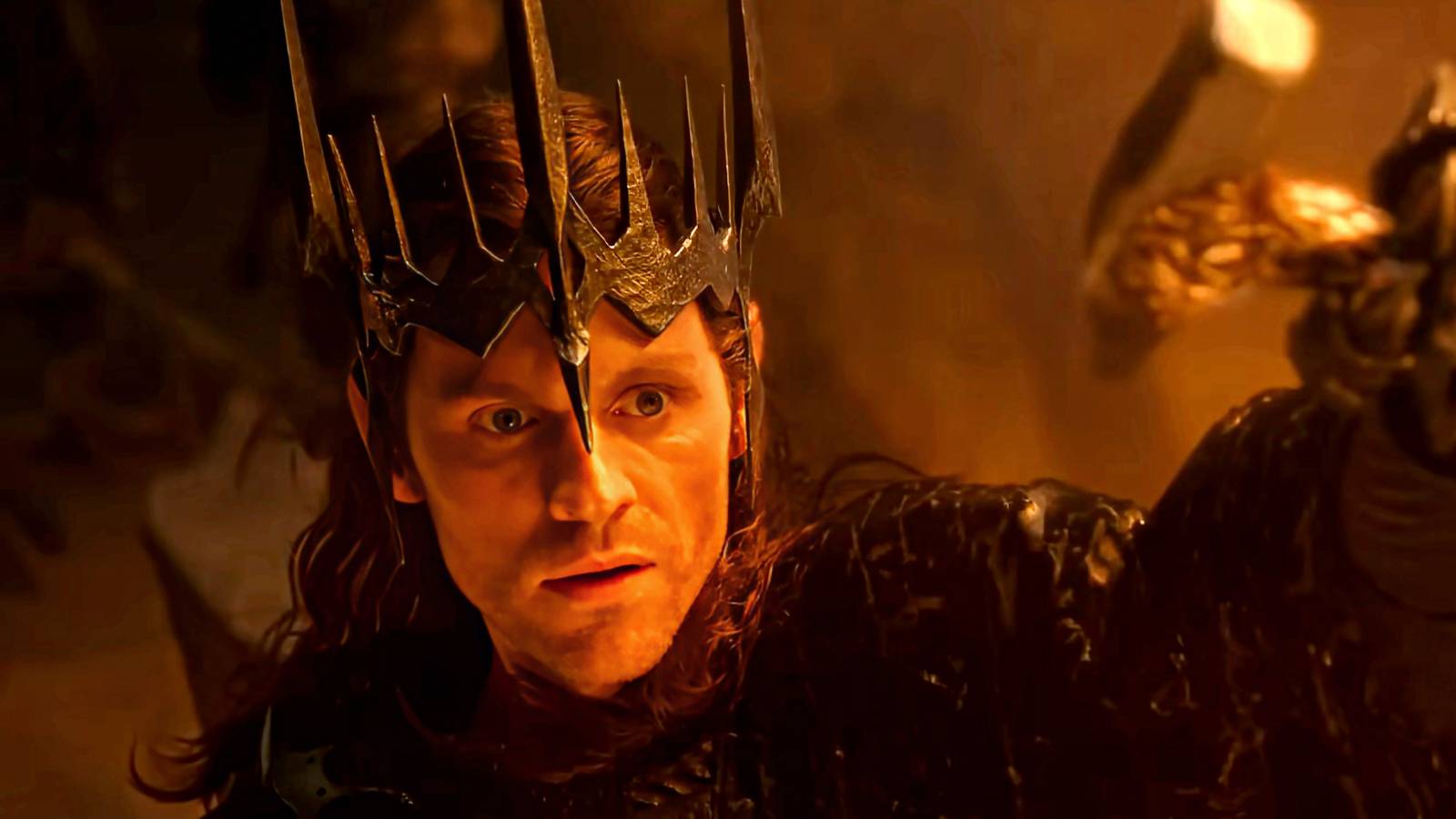
Published Nov 24, 2026, 10:00 PM EST Grant Hermanns is a TV News Editor, Interview Host and Reviewer for ScreenRant, having joined the team in early 2021. He got his start in the industry with Moviepilot, followed by working at ComingSoon.net. When not indulging in his love of film/TV, Grant is making his way through his gaming backlog and exploring the world of Dungeons & Dragons with friends. Sign in to your ScreenRant account Warning: Major SPOILERS lie ahead for The Lord of the Rings: The Rings of Power season 3, episode 7, "Forging of the One Ring"!EXCLUSIVE: Sauron finally has the One Ring in The Lord of the Rings: The Rings of Power season 3, and it came with a few tweaks. After having spent the majority of the season struggling to replicate Celebrimbor's forging abilities to create the all-powerful relic, and being rejected by Mount Doom's volcanic prowess, episode 7, entitled "Forging of the One Ring," saw Charlie Vickers' Sauron venturing to Moria to consult the Balrog on how to harness Mount Doom to his will. Relinquishing himself to the ancient area, the Dark Lord is successful in crafting the One Ring, with his power immediately being felt by Ring bearers across Middle-earth. Ahead of the episode's premiere, ScreenRant's Grant Hermanns interviewed Stefan Schwartz to discuss The Lord of the Rings: The Rings of Power season 3, episode 7. Breaking down his approach to the ending sequence of Sauron forging the One Ring, the director explained that one of his first goals for the sequence was to avoid replicating the illustrations done by Alan Lee of the moment from J.R.R. Tolkien's novel, in which he's "at a forge...just bashing a ring." Schwartz expressed that the more routine imagery of Sauron working at a forge was "very mundane" and, in his opinion, lacked the appropriate scale of the creation of an artifact that "will be [key to] Frodo and Bilbo's story 1000 years later" in both the Hobbit and Lord of the Rings novels. In setting out to create his own visual style for the One Ring's forging in The Rings of Power season 3, the director had a checklist of a few elements to "feel like it had a lot of depth and thought behind it." For starters, Schwartz came back to "the idea of music" and its connections to Middle-earth's creation, denoting how "a musical track was created, and darkness was melded into that music" — referring to the Ainulindalë, or the "Music of the Ainur" — and from such the fictional world was born: Stefan Schwartz: So, I thought that Middle-earth, that music should — being true to Tolkien — be there in some form. So, the idea that Sauron doesn't just create it himself, but there's a meld between him and the mountain. So, the hammering waves were these ideas of musical vibrations that send out, and the mountain effect and reverberates back to slowly, through cymatics, create the Ring. One of the other main elements Schwartz sought to focus on in crafting The Rings of Power season 3's One Ring forging is the idea that Sauron "would have to sacrifice himself" in order to create the artifact. As the director points out, the Dark Lord's efforts to make the One Ring was in and of itself a moment of unique character development, as episode 7 begins with him entering Mount Doom with the knowledge of the ingredients needed to forge it, but is "going in there arrogant, thinking he knows everything." Instead, Sauron is immediately "tossed aside and thrown against the wall" by the volcano, resulting in him "rac[ing] away to get the Balrog's help." Schwartz cited this as a key way of making "Mount Doom a character in this scene," with the One Ring's forging being a two-hander that establishes "a connection with the mountain" for Vickers' antagonist in a way not previously shown in Lord of the Rings adaptations: Stefan Schwartz: Second time around, he has humility. He kneels down, he offers the hammer to the mountain, and the mountain does respond at this point. So, for me, it was about a connection with the mountain. So, the Ring is created by the two of them rather than him just hammering a piece of metal. That was really important. So, when talking with Jason [Smith], we did a lot of sketches about how we'd see the metal moving, and the shapes it might form. And then we suddenly realize, "Oh my God, it's forming a ring, but it's a rough ring." It needs Sauron's sacrifice of blood and his ultimate, I think of it as death, before it can be fully created whole. As with much of the show, Sauron's forging of the One Ring in The Rings of Power season 3 was already coming with a variety of changes from Tolkien's source material. Unlike the books, the Lord of the Rings prequel saw the Maiar's true nature exposed by the Elves, thanks in large part to Morfydd Clark's Galadriel, before he could create the powerful relic. In Tolkien's work, Sauron, still believed to be the fair-seeming Annatar to Elves, created the One Ring in secret before Eregion fell under his control. Moreover, the Rings of Power season 2 finale saw Sauron kill Celebrimbor well before the forging, which season 3 showcases as leaving him in the dark on the specifics of how to effectively create new Rings. In the source material, the Elven smith and Eregion leader wasn't put in danger until the War of the Elves and Sauron, in which the Dark Lord captured Celebrimbor and tortured him to find the Nine Rings of Men, during which he died before he would reveal the location of three additional, more powerful Rings the smith created in secret. The other major change to come from The Rings of Power season 3's One Ring forging is that Sauron had to turn to the Balrog in order to better understand how to harness Mount Doom's powers. In establishing a connection between the pair not frequently featured in Lord of the Rings, it also added the layers Schwartz was looking for while further amplifying the stakes for everyone fighting against Sauron. Despite its changes, it is still very clear that Schwartz and the team behind The Lord of the Rings: The Rings of Power season 3 were still driven to deliver an overall faithful and grand approach to the One Ring's forging. The fact that the director even went back to the wider lore of Tolkien's work with the Ainulindalë and better highlighting Mount Doom's own innate abilities shows the deep research and love the creatives have for the show, evidenced all the more by the series-high reviews for the season on Rotten Tomatoes. The Lord of the Rings: The Rings of Power season 3 is now streaming in its entirety on Prime Video. Release Date September 1, 2022 Network Amazon Prime Video Showrunner John D. Payne, Patrick McKay Cast Ismael Cruz Cordova Arondir Set in the Second Age of Middle-earth, The Rings of Power explores the forging of the iconic rings, the rise of the Dark Lord Sauron, and the epic events leading up to the stories in J.R.R. Tolkien's classic novels. Directors J.A. Bayona, Sanaa Hamri Writers Patrick McKay, John D. Payne, J.R.R. Tolkien, Justin Doble, Jason Cahill, Gennifer Hutchison, Stephany Folsom, Nicholas Adams Franchise(s) The Lord of the Rings Main Genre Fantasy Creator(s) Patrick McKay, John D. Payne Executive Producer(s) Patrick McKay, John D. Payne, Justin Doble, Lindsey Weber, Jason Cahill, Callum Greene, Gennifer Hutchison, Charlotte Brändström, Belén Atienza, J. A. Bayona, Sharon Tal Yguado, Bruce Richmond, Eugene Kelly Producers Kate Hazell, Christopher Newman, Ron Ames, Matthew Penry-Davey Seasons 3 Story By Patrick McKay, John D. Payne Streaming Service(s) Amazon Prime Video
Sauron's One Ring Forging Changes & Tolkien Easter Egg Broken Down By Rings Of Power Director
Full Article
Original Source
Read the full article at Screenrant →KhanList aggregates and links to publicly available news content. We do not host full articles from third-party sources. Always verify important information with original sources.