
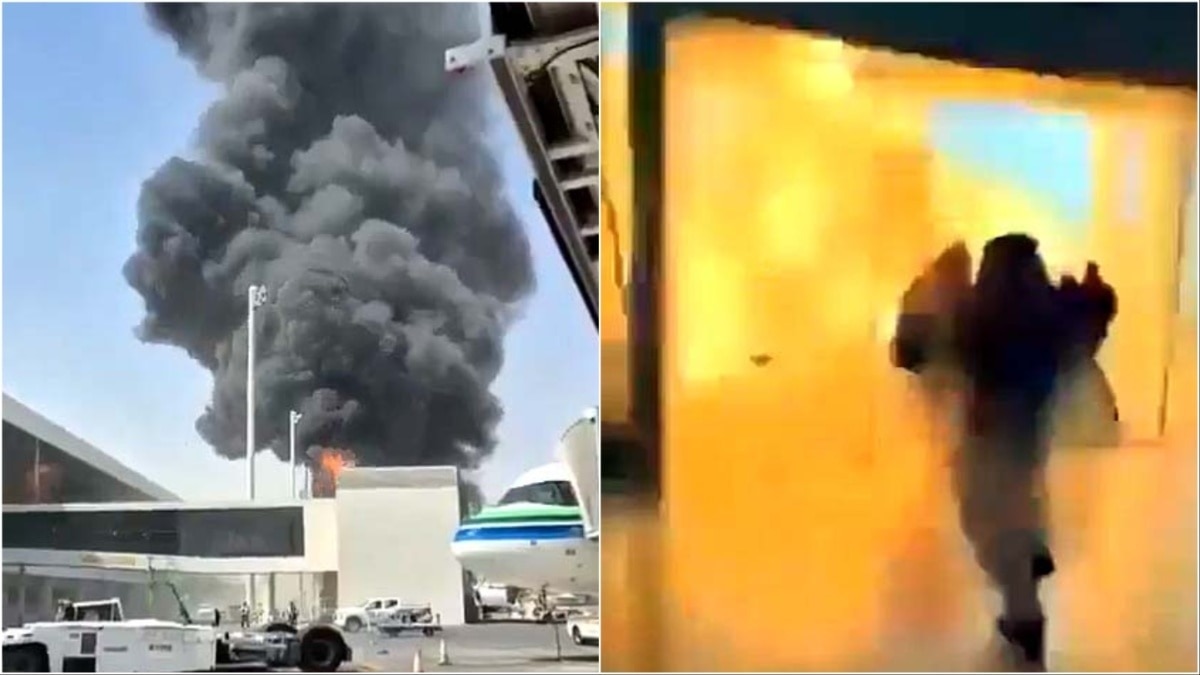
The attacks on Saudi Arabia, a regional powerhouse and the world's top oil exporter which has poured billions of dollars into its military, were the deadliest to hit the kingdom in a decade.Saudi energy minister says Houthi attacks testing infrastructure, vows response (Screengrab: X)Saudi Arabia's energy minister acknowledged on Monday that the kingdom's infrastructure and resilience had been tested, as he vowed a firm response following a wave of deadly attacks claimed by Yemen's Houthi rebels.The attacks over the weekend marked a sharp escalation in the conflict involving the Houthis, against whom Saudi Arabia has long supported Yemen's internationally recognised government. On Sunday, a strike hit Riyadh's King Khalid International Airport, killing one person, hours after an earlier attack on the site killed 13 people and wounded hundreds, forcing authorities to suspend operations.The attacks on Saudi Arabia, a regional powerhouse and the world's largest oil exporter, were the deadliest to hit the kingdom in a decade, despite its billions of dollars in military spending."For Saudi Arabia, these circumstances have tested our infrastructure, our institutions, our people, and our resilience. They have also tested decisions made long before present crises, because resilience is built before crises begin," Energy Minister Prince Abdulaziz bin Salman said. "Energy security can't be taken for granted," he told a high-profile conference in Riyadh. "The events of recent weeks are serious, our response must be equally serious."'THE WHOLE HOUSE SHOOK'The Houthis on Sunday claimed multiple attacks over the preceding 24 hours, including strikes on the airport, and threatened to continue targeting the kingdom's transit hubs, describing them as "a theatre of operations for our forces".Hours later, the Saudi-led coalition fighting the group said a projectile had struck King Khalid International Airport, sparking a fire. Air defences also intercepted a missile nearby, it added. AFP journalists and local residents reported hearing multiple blasts in Riyadh on Sunday. "The whole house shook," said a resident of the Al-Aarid neighbourhood in the city's north.Authorities extended the suspension of airport operations even as Saudi Arabia's high-profile convention and entertainment season gets underway this month. Riyadh hosts a packed calendar of events, including its flagship investment conference, which draws foreign leaders and business executives.The airport was not the only aviation facility targeted. Saudi Arabia's civil aviation authority also reported an attack on King Fahd International Airport in Dammam, in the kingdom's east.The Saudi-led coalition said on Monday that it had also "intercepted and destroyed" a Houthi ballistic missile heading towards the southern city of Khamis Mushait, home to a major military base.'FULL-FLEDGED WAR CRIME'Despite Saudi Arabia's extensive military spending, Houthi attacks continue to penetrate its defences."Saudi air defences have been able to intercept some Houthi missile and drone attacks, but Saudi Arabia is so large that it's simply impossible for them to consistently defend themselves," said Thomas Juneau, a security analyst at the University of Ottawa.The anti-Houthi coalition described Saturday's attack as a "full-fledged war crime" and vowed to "respond decisively".Houthi media reported two Saudi strikes in Yemen's Houthi-controlled Sanaa governorate on Sunday. A spokesman for the Houthi-run health ministry said on X that one of the strikes killed a civilian and wounded five others.Saturday's attack on Riyadh drew condemnation from the United Nations and leaders around the world, including US President Donald Trump, who said he was considering joining Saudi strikes against the Houthis.Israeli Prime Minister Benjamin Netanyahu, whose country does not have diplomatic relations with Saudi Arabia, also condemned what he called a "horrific terrorist attack".Iran, which backs the Houthis, said on Monday that it was "deeply concerned" about the escalation.Saudi Arabia's civil aviation authority said four Saudi citizens, two Bangladeshis, one American, one Egyptian, one Jordanian, one Syrian, one Palestinian and one Sudanese national were killed, while 309 people were wounded.The Indian Embassy in Saudi Arabia also confirmed that one Indian national died on Sunday after being injured the previous day.WITNESSES DESCRIBE CHAOSWitnesses to Saturday's strike described scenes of chaos in its aftermath. "Some had lost a hand or an arm. People were running while carrying injured people, covered in blood," a 32-year-old Riyadh resident told AFP.The US, Canadian, German and Spanish embassies in Saudi Arabia have advised their citizens to avoid Riyadh airport.Saudi Arabia has led an international coalition supporting Yemen's government militarily since 2015. Its campaign has included efforts to control Yemeni airspace and the airport in Sanaa, the Houthi-held capital.Juneau said the Houthis now "want to do to Saudi Arabia what Saudi Arabia does to them".On the ground in Yemen, Saudi-backed government forces were advancing in a counter-offensive against the Houthis near the Bab al-Mandab Strait, a key international shipping route, military sources said on Saturday. The Houthis claimed to have repelled the advance.Claims by both sides have been difficult to independently verify amid rapidly changing conditions on the ground and limited access for journalists.- Ends
Saudi vows firm response after Houthi attacks hit Riyadh airport, energy sites
Full Article
Original Source
Read the full article at Indiatoday →KhanList aggregates and links to publicly available news content. We do not host full articles from third-party sources. Always verify important information with original sources.