
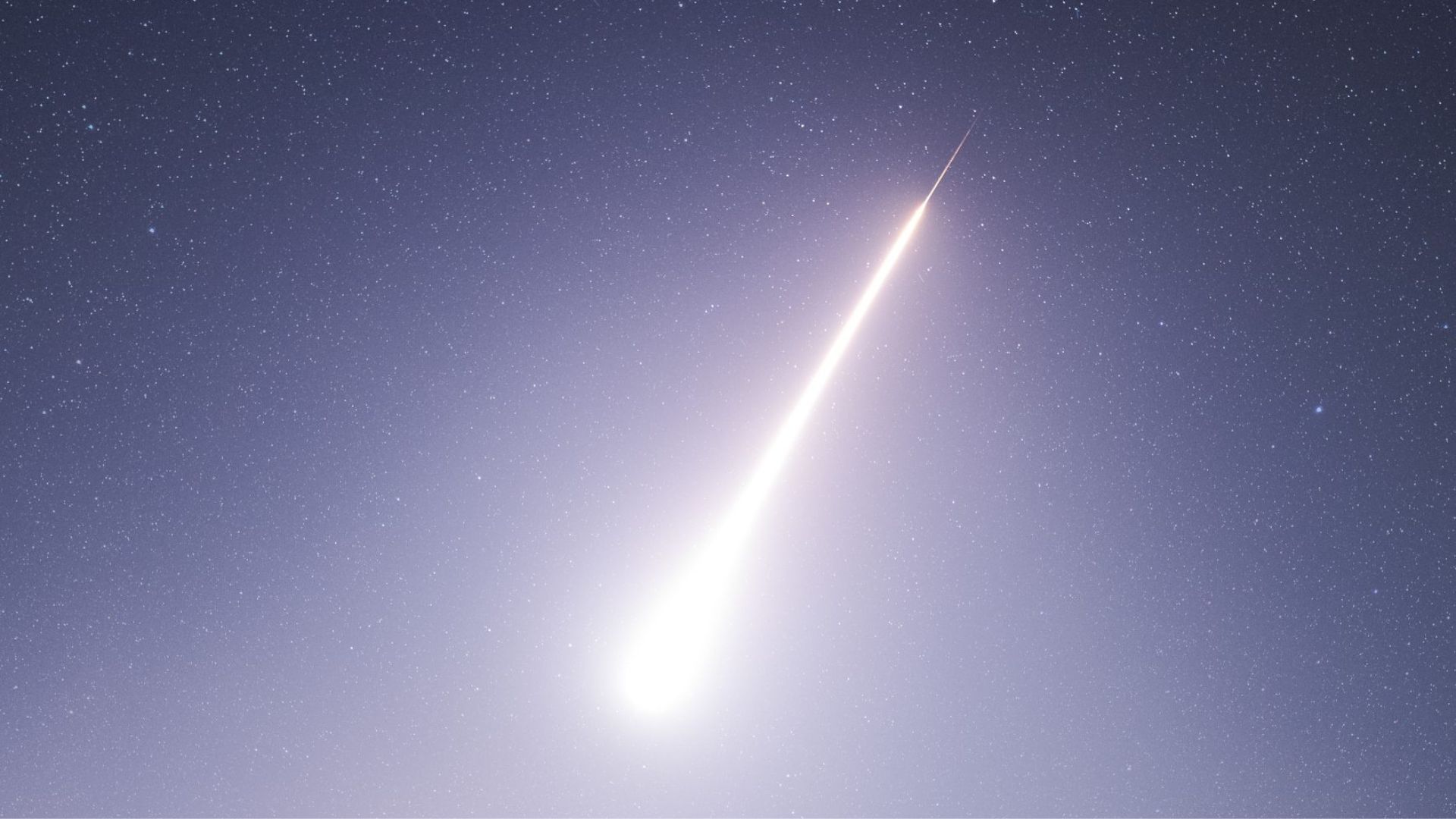
A rocket flight involves a complex sequence of physical phenomena from launch to target arrival. And there’s been a need to model these step-by-step physics specifically for the reentry phase. Now, engineers at Sandia National Laboratories successfully conducted the Atrax sounding rocket flight test to collect real-world reentry vibration data. The mission captured vibration data to aid the development of the W93 warhead, which is the United States’ first completely new nuclear weapon program in nearly 30 years. Outfitted with advanced external sensors, a new separation system, and a three-stage sounding rocket, the test captured vital thermal, fluid, and structural data without damaging the vehicle. “The Atrax sounding rocket flight test is helping us improve credibility and confidence in our modeling and simulation tools in preparation for the W93 warhead,” said Ross Wagnild, an aerospace engineer at Sandia. “Getting confidence in our toolset earlier allows more time to inform the design of components.” Sensors to collect data When a warhead plunges back into Earth’s atmosphere, aerodynamic drag creates violent mechanical vibrations. Replicating those forces in a ground lab is almost impossible. If an internal component shakes loose, the entire weapon fails. To solve this, engineers took a shortcut. Rather than waiting for an expensive full-program flight test years down the line, Sandia launched a suborbital three-stage sounding rocket following an agile, 18-month turnaround. Particularly, the rocket didn’t need to look like the final weapon, but it just needed to experience the same brutal environment. In the testing, surface fluid dynamics and structural strain in real time were captured by deploying cutting-edge external sensors directly onto the vehicle’s outer shell. Regular flight tests rely exclusively on internal vibration sensors, leaving external aerodynamic forces largely to estimation. This direct monitoring of outer atmospheric interaction clarifies how external friction and airflow drive internal structural stress, thereby sharpening predictive flight models. “Vibration during reentry is a mechanical environment challenging to some of our components,” said Peter Coffin, a Sandia engineer who analyzes structural dynamics. “This test helps us understand our models so that we can better predict those environments as we move forward on new vehicles.” Triad modernization To map these complex conditions, engineers leveraged advanced simulation models and experimental diagnostic capabilities developed through NNSA’s Advanced Simulation and Computing and Engineering and Technology Maturation programs. Interestingly, the testing gave early access to real flight physics two full years ahead of the scheduled W93 flight tests. This early timing provides a rare advantage: refining non-nuclear components while structural design tweaks remain fast and inexpensive. The evaluation for nonnuclear component survivability much earlier in the development process could make design adjustments faster, cheaper, and tailored directly to the extreme environments the hardware will actually face. This data-driven precision directly supports the nation’s nuclear triad modernization, and ensures the W93 warhead will reliably arm the U.S. Navy’s sea-based strategic deterrence leg when fielded in the 2030s. Moreover, the aerodynamic datasets captured during the Atrax test carry hypersonic ripple effects, providing vital physical evidence to enhance predictive modeling across broader U.S. hypersonic research initiatives. Sandia trims years off the design curve through the direct substitution of digital predictions with hard physical evidence. This proactive approach ensures the next generation of deterrence works long before it ever has to fly. Get the latest in engineering, tech, space & science - delivered daily to your inbox.Mrigakshi is a science journalist who enjoys writing about space exploration, biology, and technological innovations. Her work has been featured in well-known publications including Nature India, Supercluster, The Weather Channel and Astronomy magazine. If you have pitches in mind, please do not hesitate to email her.
Sandia tests rocket to capture violent reentry data for future US warhead designs
Full Article
Original Source
Read the full article at Interestingengineering →KhanList aggregates and links to publicly available news content. We do not host full articles from third-party sources. Always verify important information with original sources.