
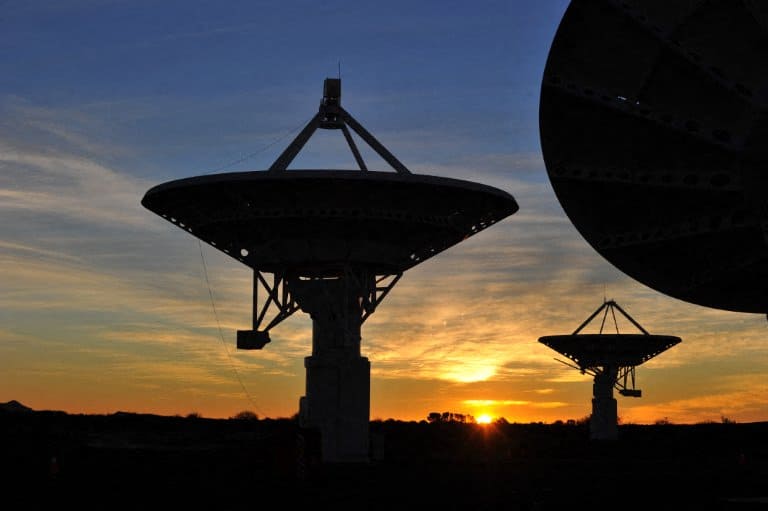
Brics has incorporated astronomy into cooperation programme, establishing Brics Astronomy Working Group that met in Pune. Astronomy extends far beyond the mystical and philosophical dimensions of the cosmos. It is a scientific discipline rooted in physics, chemistry and maths, underpinning much of our understanding of the universe while driving technological advancement and innovation. Its applications range from space exploration and research to technologies such as Wi-Fi, GPS and digital imaging, as well as medical breakthroughs involving diagnostic tools such as MRI and PET scanners. Recognising astronomy’s contribution to scientific progress and human development, Brics has incorporated the discipline into its programme of cooperation, establishing the Brics Astronomy Working Group (BAWG), which recently held its 12th gathering in Pune, India. Three Brics members – China, South Africa and India – among the bloc’s most advanced countries in astronomy and space research, played prominent roles at the meeting. China ranks among the world’s leading nations in astronomy and space research – second only to the US. It is home to the world’s largest single-dish radio telescope, the five hundred-metre Aperture Spherical Telescope, popularly known as “Heaven’s Eye”. South Africa, which chairs the group, also featured prominently, with a 17-member delegation led by Takalani Nemaungani, chief director of astronomy at the department of science, technology and innovation. The delegation showcased the country’s astronomy programmes and infrastructure, including the MeerKAT radio telescope and the forthcoming Square Kilometre Array (SKA) in the Karoo. Both are among the world’s most significant astronomy and big-data engineering projects. India, the host country, has substantial astronomical infrastructure, including the Giant Metrewave Radio Telescope, and is a key partner in major global astronomy initiatives such as the SKA and the Thirty Metre Telescope in Hawaii. Supported by the Indian Space Research Organisation (ISRO), the country is also active in multiwavelength-transient research. Brazil and Russia are likewise making significant contributions to astronomy. Brazil’s focus includes optical and astrophysical research, as well as participation in international initiatives such as the Gemini Observatory. This facility comprises twin 8.1-metre optical and infrared telescopes – one in Hawaii and the other in Chile – providing coverage of almost the entire sky. Russia has a long and distinguished history in radio astronomy, with facilities including the Pushchino Radio Astronomy Observatory and extensive cross-shaped radio telescope arrays. Among the highlights of the BAWG meeting was the Brics Astronomy Data Science Hackathon, organised in collaboration with India’s Aryabhatta Research Institute of Observational Sciences and ISRO. The initiative exposed participants to data-driven research challenges, offering practical experience in computational techniques and collaborative problem-solving. Education and human capital development also featured prominently. These priorities were advanced through science communication training and the launch of the Brics astronomy robotics and coding training initiative, designed to extend cooperation beyond established researchers and create opportunities for the next generation of scientific talent. Also notable was the handover of an Inter-University Centre for Astronomy and Astrophysics banner symbolising India’s commitment to research cooperation by India’s high commissioner to South Africa Prabhat Kumar and consul-general Ruby Jaspreet to Southern African Large Telescope and National Research Foundation’s SA Astronomical Observatory director Rosalind Skelton. For SA, the meeting provided a platform for promoting knowledge exchange, strengthening institutional relationships and creating opportunities for researchers to engage with new datasets, technologies and research methodologies. It also offered scope to align scientific priorities.
SA astronomers stand tall to keep Heaven’s Eye on universe
Full Article
Original Source
Read the full article at Citizen →KhanList aggregates and links to publicly available news content. We do not host full articles from third-party sources. Always verify important information with original sources.