
James Rodgers is the author of The Return of Russia: from Yeltsin to Putin, the story of a Vengeful Kremlin Welcome to The i Paper’s new mini-series, in which former Moscow correspondent James Rodgers explores the Russian threat to the UK – and how Britain is fighting back Putin has taken Europe to the brink – the next Russian attack could target Britain Russia’s espionage battle with Britain has a history of rivalry and suspicion that goes back more than a century. Now, it is increasing in intensity – and changing in nature. When Russia’s intelligence services look at the UK, they see an enemy looking for weaknesses to exploit. “It’s probably one of the most emotional topics in the history of Russian intelligence,” says Andrei Soldatov, an expert on the Russian intelligence services, and co-author, with Irina Borogan, of Our Dear Friends in Moscow. “It’s something about the concept of the fragility of the Russian state, which is an important part of the ideology of Russian intelligence.” Soldatov has personal experience. In March, he was jailed for four years in absentia (he now lives outside Russia) having been declared a “foreign agent” by the Russian state because of his work. Shorts The belief that enemies – and the UK, in particular – are ranged against Russia goes all the way back to foreign attempts to overthrow Lenin’s Bolshevik regime after they seized power in the October revolution of 1917. Add to that UK-Russia confrontation during the Cold War – “Kim Philby is still the biggest hero of Russian intelligence,” Soldatov says of the man who spied for the Soviets while working at the Foreign Office – and you have a history of enmity that feeds into the current conflict. British intelligence officer and double agent for the USSR, Kim Philby (Photo: Bettmann Archive) In between, there have been good times in relations. The decade after the end of the Cold War, and the early Vladimir Putin years, saw diplomatic co-operation, and increasing trade, even if the spying did not stop. (In 2006, British diplomats in Moscow were caught using a fake rock containing electronic equipment. It was also around that time that a Russian journalist I knew in the West told me that about half of Soviet foreign correspondents had also been reporting to the GRU, Russia’s military intelligence.) But we are not in those relatively good times any more. Since Russia’s full-scale invasion of Ukraine in 2022, the increasingly confrontational diplomatic relationship between London and Moscow has meant an increased threat from Russian spies. In 2024, the expulsion of the Russian defence attaché – “an undeclared military intelligence officer”, in the words of the government – was just one measure taken to frustrate the Kremlin’s network of agents. Diplomatic expulsions are an established counter-measure – but they are not enough in the changing world of spying and sabotage. In the 20th century, agents were generally classified as “legals” (those using diplomatic cover) and “illegals” (those in the foreign country under entirely false pretences). Some in the latter category were trained for years, at great expense, to be able to fit imperceptibly into the societies they were to spy on. Now, there are new kinds of spies. They are cheaper to manage, harder to trace. In short, a whole new threat. You might even say there’s an app for it: people being hired online for one-off attacks. Vladimir Putin, right, with his then- defence minister Sergey Ivanov, centre, and GRU military intelligence chief Valentin Korabelnikov in Moscow in 2006 (Photo: Konstantin Zavrazhin/Getty) The 2024 arson attack on the east London warehouse containing supplies for Ukraine, for example, was just one incident showing how dangerous this can be. It was organised by a man who had made contact with Wagner, the Russian mercenary organisation, on Telegram. Six men are now serving long jail terms as a result. Soldatov sees yet another potential new threat: veterans of Russia’s war in Ukraine, with little to lose – “And these guys, by definition, would be much more aggressive, and would care much less about the risks they take”. The reasons for the August visit of the CIA director, John Ratcliffe, to Moscow were not made public, but did show that US intelligence is keeping its eyes on the Kremlin. Though they have little to show for their trips to Moscow, the talks that Donald Trump’s envoys, Steve Witkoff and Jared Kushner, have held with Putin are a diplomatic process of sorts. While that continues, the Kremlin will not want to antagonise the White House. Relations with London are another matter. The Russian ambassador left in July, prompting speculation that the mission would be downgraded – though the Russia foreign ministry has denied this. Even so, his absence does not mean that other representatives of the Russian state and their hired hands will be idle. Far from it.
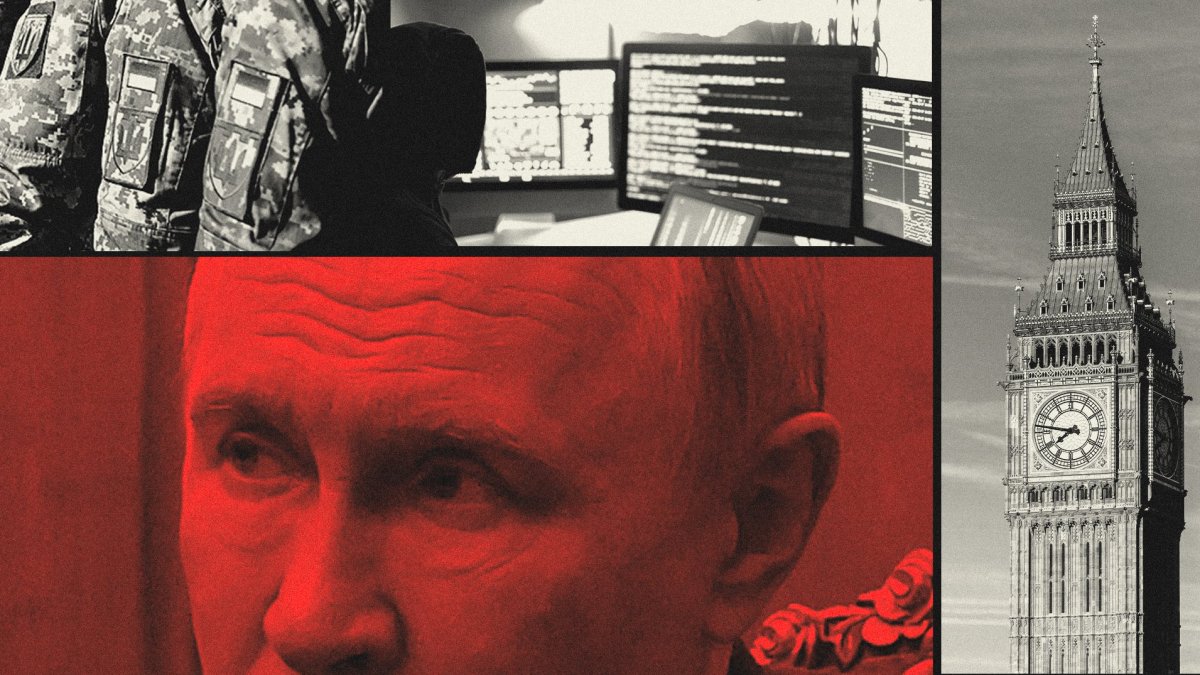
Russia’s spy game is as intense as ever. And a new type of agent has emerged
Full Article
Original Source
Read the full article at Inews →KhanList aggregates and links to publicly available news content. We do not host full articles from third-party sources. Always verify important information with original sources.