
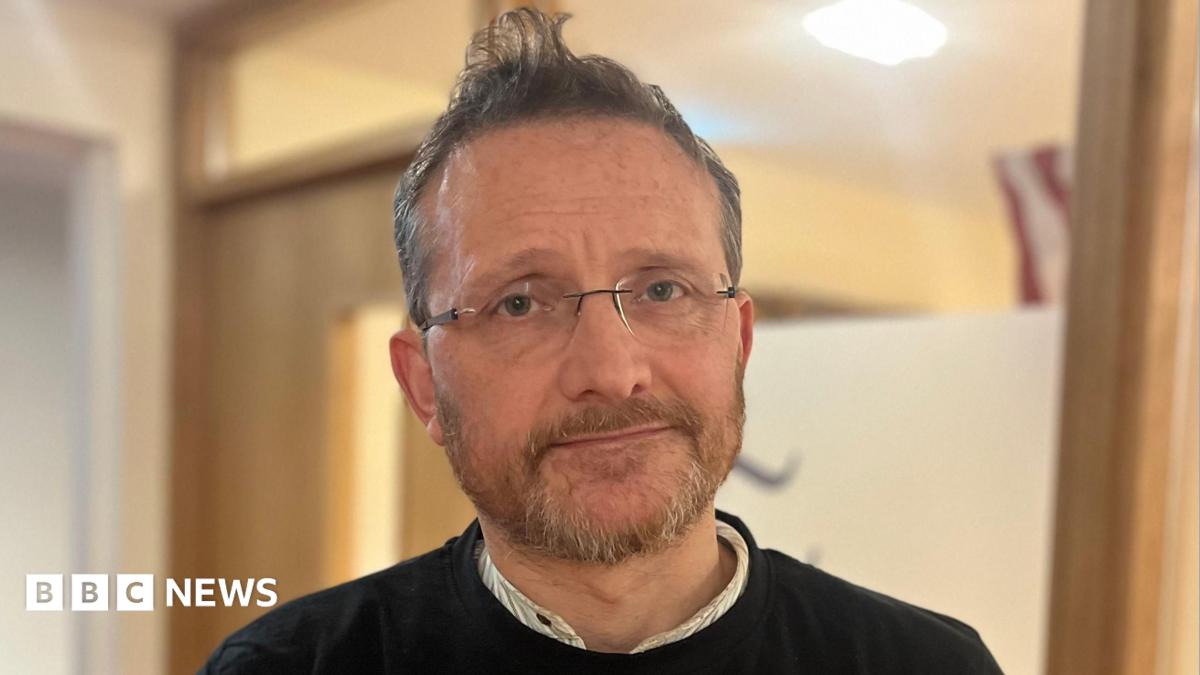
Rural lives cannot be an 'afterthought', healthcare campaigners sayImage caption, Donal O'Cofaigh of Save Our Acute Services (SOAS) says people are "already losing their lives" due to a reduction in rural servicesRural lives "cannot be an afterthought" when it comes to health transformation, campaigners have said.In a joint "letter of concern" to the Northern Ireland Executive, four hospital campaign groups have called for a cross-departmental working group on rural health access.The campaigners have warned that rural communities "face the real threat of being cut off from timely access" to acute and other vital hospital services.In 2024, former Health Minister Mike Nesbitt proposed a new hospital network which would see healthcare services spread and shared across counties, with patients expected to travel further for specialist treatment. The Department of Health has been approached for comment.Donal O'Cofaigh from Save Our Acute Services (SOAS), based in County Fermanagh, said it is "vital" that executive ministers collectively consider decisions about removing services from local hospitals.SoS Causeway Hospital group, Save Our Services Daisy Hill and the Down Community Health committee were the other three groups that signed the letter.For several years the groups have been campaigning against the closure of acute services in their areas. In their letter, the campaigners said that past healthcare decisions have been framed as "purely operational or clinical, with too little cross-departmental scrutiny".What services have been suspended or removed at local hospitals?Image caption, Inpatient maternity services are likely to move from Daisy Hill Hospital in Newry to Craigavon Area Hospital next monthO'Cofaigh said: "It's simply not good enough to allow services to temporarily [be removed] or collapse under pressures and then do nothing about it for years and just leave that as the situation."The groups called for a "presumption of restoration" - a pathway to restore services in cases where they were removed from rural hospitals without the appropriate assessments or scrutiny."We cannot accept the situation where our communities are disadvantaged simply because of where they live," O'Cofaigh continued."We are second-class citizens at the moment. Stormont is presiding over that system."In September, Health Minister Robbie Butler said a new independent expert committee would provide him with advice on major or controversial proposals for permanent changes to health and social care services.'Unsafe distances'The campaigners said communities are forced to travel "long, unsafe distances for emergency care when they are at their most vulnerable".O'Cofaigh said this was an "outrageous situation"."It has very significant impacts on people's lives," he added."It's re-entrenching wider disadvantage."Image caption, Members of the campaign group Save Our Acute Services (SOAS) pictured outside Stormont in February 2026O'Cofaigh hopes Stormont ministers will recognise the "severity" of the situation."If you have to travel long distances, waiting long times to receive life-saving, treatments...then the health outcomes are different. They're not the same. "The procedures can be much more complicated... People are already losing their lives. We're seeing it."The campaigners have also told the executive that rural-proofing is "non-existent", stating that "decisions have been repeatedly made without meaningful assessment of the differential impact on our communities".They have called for independent rural-needs and equality assessments, as well as a cross-departmental ministerial working group on rural health access.What would a new hospital network look like?The proposed new network would retain the current model of four categories: area, general, local hospitals and regional centres.Area hospitals are Northern Ireland's largest hospitals, offering emergency and planned treatment, with 24-hour emergency departments, paediatrics, obstetrics, specialised clinical teams and critical careGeneral hospitals would include unscheduled (unplanned for) care, but geared to a specific more isolated geographical location. These hospitals will compete with the area hospitals for resourcesLocal hospitals would continue to offer a broad mix of community services including diagnostic and mental health support, but if they are to remain open, they will have to justify that they meet their population's needs and are cost effectiveRegional centres would deal with the likes of breast cancer, strokes, cataracts, and neurology, with the aim of reducing hospital waiting time
Rural lives cannot be an 'afterthought', healthcare campaigners say
Full Article
Original Source
Read the full article at Bbc →KhanList aggregates and links to publicly available news content. We do not host full articles from third-party sources. Always verify important information with original sources.