
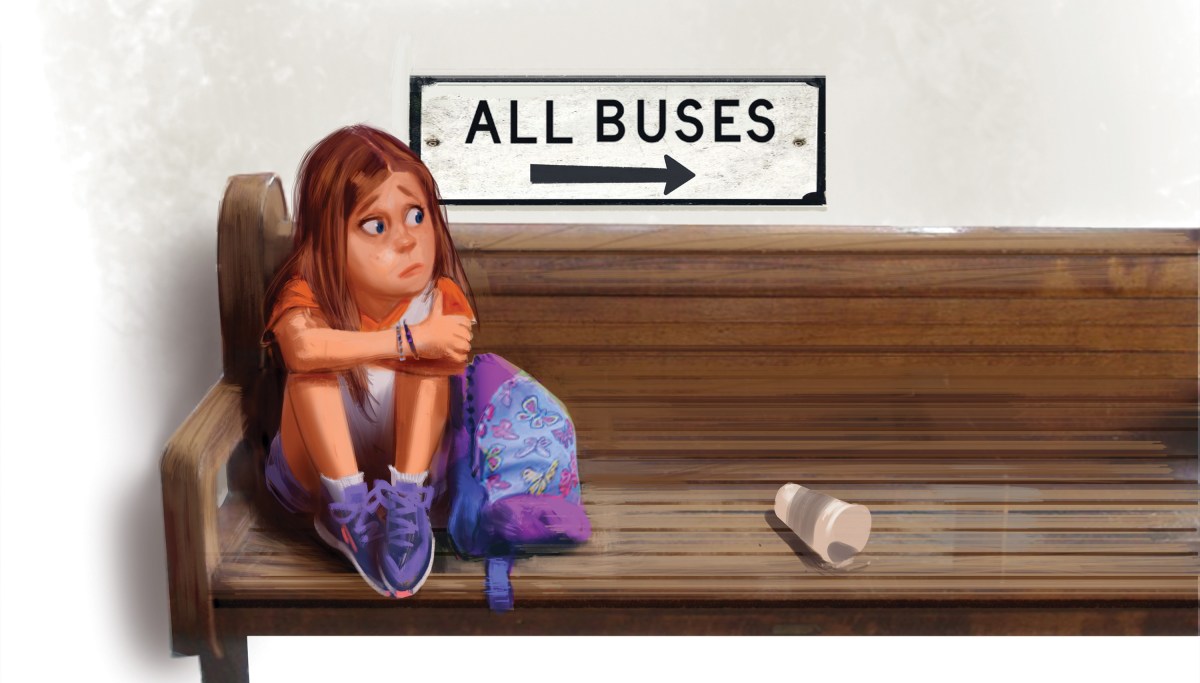
In 2025, the New Mexico legislature passed a law that required the state’s Children, Youth, and Families Department to create a dashboard on its website. Among other pieces of information that the public should be able to see, according to this new rule, was “the number of children placed in the custody of the department who have run away while in custody.” Since the end of June, that number has been 56. There are 56 children in foster care in New Mexico that the state cannot locate. How did this happen? Who are these kids? And why is the government agency that is supposed to keep them safe failing them so spectacularly?Here’s a hint from one of the children who was recently found after a statewide search. Police issued an alert that 13-year-old Andy Carrasco, who was reported missing in Albuquerque, “was last seen Aug. 11 leaving the University of New Mexico Children’s Psychiatric Center. Andy left the facility on foot.” Like Carrasco, the runaways are generally teenagers, and they have significant behavioral and mental health challenges. Often, these are the result of spending years of their lives suffering chronic abuse and neglect at the hands of their families. As more and more states have decided to reduce the number of kids taken into foster care, the ones who do come in often have a higher level of need because they have suffered more years and higher levels of trauma.A few weeks ago, 17-year-old Korbin Papadopoulos died because Missouri’s Children’s Division placed him in an unlicensed foster home with a caregiver who was unable to manage his Type 1 diabetes. Autopsy reports list his cause of death as diabetic ketoacidosis, a build-up of toxins in the blood that occurs when the body does not have enough insulin. Though records show a doctor’s note saying that the boy was “at high risk” of such a catastrophic event, it seems as if the department didn’t have anywhere else to put him. There were no options for Papadopoulos, who had been in 15 different homes and residential facilities as a result of his medical needs and aggressive behavior. And so kids like Korbin and Andy end up in unlicensed homes or, more often, offices, hotels, and homeless shelters. (Illustration by Thomas Fluharty for the Washington Examiner) Across the country, facilities that can handle children with significant problems have been closing. State and federal government officials have leaned heavily into “deinstitutionalization.” For years, advocates have argued that “kids belong in families.” Of course, no one disputes the idea that — all things being equal — it is better for children whose parents can’t or won’t care for them to be raised by other family members or other families entirely. But all things are not equal, and the question is what to do with kids who can’t simply be placed into an ordinary home? Even the most dedicated and vigilant foster parents cannot provide 24-hour supervision to kids who may be at risk of harming themselves or others. Pretending they will be fine living with families often leads to multiple placements or runaways. Every time one doesn’t work out, and we move a child again to a home that doesn’t meet their needs, we are causing more harm.Celebrities like Paris Hilton have made a crusade out of closing residential facilities that serve foster kids (even though Hilton’s experience was at a facility that is private and governed by an entirely separate set of regulations). Congress has held hearings about the poor treatment that kids have experienced in a small number of these facilities. Both public and philanthropic dollars have fled the sector. The federal government has made it much harder for states to use federal funds for these kinds of placements. And the rules imposed on these facilities make it even harder to operate. In New York, for instance, the facilities that house emotionally disturbed foster youth can’t have locked campuses. So local residents find that they are terrorized by kids who just leave whenever they want.In a recent blog post, former director of Georgia’s child welfare system, Tom Rawlings, lamented the closure of Kids Peace, a residential facility near the state’s Alabama border. As Rawlings notes, for two decades, the staff “have provided intense therapeutic care for up to 80 children” in foster care and the state’s juvenile justice system. It “offers one of only two intensive residential programs for Georgia’s juvenile sex offenders outside of juvenile detention facilities.” But the costs have become too much to operate. The facility has lost public funding, and it’s increasingly impossible to get private funding. Operating costs have also skyrocketed. There is always a shortage of qualified people who want to go into this work. Walmart will offer similar wages, and you don’t have to deal with emotionally disturbed kids who probably won’t treat you well.And then there is the cost of liability insurance, an issue that has simmered in the foster care system for several decades. In a report my colleagues and I wrote last year, we noted that “In Pennsylvania, more than half of foster care providers report a lack of available and affordable liability insurance. In New York, they have found it ‘extremely hard’ to find insurance. In Nebraska, ‘Foster parents have been unable to obtain liability insurance coverage.’ In Florida, liability insurance issues became an ‘existential threat.’ And in Nevada, the foster care system was left scrambling after the main insurer decided not to renew policies.”Here again, our public policies have made it harder to keep the doors open at facilities that do the difficult work of caring for kids who need a higher level of supervision. Eye-popping awards from lawsuits against schools and other “child-serving institutions” have become so common that it is all but impossible for insurers to cover foster care providers. How do they know that someone won’t come along and claim they experienced abuse at a foster home that was licensed decades ago and get awarded tens of millions by a jury?Los Angeles County recently started paying 11,000 people almost $5 billion to settle decades-old claims of childhood sex abuse at foster homes and juvenile-detention centers. As California, New York, and other states have either extended or eliminated the statute of limitations on such claims, more and more victims have come forward. And states like California have refused to cap awards, leading more and more hungry trial lawyers to search for clients. An article in the Wall Street Journal recently noted that many of the claims in Los Angeles have turned out to be fraudulent. The LA District Attorney’s office found through court filings that “up to 81% of the claims in Los Angeles County’s main settlement fund contain ‘fraud indicators,’ such as records showing a purported victim lived outside the county at the time they said they were abused.” HOW FOUNDATIONS THAT SUPPORT CHILD WELFARE LOST THEIR WAYSo, as billions of dollars are being siphoned away from child welfare systems in order to pay potentially fraudulent claims from decades ago, children today are stuck in placements that are neither safe nor therapeutic. Even sending money to pay tens of millions in legitimate claims must be weighed against the needs of the most vulnerable children today.“Without significant investment in intensive community-based mental health services as well as therapeutic foster homes and residential placements for these children and youth,” Rawlings writes, his state “is likely to see even more children stuck in hospital emergency rooms and crisis stabilization centers, hotels, and DFCS offices.” The same is true in the rest of the country. We are sacrificing the futures of children like Andy and Korbin in order to appease ideological crusaders, and with no realistic understanding of what these troubled teens really need.Naomi Schaefer Riley is a senior fellow at the American Enterprise Institute.
Runaway problems: Institutions and policies aren’t giving at-risk children the care they need
Full Article
Original Source
Read the full article at Washingtonexaminer →KhanList aggregates and links to publicly available news content. We do not host full articles from third-party sources. Always verify important information with original sources.