
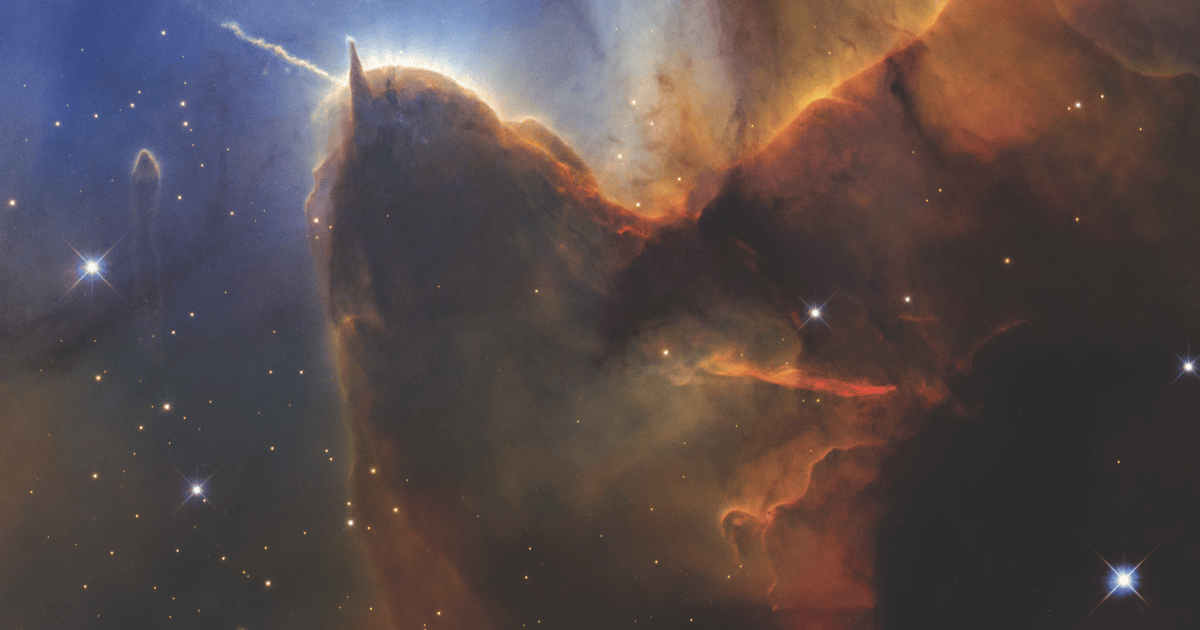
Clouds of gas and dust called galactic cirrus stretch across this wide-field Rubin Observatory shot of galaxies in Centaurus and Lupus. | Published: November 20, 2026 Credit: NSF–DOE Vera C. Rubin Observatory/NOIRLab/SLAC/AURA Credit: NSF–DOE Vera C. Rubin Observatory/NOIRLab/SLAC/AURA After more than 20 years of planning, construction, and testing, astronomers have officially started the Legacy Survey of Space and Time (LSST). The survey will snap about 1,000 images per night with a 3.2-gigapixel camera — the largest digital camera in the world — attached to the 8.4-meter telescope at the Vera C. Rubin Observatory in Chile. The LSST will observe the entire southern sky every three to four nights, on average, across its 10-year lifetime. The goal: build a high-definition, time-lapse record of the cosmos from the solar system to distant galaxies. This part of the initial image covers about 1.7° by 1.7° centered in northeastern Centaurus, though the left side bleeds into Lupus. The wispy swirls are tenuous clouds of gas and dust known as galactic cirrus, illuminated by the diffuse glow of the Milky Way. Richard Talcott is a former senior editor and current contributing editor of Astronomy.
Rubin brings the universe into focus
Full Article
Original Source
Read the full article at Astronomy →KhanList aggregates and links to publicly available news content. We do not host full articles from third-party sources. Always verify important information with original sources.