
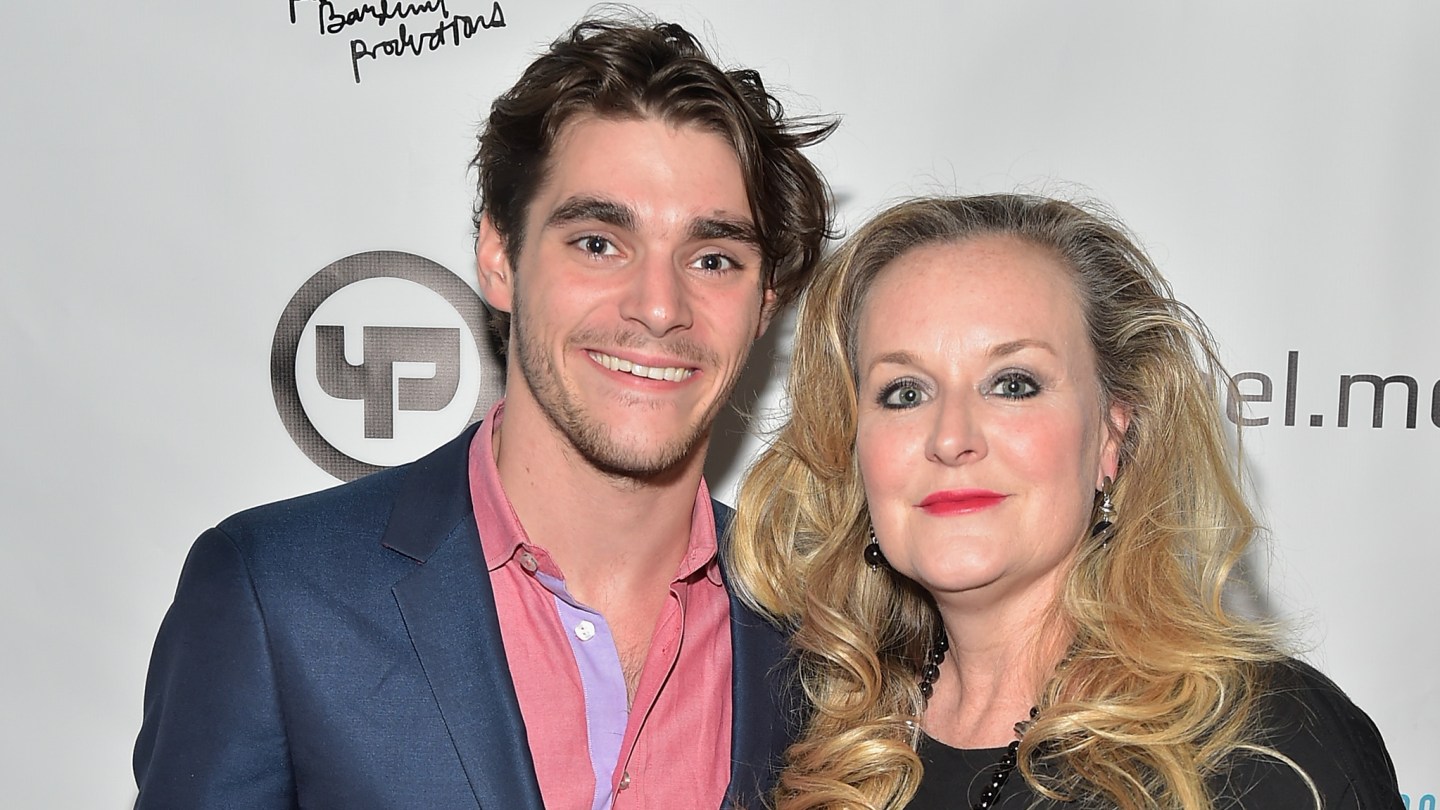
Dyna Mitte is taking one step at a time. The mother of R.J. Mitte is walking through unimaginable grief after discovering her son Monday at his Texas home after he took his own life at age 34. The blow gave way to highs of hearing how much of an impact he had on the lives of those touched by his acting work on shows like Breaking Bad or his advocacy on behalf of the disability community, and lows of waking up each day without him. The week ended as R.J. Mitte was remembered during a Celebration of Life ceremony at the Mitte Center in Brownsville, Texas, where hundreds filled the seats (and an overflow building) to share memories and emotional tributes. Dyna chose to not stand at the podium because she was more focused on supporting her other child, R.J.’s little sister Lacianne Carriere, and allowing others the chance to speak on his behalf. But hours after the ceremony, she got on a Zoom with The Hollywood Reporter for the purpose of honoring her only son while offering advice to families out there that may one day see red flags like she did. “Listen to your children. Watch for the signs. Be in tune with them, be there for them and be willing to get help when it’s needed,” she said. Dyna Mitte was also keen to clarify online speculation and rumors about the state of his career and finances and an reported feud with his fiancé. How are you feeling? I’m taking one step at a time. It’s a difficult thing for a parent to lose a child, and then to face the day of the actual celebration of life. It takes a lot out of you. I’m glad to do this [interview], but I’m tired and emotional. I feel a little beat up emotionally, but I think this is important. You’re speaking today in part because you want to help other families that may be struggling. What do you hope people take away from your experience? It’s important for parents to realize that there may be big signs or small signs. If you notice, even in conversation, that there are struggles or questions, be really in tune with your children and take the steps you can to help. You didn’t speak at the celebration of life today. What led you to that decision, and what might you have said if you had been able to speak? It’s hard enough to plan a funeral or a celebration of life — to know that you’re waking up without your son or daughter and will never see or hear them again. I’m in a slightly different situation because I can watch his movies or listen to his speeches, but that in itself is overwhelming. To then stand up and share all of that with people was not something I felt prepared to do on that particular day. I also have a daughter who is devastated. We didn’t know whether she was going to speak, but she wanted to. She had a difficult time throughout the service, so I needed to be there to support her. There were so many people who could have spoken that we could have been there for days or weeks. We tried to choose people who were close to R.J. and had meaningful relationships with him. I speak about my children every day and how wonderful they are, so I thought I would let other people share their memories of him. Was there a particular moment, memory or comment from the service that stood out to you? Everything did. Every picture in the room had a different meaning to each of us. Family members were sharing stories and feelings before and after the celebration, and everyone who spoke honored R.J. The room was filled with producers, directors, casting agents, agents, managers and publicists. For an actor, that says a lot. All of those people traveled to be there for him. Everything had meaning to me, and I think R.J. was looking down and understood that it all had meaning for him, too. What would it have meant to R.J. to see all of those Hollywood friends and collaborators in attendance? Well, first of all, I know there’s been some speculation that his career had taken a dive or this and that. And honestly, I want to straighten that out right now. They used to say, “You may do a thousand auditions before you land one job.” Well, obviously it doesn’t work that way today. Of course, COVID made things kind of slow but things picked back up. But honestly, R.J. had three movies that have already come out this year. He has two more coming out. He has already signed deals on several new movies that he was going to be filming. There were talks of different things. He had a book coming out. He had a food truck he was starting. He had a lot going on. To answer the question, I do believe R.J. did see [the support today]. I do believe that when we get to heaven, God rolls back the curtains and reveals some things. I’m sure he rolled back those curtains and R.J. saw today exactly who was there, who honored him. I’m sure he laughed about things. I’m sure he joked about things. He probably was the one pulling the back of my hair and making me twitch. But I do believe R.J. was incredibly proud, and I’m sure that he was weeping and hearing all the wonderful things that were being shared about him. R.J. would’ve been proud of each and every moment. RJ Mitte and his mother, Dyna Mitte, at the HBO Luxury Lounge Four Seasons in L.A. on Sept. 21, 2013. (Photo by Rachel Murray/Getty Images for Mediaplacement) Thank you for clarifying. I know there had been a lot of commentary swirling around on social media, some of it in reference to things that happened years ago, including a financial situation involving a representative that had taken some money? There had also been speculation about a financial situation involving a manager. That happened years ago, had already been resolved, and was not related to what happened now. Hearing you talk about all of the movies he had upcoming, the food truck, everything to look forward to, does it make it harder to process why he left? When something is tormenting you — whether it’s for an hour, a day, a week or a month — I think people can have weak moments. I believe that’s what happened in this case. That doesn’t mean he hadn’t been having personal struggles. He had been opening up to me, to his sister, to family members and to people on his team. I don’t know what else to say other than that it wasn’t something we expected. A mother should never have to find her child that way. It’s a hard pill to swallow. You’ve said that you noticed warning signs and encouraged R.J. to seek therapy. What can you share about what those signs looked like? It wasn’t necessarily about specific actions. It was more about the conversations we were having — not just with me, but with his team and friends. There were concerns. That’s why I encouraged him to talk to a counselor. It’s always good to have an outside counselor, a third party with no “skin in the game,” as we say in the South. I told him to talk to a therapist and share his feelings and how he saw things. A therapist could tell him what they saw and heard without having a personal stake in it. Parents should listen to their children and watch for signs. I thought R.J. was in a place where we had gotten over the hump and that he was OK. It wasn’t until he didn’t answer the phone that I recognized it as a red flag, because we talked regularly. You are such a close family. Finding your beloved son the way that you did must be traumatic. Are you getting support and therapy yourself? Yes. I’ve already talked with a therapist about my feelings and everything that’s happening. I have one therapist in Texas, where I live, and another in Los Angeles when I’m there. I had even spoken with a therapist ahead of time about the signs and conversations we were having and how to approach those subjects. There has been speculation about R.J.’s relationship with his fiancé and reports about who was invited to the celebration of life. Is there anything you want to clarify? I can share certain things, but some things are private and are not my story to tell. I don’t know all of the conversations between the two of them. I can say there were struggles, but those conversations were private between R.J. and me and between him and his friends. She moved in December, and they had only seen each other three or four times since then. I don’t know what those conversations were after she moved. I had not spoken with her about not coming to the funeral. She had asked one of R.J.’s friends on the day I found my son, but at that point we didn’t even know what was happening. No plans had been made. That’s all I can share about it. What was R.J. like as a child? Must’ve been pretty special to have been raised to grow into this advocate and activist that changed so many lives? R.J. was adopted at three days old and was the light of my life. He was a very smart child who started speaking words at nine months. He was always an achiever, and he lit up a room with his big smile. He was also laid-back and incredibly giving. If another child wanted his toy, he would give it to them. If a child got hurt and started crying, he would go check on them. He was passionate and caring from an early age. His grandparents also had a strong influence. I grew up with a grandmother who was a children’s minister and a mother who worked in education. When R.J. and his sister were young, we gave them allowances and asked them to set aside 10 percent as a tithe and another 10 percent in a charity bank. Every Christmas, they chose a child from a giving tree, Make-A-Wish or another organization and spent that money on the child they had selected. They learned that because they were fortunate, they needed to give back. They learned to recognize that other people might be less fortunate and to lend a helping hand. As R.J. grew older and lived with a disability of his own, he developed an even deeper understanding. At Shriners Hospitals for Children, he would meet children with different disabilities and take time to visit them, talk with them, laugh with them and make them laugh. He understood what they were going through because he was going through it, too. That passion carried into his acting and advocacy. He spoke out for actors with disabilities and worked with organizations including Shriners Hospitals for Children and United Cerebral Palsy. He raised money, spoke around the world and advocated for inclusion and diversity in the workplace and education system. He believed everyone should have the opportunity to audition for a role, whether it was written for a disabled character or not. He fought hard for that. He wanted to change the world and make it better for everyone. What did you learn about the impact R.J. had on people after his death? In the first few days, I received more than a thousand messages. People weren’t asking for details. They were telling me what R.J. had meant to them. One person said, “You’ll never know. I met your son on the street, and you’ll never know how he changed my life.” Another person said they had met R.J. at a college while contemplating suicide, and by the end of their interaction, they felt able to make it another day. People from other countries called to talk about the impact he had made. He had traveled to Lithuania to speak about disabilities in education, to Russia to speak about disabilities in the workplace and to Washington, D.C., to lobby for disability rights. For the first couple of days, there was almost no sleep. I was inundated with people sharing his accomplishments, and I had to sit back and realize, “My son did this. My son was able to change lives.” That’s why it’s so important to be in tune with your children, listen to them and be willing to say that they need help. We need to shine a light on mental illness, depression and the importance of being there for one another. The world lost a bright light this week, and that light happened to be my son. How do you reconcile R.J.’s own struggles with the fact that he helped so many other people? He’s still helping people. This is what he would expect me to do. He would want me to raise awareness. I feel as though he’s looking down at me and saying, “Yes, Mom, this is a hard pill for you to swallow, but you’re going to talk about it and make some changes on my behalf.” There is no shame. He was an incredible young man. When did you first realize that R.J. was a star? I think we’re talking about two different stars. He was a star, but I’m talking about the shining star in the sky. What makes someone a celebrity or a star? R.J. never believed he was better than anyone else. He never identified himself as a celebrity. He simply loved acting and loved working with producers. Vince Gilligan allowed him to shadow different departments on Breaking Bad, and R.J. learned about every part of filmmaking — the producer, director, cinematographer, actor, lighting, camera and everything else. He understood that great things happen when people work together. R.J. never thought, “I’m this actor — look at me.” He believed we’re all human and all in this together. He saw everyone as a friend and as someone he worked with on the same level. R.J. Mitte in Breaking Bad season four. Everett Collection You’ve said that R.J. lives on through his work. Have you been able to watch any of it since his death? Can you watch Breaking Bad? I’ve watched Breaking Bad all the way through twice. I’ve always watched R.J.’s work at least once, although R.J. himself didn’t watch his own work. He didn’t like hearing himself. Early on, I asked his manager about that. He told me that if actors watch themselves and criticize what they’re doing, they may change their approach, so you don’t want them to change their natural acting. I would watch him on set and give him feedback, and we would talk about his projects. I don’t know when I’ll sit down and watch one of his movies, but I will. Since Monday, I’ve watched the videos people have been posting. I find comfort in still hearing his voice, seeing his smile and watching his eyes light up when he talks about something passionately. Is another celebration of life being planned in California? We don’t have all the details worked out yet. Because R.J. worked so diligently in South Texas, we knew we needed to have something there, and it was an incredible day. The building reached maximum capacity, and the city opened an overflow building that also reached capacity. After calls came in from Los Angeles, New York and around the world, we knew we needed to do something somewhere else. Los Angeles seemed like the logical place because so many people who wanted to attend were there, including directors, producers, actors and crew members who had worked with R.J. We’re working on it now. It looks like it will probably be Oct. 30, but the details are not final. I’ll do whatever I can to make sure R.J. is honored and that his legacy lives on. The city is already discussing programs, and actors have reached out about helping ensure his legacy continues. In closing, right now on this emotional day from where you’re sitting, what advice can you give parents who may be worried about their children? Even if you think your child needs counseling — whether they want to go or not, whether they’re an adult or a minor — you find a way to get them there. That would be my biggest message. Listen to your children. Watch for the signs. Be in tune with them, be there for them and be willing to get help when it’s needed. Interview edited for length and clarity. Bob Odenkirk, R.J. Mitte, Anna Gunn, Bryan Cranston, Aaron Paul, Jonathan Banks, Betsy Brandt, and Dean Norris during the 30th Screen Actors Guild Awards in L.A. on Feb. 24, 2024. Matt Winkelmeyer/Getty Images
R.J. Mitte’s Mother Opens Up About His Tragic Passing to Help Other Families (While Clarifying Speculation About His Finances, Career and Fiancé)
Full Article
Original Source
Read the full article at Hollywoodreporter →KhanList aggregates and links to publicly available news content. We do not host full articles from third-party sources. Always verify important information with original sources.