
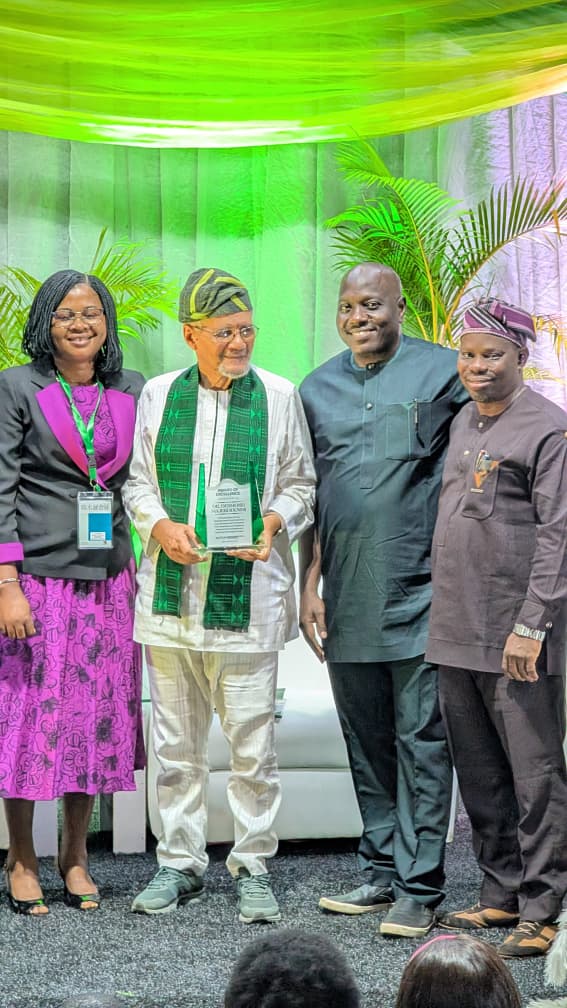
Funmi Ogundare Environmental activist and Chairman of the Lekki State Urban Forest and Animal Shelter Initiative (LUFASI), Dr. Desmond Majekodunmi, Tuesday warned that rising sea levels and the growing effects of climate change could threaten parts of Lagos by 2050, urging Nigerians to embrace sustainable environmental practices to avert an ecological crisis. He stated that continued greenhouse gas emissions, deforestation, pollution and the destruction of biodiversity were worsening the climate crisis and putting communities at risk. Majekodunmi made this known at the three-day international conference of Society for Environmental Toxicology and Pollution Mitigation (SETPOM), themed: ‘Driving Environmental Security, Innovation, and Resilience through AI, Research, Industry, and Regulation for Global Livelihoods,’ held at the University of Lagos. He stressed the need for urgent collective action to protect the environment, warning that prioritising profit over people and the planet could have devastating consequences for future generations. According to him, “The earth remains uniquely habitable because of its atmosphere, but human activities are increasingly threatening the natural systems that sustain life.” He identified industrial activities, fossil fuel consumption, mining, deforestation, agricultural practices, waste disposal and transportation among the major contributors to environmental degradation and global warming. Majekodunmi explained that rising global temperatures were intensifying the water cycle, contributing to heavier rainfall, flooding and other extreme weather events. He cited the effects of coastal erosion and rising sea levels as particular concerns for Lagos, a coastal city vulnerable to the consequences of climate change. He warned that continued emissions could worsen the situation, with potentially devastating implications for communities, infrastructure and institutions, including the University of Lagos. The environmentalist called for greater public awareness and stronger commitment to sustainable development, saying: “Individuals, institutions, industries and governments must take responsibility for protecting the environment.” He, however, expressed optimism that the climate crisis could be addressed through the adoption of renewable energy, improved waste management, recycling, scientific research, technological innovation and effective environmental regulation. He identified solar, wind and water-based energy as potential sources of cleaner power, stressing that sustainable alternatives were available but required stronger commitment and investment. Speaking with journalists, the President of the Society for Environmental Toxicology and Pollution Mitigation (SETPOM), Dr. Idowu Aneyo, stated that Nigerians must embrace behavioural change and leverage Artificial Intelligence (AI) to protect the ecosystem and promote environmental sustainability. Aneyo, a lecturer in the Department of Zoology at the University of Lagos (UNILAG), said although regulations were in place, particularly in Lagos State, effective environmental protection required greater public cooperation and a deliberate commitment to sustainable practices. She commended the state government for its efforts in enforcing environmental regulations, noting that the major challenge was getting people to accept and adapt to the changes needed to protect the environment. “There are regulations, especially in Lagos State. I want to say that the Lagos State Government is really trying to enforce them. It is just we humans that need to accept this change,” she said. According to her, behavioural change remains difficult for many people, but individuals must be intentional about protecting the ecosystem. She stressed the need for Nigerians to take personal responsibility for environmental preservation, adding that effective regulation must be complemented by public awareness and a willingness to adopt environmentally responsible practices. Aneyo also emphasised the potential of AI and machine learning in addressing environmental challenges, noting that the technologies could help predict environmental risks, control damage and support sustainable ecosystem management. “In the era of artificial intelligence, there is a lot that it can actually help to do. We need to use machine learning and AI to predict and also control some damage, and bring about sustainability of the ecosystem,” she stated. The conference witnessed a debate competition among secondary school students, titled, ‘Harnessing Innovation and Artificial Intelligence for Environmental Sustainability Investments’. It produced winners in the junior and senior categories who were rewarded with cash gifts and certificates.
Rising Sea Levels Could Threaten Lagos by 2050, Majekodunmi Warns
Full Article
Original Source
Read the full article at Thisdaylive →KhanList aggregates and links to publicly available news content. We do not host full articles from third-party sources. Always verify important information with original sources.