
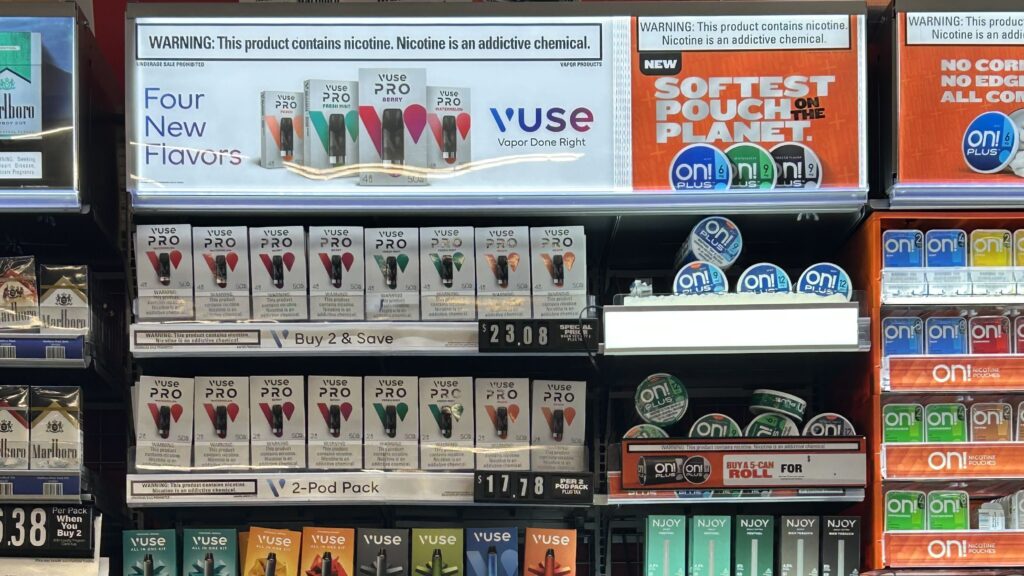
CLEVELAND — At a GetGo gas station close to a highway entrance in suburban Ohio, a brightly lit sign alerts customers to four new flavors of Vuse Pro vapes, now available in peach, berry, watermelon, and fresh mint. These products from Reynolds American are already for sale in Ohio and select other states, even though they haven’t been authorized by the Food and Drug Administration. But the FDA effectively invited companies to start breaking the rules when it softened its enforcement guidance in May, according to some critics, setting the stage for what they say is likely to be a new wave of illegal fruit-flavored e-cigarettes.“If the only reason why a major player like this is putting completely unauthorized and illegal products on the market is because of the FDA enforcement guidance, to me, it shows how wrongheaded that guidance is both as a public health matter, but also as a legal matter,” said Mitch Zeller, a former head of the FDA’s Center for Tobacco Products.The decision to move ahead with new products in the absence of FDA authorization could spur other big manufacturers frustrated with the agency’s decisions and timelines to do the same, said Cristine Delnevo, director of the Rutgers Institute for Nicotine and Tobacco Studies. (Tobacco giant Altria sued the FDA over the timeliness of its review process last week.) “If major manufacturers conclude that compliance offers little advantage over introducing products first and dealing with regulatory consequences later, it could encourage broader noncompliance across the marketplace,” Delnevo said via email. British American Tobacco, which owns Reynolds and its subsidiaries including the R.J. Reynolds Vapor Company, highlighted the planned rollout of the new Vuse fruit flavors in its midyear results presentation. A slide on page 25 also notes that “Regulatory and enforcement actions support U.S. New Category growth,” referring to the categories of vapes and nicotine pouches. Luis Pinto, a spokesperson for Reynolds American, said in a statement that the sale of Vuse flavored pods is “consistent with applicable state regulations.” (Some states, including California, Massachusetts, New York, and New Jersey, have bans on flavored vapes.) The launch is being paired with “enhanced youth access prevention measures,” including ID requirements and purchase limits, Pinto said, adding, “We believe expanding choices for adult nicotine consumers should be accompanied by strong measures to help prevent underage access.” Why FDA changed its stance on fruit-flavored vapes Under U.S. law, companies aren’t allowed to sell new nicotine and tobacco products until they’ve been authorized by the FDA. Just 48 e-cigarettes have met that bar so far, and the agency only authorized fruit-flavored vapes for the first time in May, saying it was confident that new age-gating technology from the company Glas would reduce the risk of youth uptake. Many more vapes in a wide variety of fruit and dessert-like flavors, often manufactured by Chinese companies, are sold illegally in the U.S. — an issue the Trump administration has said is a priority.Then the FDA announced in May that it would effectively turn a blind eye to the sale of unauthorized fruit-flavored vapes in the U.S. under two conditions. First, manufacturers must have pending applications that the FDA has already accepted. Second, the manufacturers must have provided the agency with sufficient data on whether the product is “appropriate for the protection of public health” when it comes to the risk of young people and nonsmokers starting to vape. The FDA released the new policy about a week after Reynolds American donated $5 million to a super PAC backed by President Trump and company executives dined with the president at his golf club, according to reporting from The New York Times. During the lunch, Trump reportedly made calls about the FDA regulation of e-cigarettes to the agency’s then-commissioner Marty Makary, as well as to health secretary Robert F. Kennedy Jr. and Mehmet Oz, administrator of the Centers for Medicare and Medicaid Services.The agency’s decision was met with swift criticism from public health and anti-tobacco advocacy groups, who warned that sweet flavored vapes hold particular appeal for minors — as exemplified by the height of the Juul-fueled youth vaping crisis that peaked in 2019, when 20% of middle school and high school students reported using the products. A coalition including the Campaign for Tobacco-Free Kids and the American Academy of Pediatrics filed a federal lawsuit opposing the new enforcement policy in July, claiming that it violates the regulatory requirements laid out in the 2009 Tobacco Control Act. Vaping on the rise among young adults 19 to 30 Vaping among middle school and high school students has fallen from its 2019 height to 5.9%, according to the most recent government survey data. Meanwhile, vaping rates among young adults between 19 and 30 are going up, according to a separate national survey from the University of Michigan, reaching a record 19% last year. Supporters of fruit-flavored e-cigarettes say that vapes are an effective form of harm reduction for people who smoke, and that people report having an easier time quitting with flavored vapes as opposed to tobacco and menthol varieties that have a similar smell and taste to cigarettes. Fruit-flavored vapes aren’t inherently good or bad, Delnevo said. “The question is whether a specific product, marketed in a specific way, produces a net public health benefit at the population level.” Rutgers’ research and surveillance data suggest that the products with the greatest youth appeal are unauthorized vapes from foreign brands such as Geek Bar and Foger, which “appear to have little interest in participating in FDA’s pre-market review process,” she said. There are inevitably more questions and concerns about those products than those that have undergone FDA review and been properly evaluated for evidence about their potential risks and benefits. The FDA’s current enforcement policy will only lead to confusion, Zeller said, with unauthorized fruit-flavored vapes from brands like Reynolds sitting on shelves side by side with both authorized products and illicit disposable vapes from brands like Geek Bar. “How is the health-concerned adult cigarette smoker thinking of switching to e-cigarettes supposed to sort all this out?” he said. “They’re not going to go to FDA websites and look at the list of authorized products.” The problems will only increase if more manufacturers follow suit now that Reynolds has broken the seal on unauthorized fruit vapes, Zeller said. “Why wouldn’t they?” STAT’s coverage of chronic health issues is supported by a grant from Bloomberg Philanthropies. Our financial supporters are not involved in any decisions about our journalism.
Reynolds is selling fruity new vapes unauthorized by FDA
Full Article
Original Source
Read the full article at Statnews →KhanList aggregates and links to publicly available news content. We do not host full articles from third-party sources. Always verify important information with original sources.